
Trunk comparison: BMW X1 vs Skoda Superb Wagon
Key Differences
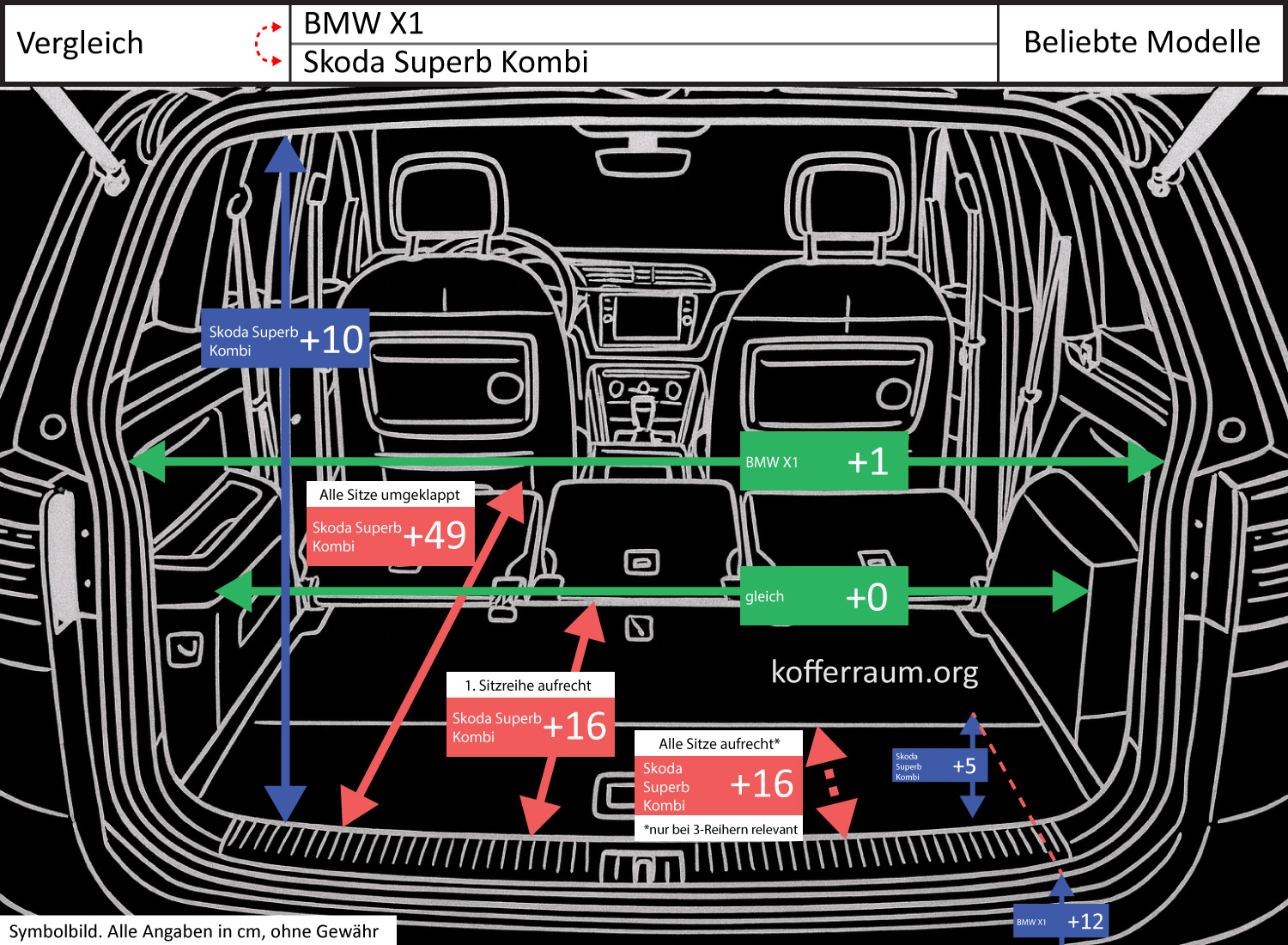
The Škoda Superb Wagon offers significantly more cargo length and headroom: with the rear seats folded down, the trunk is +19.3 in (30%) longer, and with the front seats upright, it is +6.3 in (18%) longer than in the BMW X1. The trunk opening of the Superb is +3.9 in (14%) higher, and the depth of the trunk (loading edge to trunk floor) is +2 in (167%) greater.
The loading edge on the BMW X1, on the other hand, is +4.7 in (20%) higher above the ground, which represents a significant difference compared to the lower loading edge of the Superb. The width at the narrowest point is the same; the width of the trunk opening is only +0.4 in (1%) larger on the BMW (negligible).
Impact on Usability
The larger length dimensions of the Superb make it clearly more practical for long or bulky items (e.g., slats, skis, long boxes, or furniture parts): with the rear seats folded down, significantly more length fits inside.
Also, in everyday use (seats upright), the Superb offers +6.3 in more space for suitcases and shopping bags, thus more usable cargo volume behind the seats.
The higher trunk opening and greater depth mean more usable interior height and depth in the Superb, making it easier to accommodate taller or bulkier items.
Together with the lower loading edge of the Superb, this also provides a practical advantage when loading and unloading heavy loads: shorter lever arms and easier sliding in. In the BMW X1, the higher loading edge leads to more lifting when loading, which makes handling heavy items more difficult.
Since the width at the narrowest point is identical and the opening width of the BMW is only minimally (+0.4 in) larger, width and lateral restrictions hardly play a role in practice.
Overall, the Škoda Superb Wagon is significantly better suited for transporting long, tall, or heavy items; the BMW X1 is less practical in these loading aspects.