
Trunk comparison: BMW X2 vs Tesla Model 3
Key Result
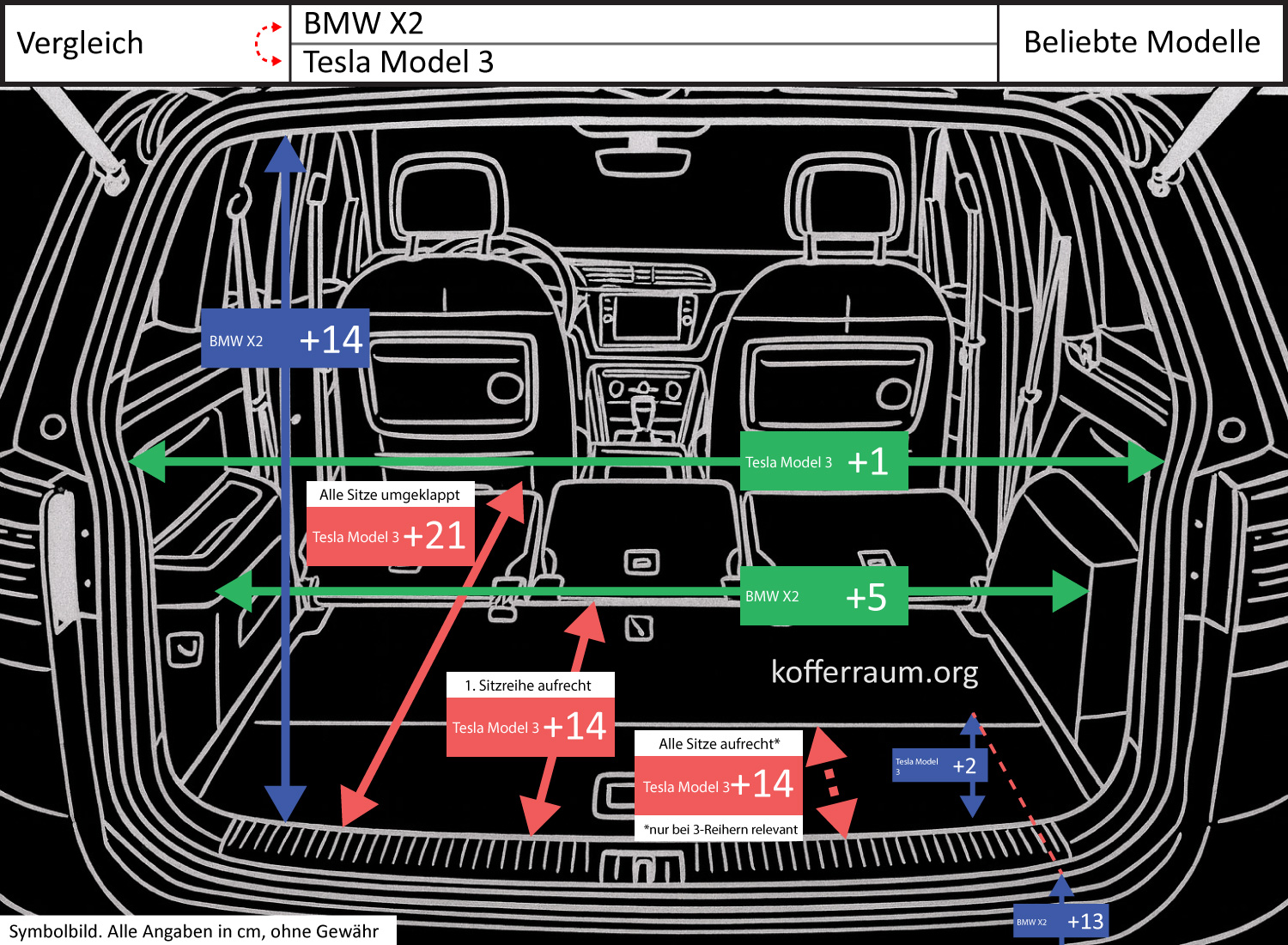
The Tesla Model 3 offers significantly more usable length and a deeper cargo floor, while the BMW X2 has a higher trunk opening and a higher loading edge. In particular, the following differences stand out:
,
,
,
, and
.
What This Means in Practice
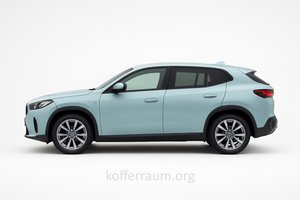
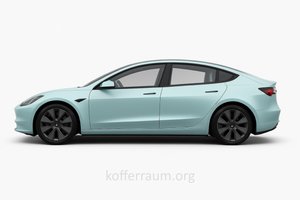
Due to the greater length (both with folded and upright seats), the Model 3 is better suited for long items like slats, skis, or furniture parts and for everyday use when passengers are also being transported — more usable cargo space in the longitudinal direction. The greater depth of the Model 3 (loading edge to trunk floor) means a deeper cargo floor: this lowers the center of gravity of the load and allows for somewhat more usable height below the opening, but combined with the Tesla's lower loading edge, it can also make rolling or sliding heavy items in and out easier. The BMW X2 scores with a significantly higher trunk opening: tall and bulky items (boxes, cabinets, tall plants) can be loaded more easily through the larger opening without scraping on the entrance height. At the same time, the loading edge in the X2 is about 5.1 in higher, meaning lifting heavy items over the threshold is more strenuous; for frequent loading of heavy loads, the higher loading edge is a disadvantage.
Small, Practical Differences
Width differences are minor: the BMW is about 5% wider at the narrowest point, while the width of the trunk opening is only 1% larger in the Tesla. These values are usually negligible in practice; they hardly change the fundamental usability of either vehicle.
Conclusion
In short: Those who need longer cargo or more usable cargo space with passengers and prefer a lower loading level benefit more from the Tesla Model 3. Those who frequently load very tall items and need a larger opening height will find advantages in the BMW X2 — albeit at the cost of a significantly higher loading edge.