
Trunk comparison: BMW X3 vs Durchschnitt Subcompact


Key Differences
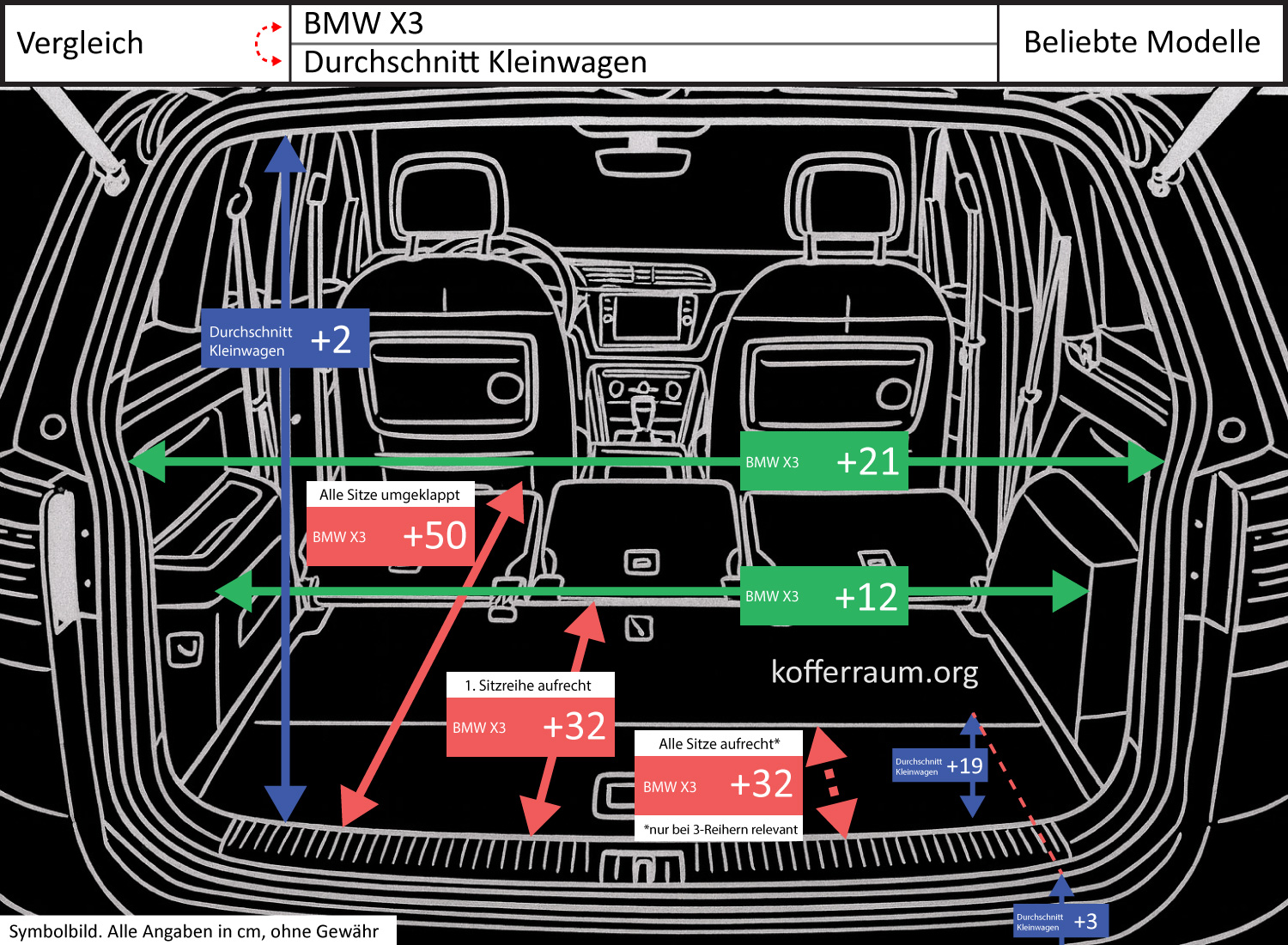
The BMW X3 offers significantly more usable floor space, while the average subcompact has advantages in trunk depth. Specifically, the BMW X3's trunk is +19.7 in (39%) longer with the seats folded down and +12.6 in (51%) longer with the first row upright compared to the average subcompact.
At its narrowest point, the BMW X3 is +4.7 in (12%) wider, and the trunk opening width in the X3 is even +8.3 in (23%) greater than that of the subcompact. In contrast, the depth (loading edge → trunk floor) is +7.5 in (1800%) greater in the average subcompact.
Impact on Usability
The larger length and width dimensions of the BMW X3 mean: longer items (e.g., skis, boards, furniture parts) are easier to transport, bulky suitcases or strollers fit more easily, and the wider opening facilitates loading and maneuvering heavy or awkward cargo.
The significantly greater depth in the average subcompact creates more vertical storage space below the loading edge.
This can help store cargo "deeper" and transport it hidden in the trunk, but it makes lifting heavy items over the loading edge and removing larger items less practical. Smaller opening and width dimensions also more strongly limit loading wider or longer parts.
In short: For flexible, voluminous, or long cargo, the BMW X3 is overall better suited; the subcompact offers a deeper cargo well but comes with limitations for comfortably loading larger or wider items.
Minor differences like the 2–1.2 in variation in opening height or loading edge height are hardly noticeable in practice.