
Trunk comparison: BMW X3 vs Durchschnitt Wagon

Highlighted Differences (>10%)
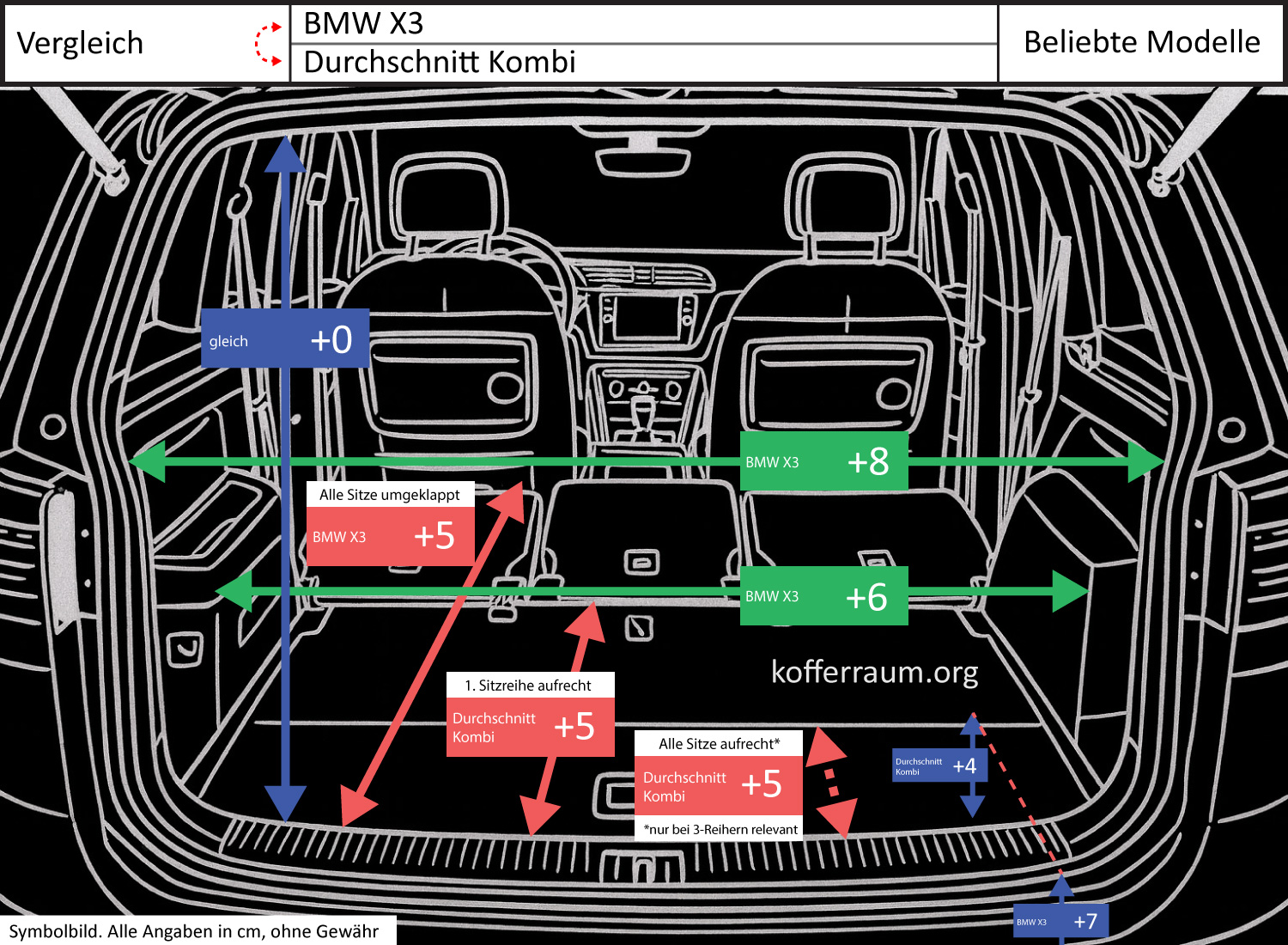
The depth of the trunk (loading edge → trunk floor) is +1.6 in or 300% greater in the average wagon. This means the floor of the wagon lies significantly lower below the loading edge, creating more usable volume beneath the loading edge.
The loading edge of the BMW X3 is +2.8 in (11%) higher above the road. With the X3, you have to lift items higher overall to get them over the loading edge.
Other, Smaller Differences
The trunk opening height is the same. With the seats folded down, the X3 is +2 in (3%) longer; with the front seat row upright, the average wagon has +2 in (5%) more length. The narrowest trunk width is +2.4 in (6%) greater in the X3, and the opening width is +3.1 in (8%) greater in the X3.
Impact on Usability
Because the wagon has a significantly deeper loading floor, it offers more volume beneath the loading edge and is generally more favorable for bulky or high-volume cargo that can be “recessed” below the loading edge.
Combined with the lower loading edge, this results in easier loading of heavy items and more comfortable handling when regularly transporting large quantities or heavy boxes.
The BMW X3, on the other hand, has the advantage of somewhat greater width (including at the narrowest point) and a slightly larger opening width, which facilitates loading wider items.
However, the higher loading edge makes lifting heavy loads more strenuous; additionally, the shallower depth beneath the loading edge limits usable volume, so very tall or deeply seated cargo fits less well.
Conclusion
For frequent transport of heavy or bulky cargo and easier loading, the average wagon is more practical due to its significantly greater trunk depth and lower loading edge.
The BMW X3 is advantageous if somewhat more width and a bit more length with folded seats are important, but this comes at the cost of a higher loading edge and less volume beneath it.