
Trunk comparison: BMW X3 vs Hyundai i10
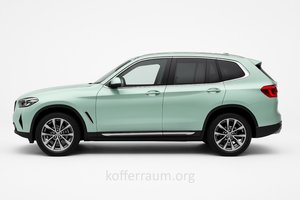
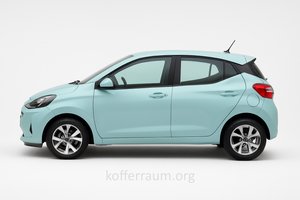
Key Differences
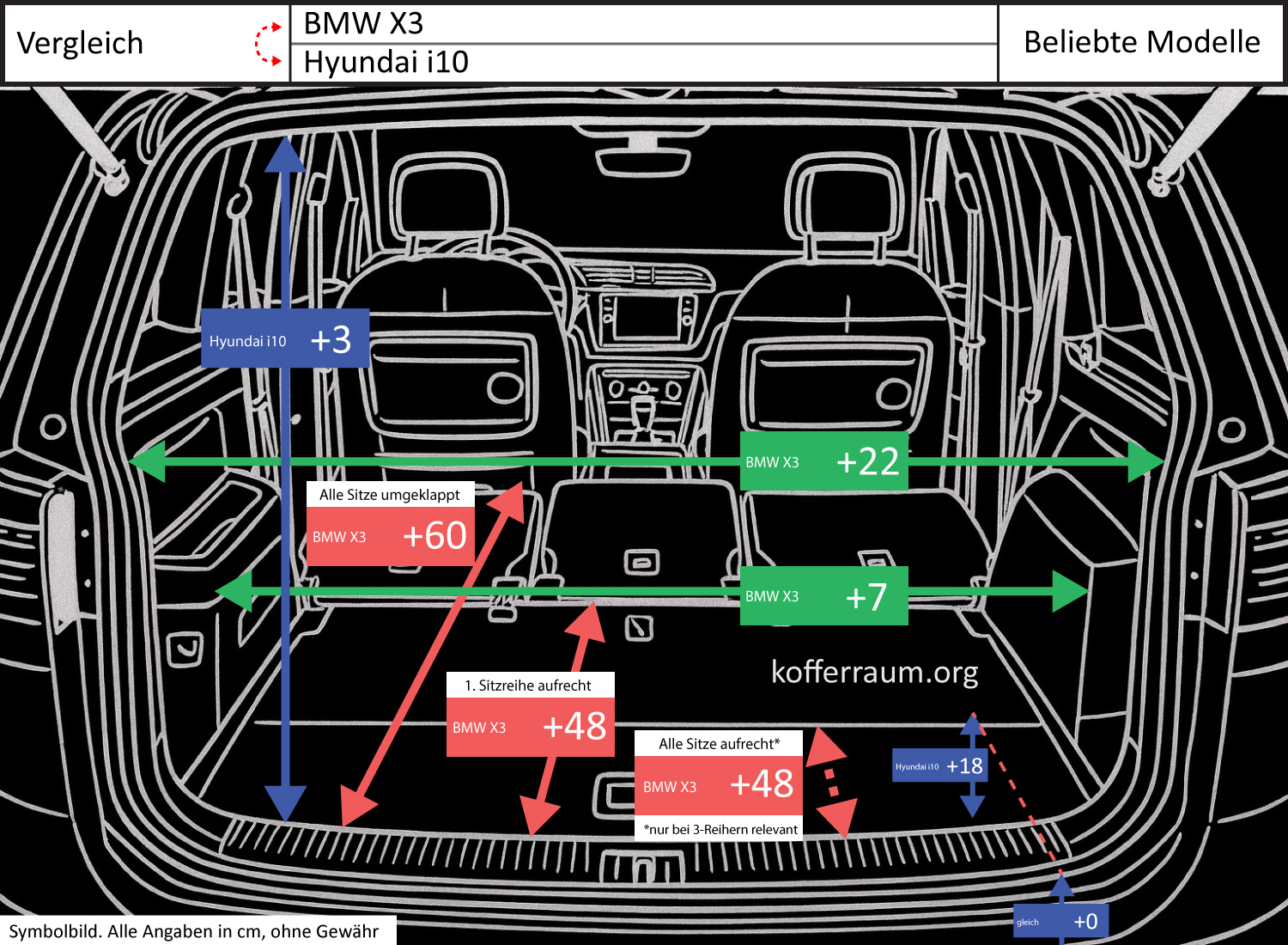
In a direct comparison, several clear differences emerge: The BMW X3 offers a cargo space length that is 23.6 in (51%) longer with the rear seats folded down and 18.9 in (102%) longer with the front seats upright than the Hyundai i10. The width of the trunk opening is 8.7 in (24%) larger in the BMW X3. In contrast, the trunk depth (distance from loading edge to trunk floor) is 7.1 in (1700%) greater in the Hyundai i10. The loading edge height is the same for both vehicles; the i10's trunk opening is only 1.2 in (4%) higher, and the narrowest trunk width differs by 2.8 in (7%) in favor of the X3 — both values are below the 10% threshold.
Impact on Usability
The significantly greater length of the X3 makes it better suited for long items such as slats, skis, furniture parts, or longer luggage — both with folded and upright seat rows. The wider trunk opening of the X3 also facilitates side loading of wide items and reduces the risk of bumping on the driveway.
The deeper trunk floor of the i10 means that smaller and stable loads can sit deeper in the vehicle, causing them to protrude less into the interior and allowing better stacking with smaller cargo volumes.
However, the deeper floor requires lifting over a greater distance from the ground to the loading edge, which can make loading and unloading heavy items somewhat more cumbersome. Since the loading edge height is the same, the overall loading height remains comparable.
In practice, this means: For occasional users with bulky or longer loads (e.g., regular transport of sports or hardware store materials), the BMW X3 is clearly more practical.
For city use with mostly small to medium luggage that should be securely stored in the lower area, the Hyundai i10 can be advantageous due to the deeper cargo space.