
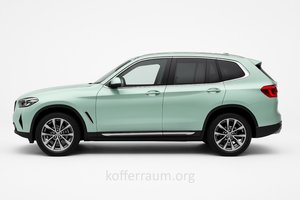
Trunk comparison: BMW X3 vs Hyundai Elantra GT Wagon
Key Differences
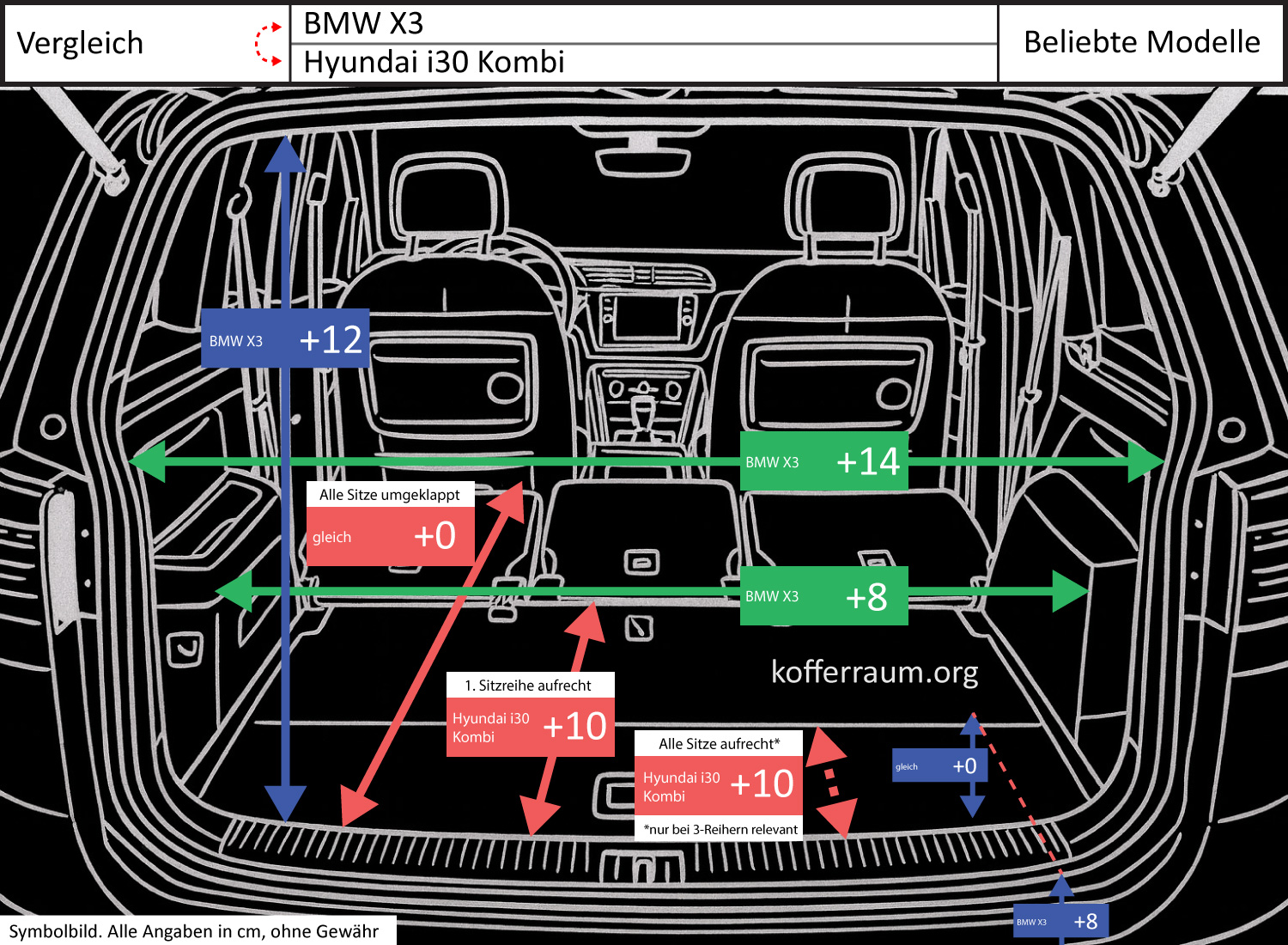
With the rear seats folded down, the loading lengths of both models are the same.
With the rear seat upright, however, the trunk of the Hyundai i30 Wagon is 3.9 in (11%) longer than that of the BMW X3. The BMW, on the other hand, offers a 4.7 in (18%) higher trunk opening as well as a 5.5 in (14%) wider trunk opening.
The loading edge of the BMW is 3.1 in (13%) higher above the ground than that of the Hyundai. Depth (loading edge to floor) and loading length with folded seats are the same; the narrowest width is slightly larger on the BMW (+3.1 in / 8%), but falls under 10% and is therefore less significant.
Impact on Usability
The longer loading length of the Hyundai with the rear seat upright makes it more practical for long items when the rear seats are occupied (e.g., skis, slats, plywood). The lower loading edge of the Hyundai significantly eases lifting heavy items into the vehicle.
The BMW scores when loading bulky or tall items: the higher trunk opening offers more vertical clearance, and the wider opening facilitates loading and unloading wider items. However, the higher loading edge requires more effort when lifting heavier loads inside.
In short: For frequent transport of long items with occupied rear seats and for easier handling of heavy loads, the Hyundai i30 Wagon is more advantageous. For transporting wide or tall goods and when width/opening is decisive, the BMW X3 is more suitable.