Trunk comparison: BMW X3 vs Nissan Rogue Sport
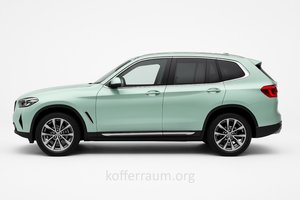
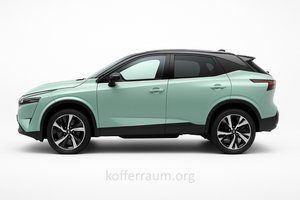
Key Differences
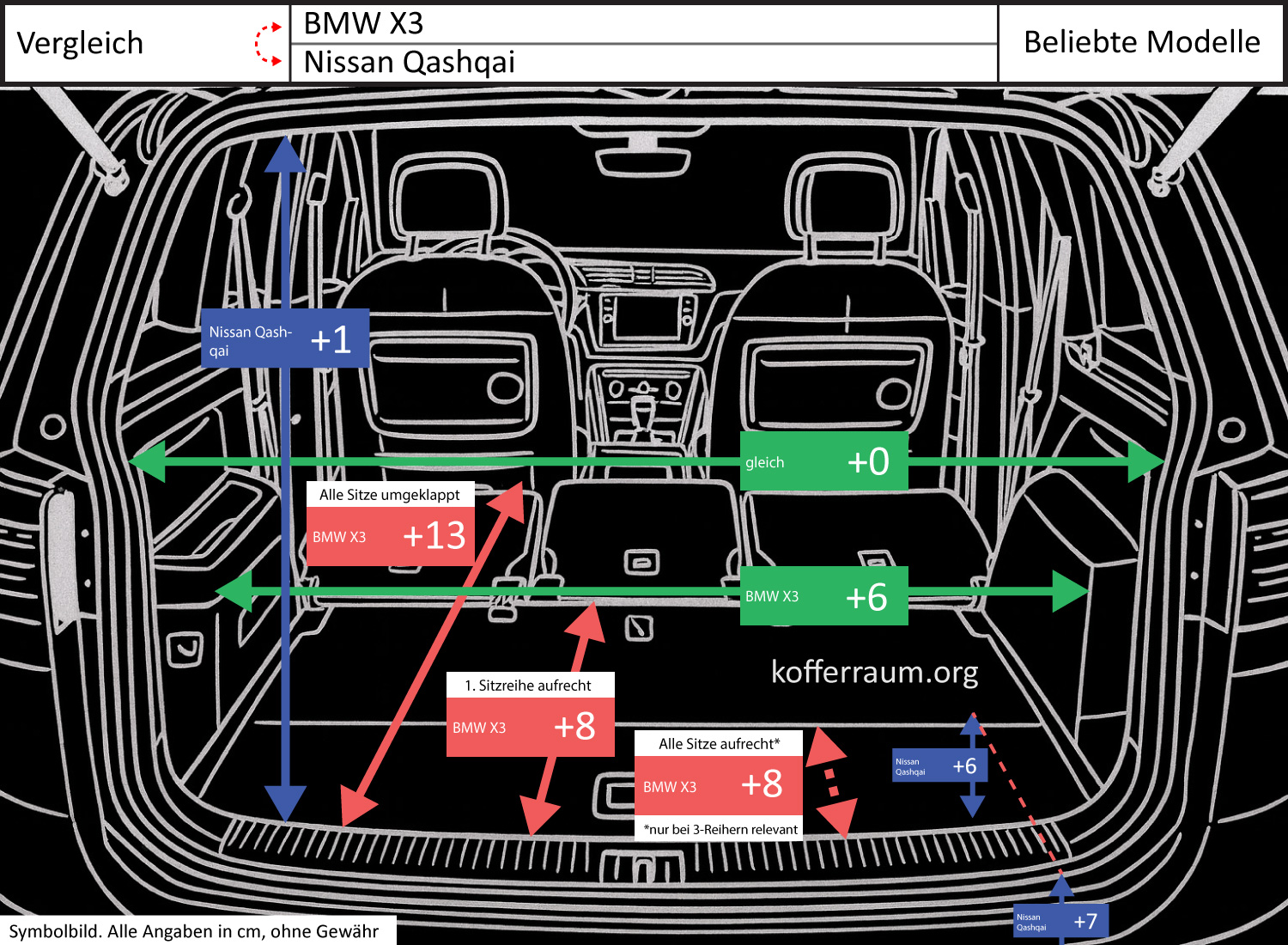
Clear focuses emerge in cargo volume and dimensions: The BMW X3 offers longer cargo areas, both with the seats folded down (+5.1 in / 8%) and with the first row upright (+3.1 in / 9%). The width at the narrowest point is +2.4 in (6%) greater in the X3, while the trunk opening width is the same in both models.
Notably, the trunk depth (measurement: loading edge → trunk floor) is +2.4 in (500%) deeper in the Nissan Qashqai. Additionally, the Qashqai's loading edge is +2.8 in (10%) higher above the ground, and the trunk opening is slightly higher (+0.4 in / 1%).
Impact on Usability
The deeper cargo well of the Qashqai means more vertical volume behind the loading edge: bulky, tall items can be better "recessed," and the cargo sits lower in the vehicle.
This increases total capacity for irregularly shaped or tall loads. At the same time, the +2.8 in higher loading edge makes lifting heavy items from the ground into the trunk more strenuous.
The BMW X3 scores with its longer cargo area and slightly wider narrow width: elongated items (e.g., slats, skis, long boxes) are easier to transport, and narrow shapes fit better through the tightest spot. The identical opening width means bulky widths make little difference.
In summary: Those who prefer more recessed vertical volume and a deeper cargo well (e.g., tall boxes, loads that should disappear into the floor) will find advantages in the Qashqai.
Those who want to accommodate longer or somewhat wider cargo more easily are better served by the BMW X3 — additionally, loading heavy objects is ergonomically easier there due to the lower loading edge.