
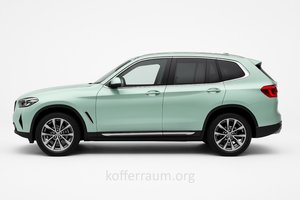
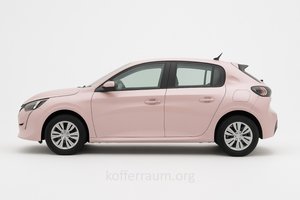
Trunk comparison: BMW X3 vs Peugeot 208
Key Differences and Impact on Usability
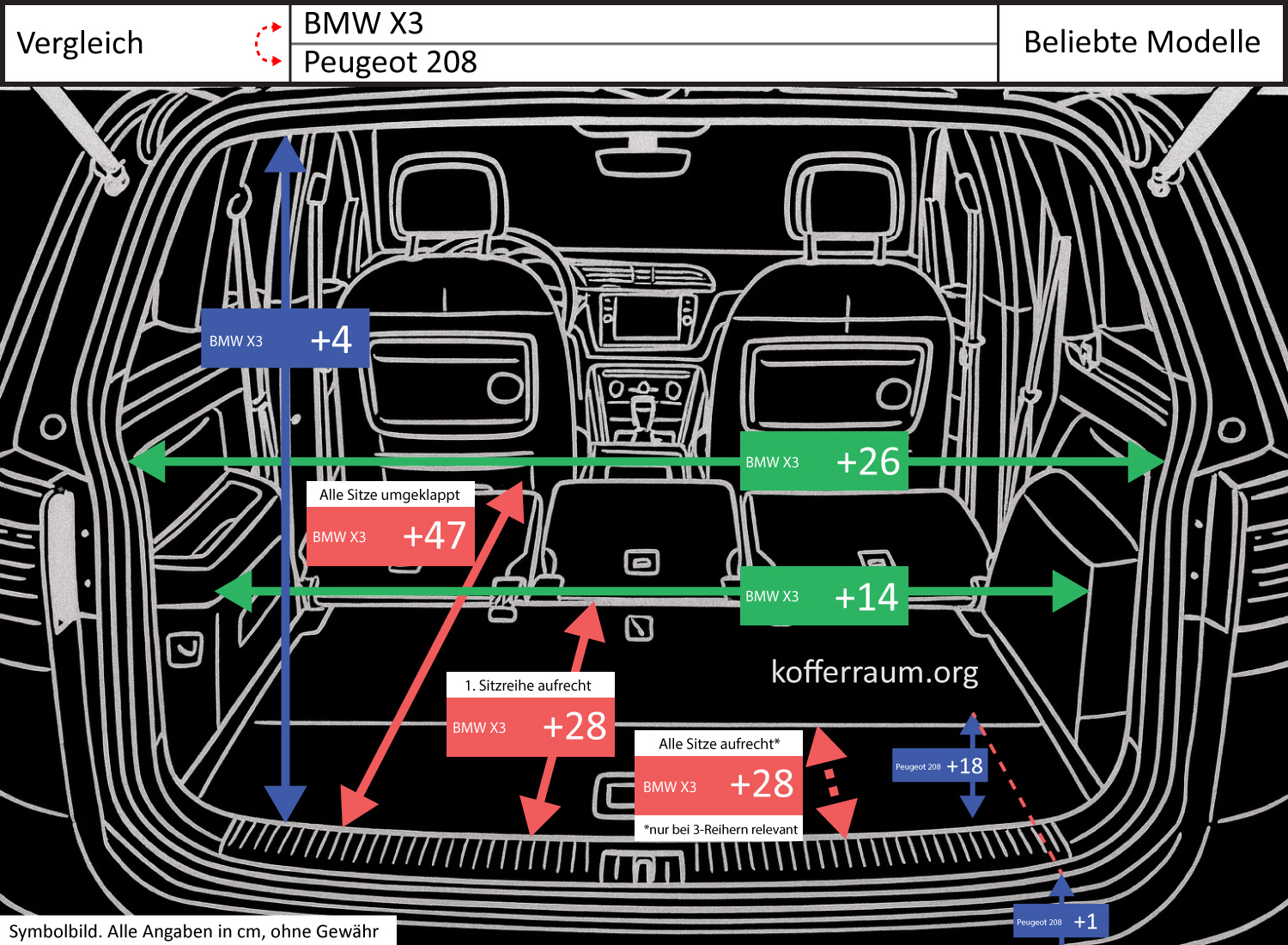
The BMW X3 offers significantly more cargo length: with the seats folded down, the trunk is 18.5 in (36%) longer, and with the first row of seats upright, it is 11 in (42%) longer than in the Peugeot 208. This makes the X3 noticeably more practical for long items (e.g., slats, skis, furniture parts) and generally for loading longer or stacked luggage.
In terms of width, the X3 scores: at the narrowest point, it is 5.5 in (15%) wider, and the opening is 10.2 in (30%) larger than the 208. This allows wider or bulky items to be moved more easily through the opening and positioned in the trunk — less maneuvering and possibly less disassembly before transport.
The Peugeot 208, on the other hand, has a significantly greater trunk depth (distance from loading edge to trunk floor): +7.1 in (1700%) compared to the X3. This creates a deeper recess in the trunk, offering more volume in the lower area and embedding items deeper.
This can be advantageous for unpadded, stackable cargo. A downside is that a deeper loading surface makes lifting heavy items in more difficult and rolling suitcases in or out less comfortable.
Smaller differences (e.g., opening height +5% in favor of the X3, loading edge height +1% in favor of the 208) are comparatively insignificant for everyday use.
Practical conclusion: Those who regularly transport long or wide items or need a lot of flexibility when loading benefit from the BMW X3. Those who prefer more compact, lower-placed cargo and can live with a deeper loading surface will find an acceptable solution in the Peugeot 208 — but for heavy or unwieldy loads, the X3 is the more practical choice.