
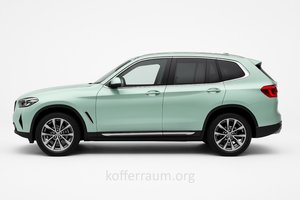
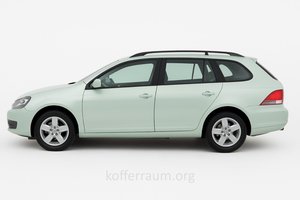
Trunk comparison: BMW X3 vs VW Golf Wagon (Mk5)
Key Differences
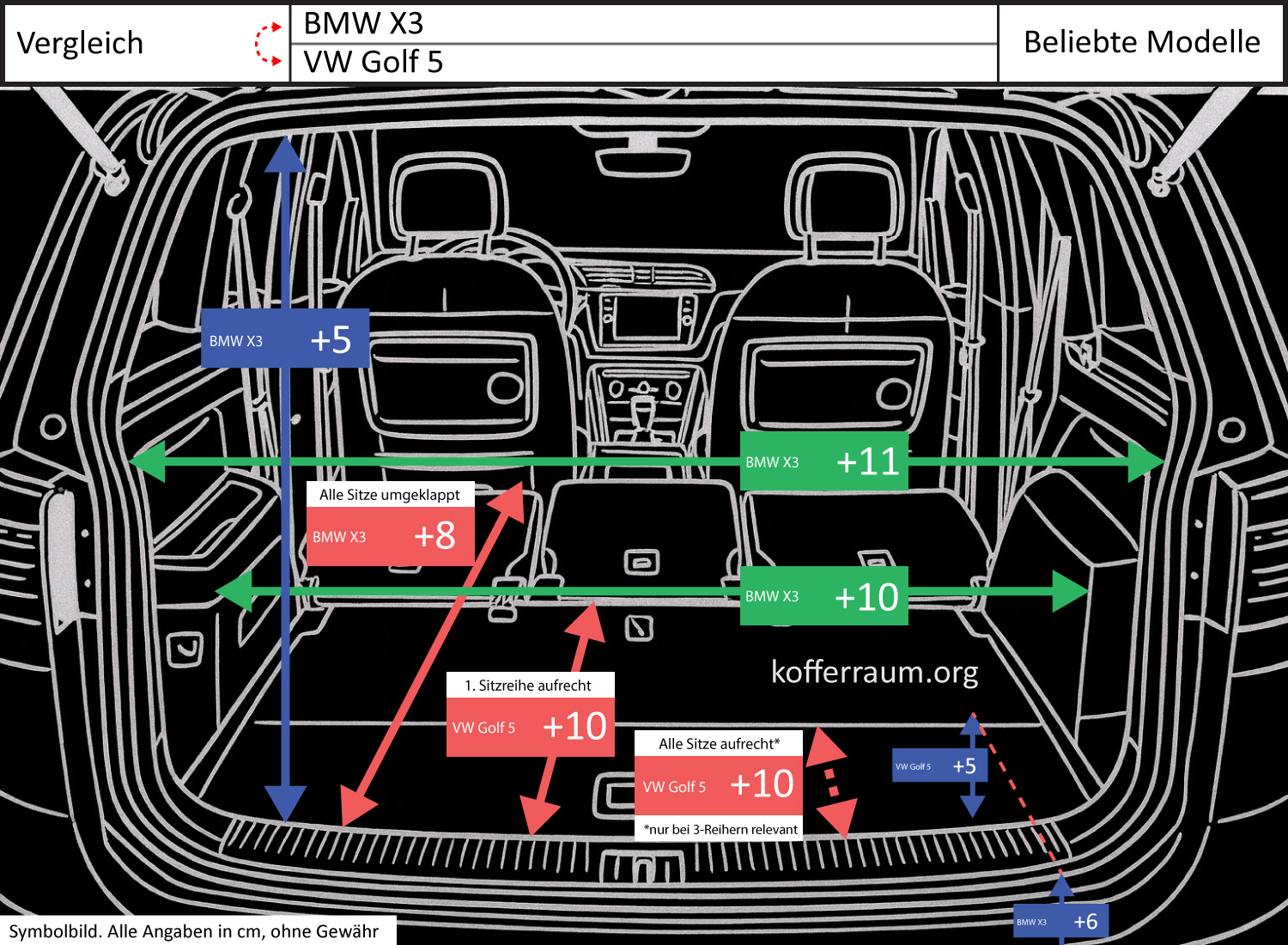
Three differences stand out with more than 10%: The VW Golf 5 has a +3.9 in (11%) longer trunk with the first row of seats upright than the BMW X3. The trunk depth (loading edge to trunk floor) is +2 in (400%) greater in the Golf than in the X3. And the width of the trunk opening of the BMW X3 is +4.3 in (11%) wider than the Golf.
What are the practical implications?
The 11% longer usable depth in the Golf with the seats upright makes it more practical for everyday use with bulky, longer items that need to be stored without folding down the seats (e.g., skis, slats, longer boxes).
The significantly greater depth between the loading edge and trunk floor in the Golf also means more space "downwards" in the cargo area — this helps to fully lay down items instead of balancing them on the loading surface and allows for more stable loading of flat or irregularly shaped objects.
The 11% wider trunk opening of the BMW X3 makes loading and unloading wider items easier (e.g., furniture parts, large boxes, wide strollers). Together with the overall wider narrowest point of the trunk (just under 10% difference), the X3 is better suited to transport wide loads without stacking or side clamping.
Other practical effects: The X3 offers a 2 in higher opening height, which facilitates storing tall items, and has a slightly longer folded cargo volume (+3.1 in, 5%) than the Golf.
However, the loading edge of the X3 sits about 2.4 in higher above the road, making lifting heavy items somewhat more strenuous; the Golf has a lower loading point there.
Conclusion: For longer loads in everyday use and a deeper loading floor, the VW Golf 5 is advantageous. For wider loads and easier sliding of wide parts, the BMW X3 is better suited. The choice depends on whether you more often transport longer/"deeper" items (Golf) or wider items (X3).