Trunk comparison: BMW X4 vs Ford Focus Wagon

Key Differences and Impact on Usage
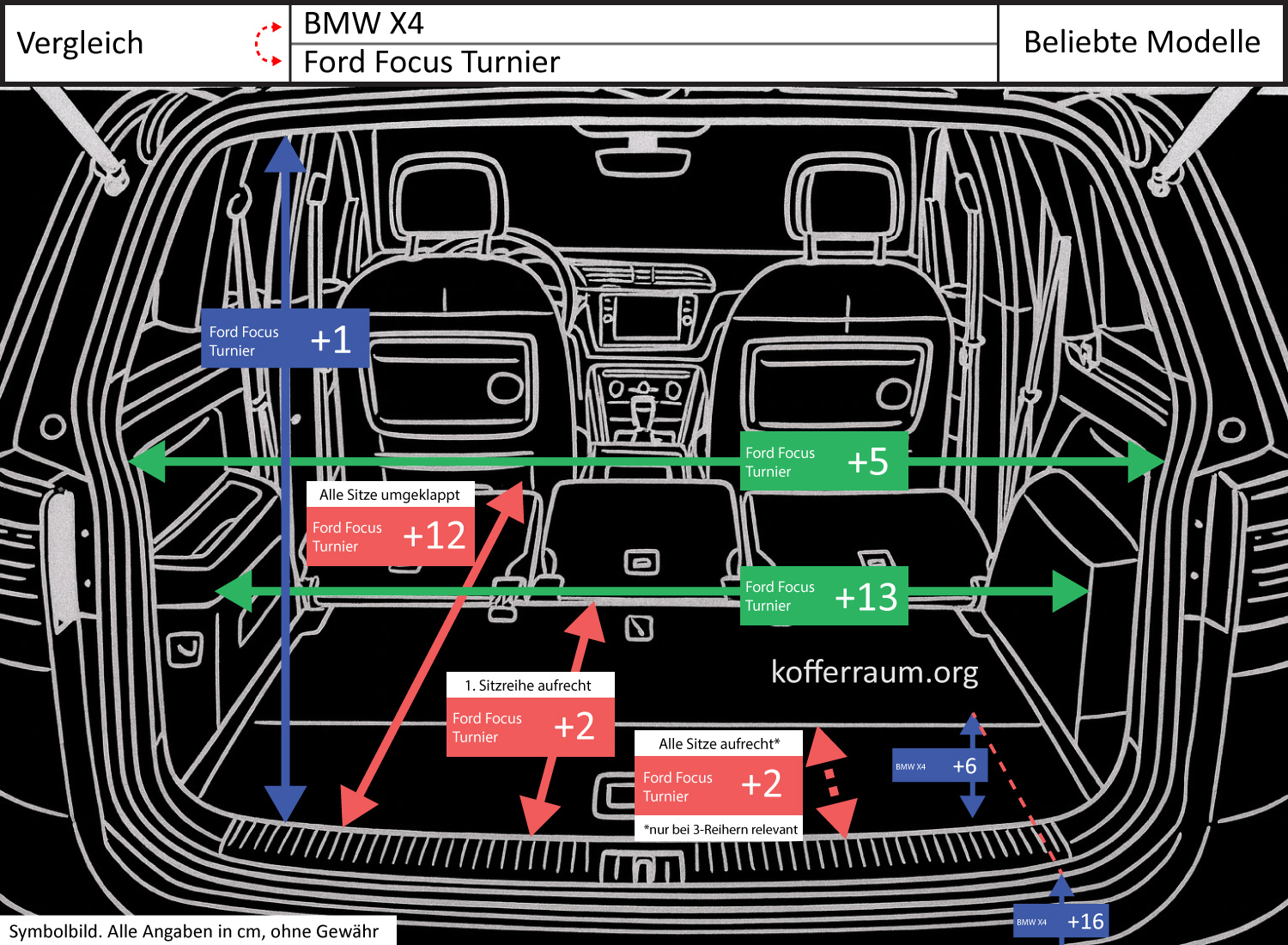
Overall, some differences between the BMW X4 and Ford Focus Wagon are minor (e.g., +4.7 in or +0.8 in cargo length or +2 in opening width) and have little impact in everyday use.
However, there are significant differences in three areas: the depth of the trunk (loading edge to trunk floor), the height of the loading edge above the road, and the width at the narrowest point of the trunk.
The BMW X4 has a significantly greater interior depth behind the loading edge (+2.4 in, about +300%). This means: there is more interior space directly behind the loading edge, allowing tall or bulky items to fit better in depth.
At the same time, the loading edge of the BMW is significantly higher above the road (+6.3 in, about +25%), making it more strenuous to lift heavy or bulky loads — more effort is required for loading and unloading boxes or heavy luggage.
The Ford Focus Wagon offers more space at the narrowest point of the trunk (+5.1 in, about +13%). Practically, this means wide or angular items (e.g., furniture boards, strollers, large suitcases) can be more easily maneuvered sideways through the cargo area.
Additionally, the loading edge of the Focus is lower, which makes lifting and handling heavy loads easier.
The slightly longer cargo floor with folded seats (+4.7 in, ~7%) and the slightly larger opening height are also positive but have less impact in daily use compared to the notable effects of the differences mentioned above.
Conclusion: For frequent transport of wide or bulky items and easier lifting, the Ford Focus Wagon is more practical.
Those who prefer more usable interior depth directly behind the loading edge and thus deeper storage will find advantages with the BMW X4 — but must accept a significantly higher loading edge and thus more difficult loading.