
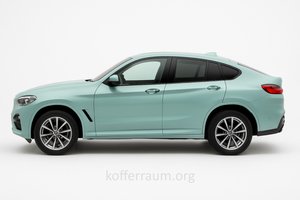
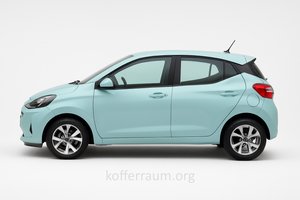
Trunk comparison: BMW X4 vs Hyundai i10
Key Differences
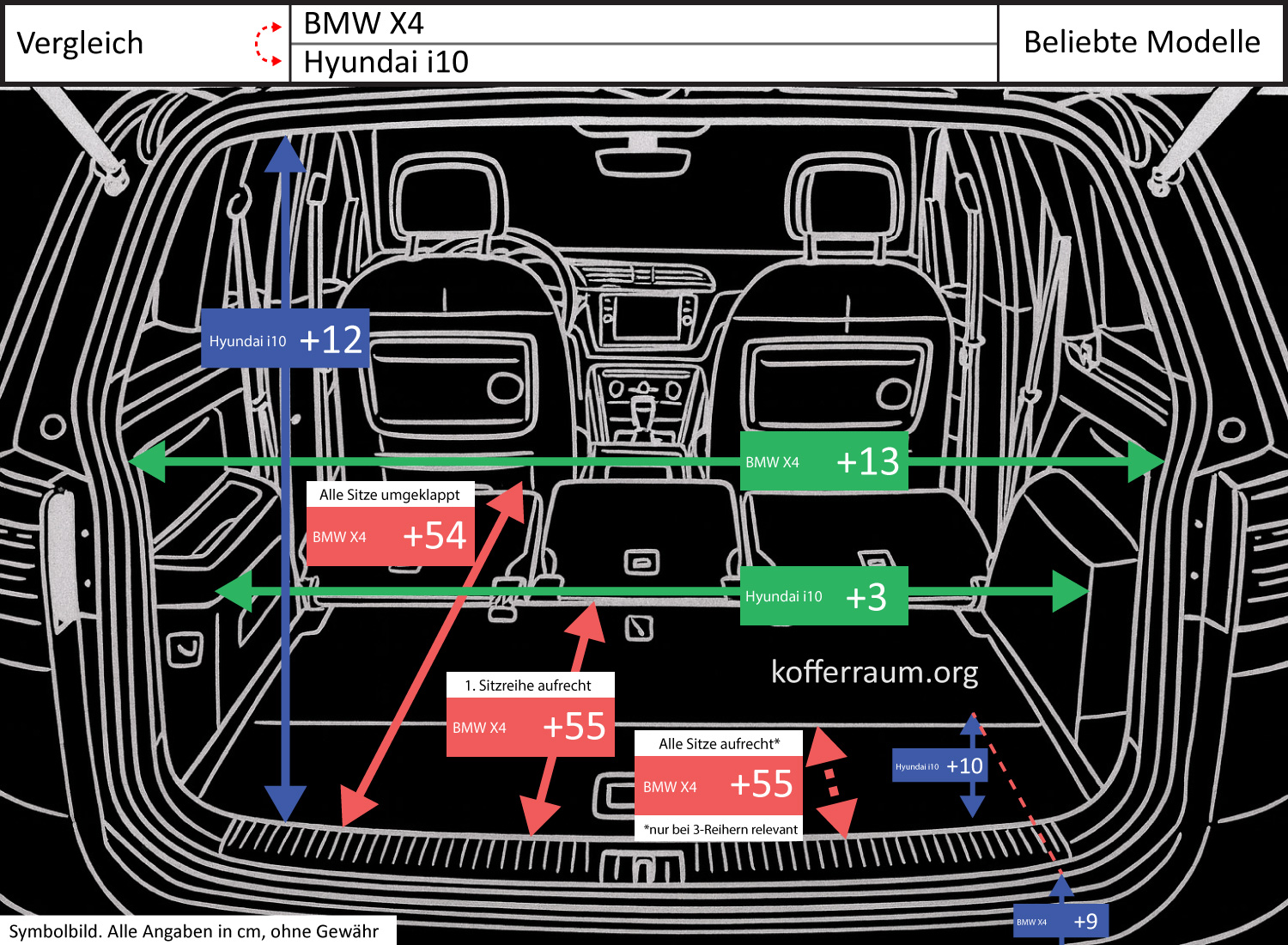
The BMW X4 offers significantly more cargo space: with the seats folded down, the trunk of the X4 is 21.3 in (46%) longer, and with the first row of seats upright, even 21.7 in (117%) longer than the Hyundai i10. At the same time, the width of the trunk opening on the X4 is 5.1 in (14%) larger than on the i10.
The Hyundai i10, on the other hand, scores with a higher trunk opening and greater interior depth: the opening is 4.7 in (17%) higher than on the X4, and the depth (loading edge to trunk floor) is 3.9 in (125%) greater.
Additionally, the loading edge of the BMW X4 sits 3.5 in (13%) higher above the road than on the i10.
The narrowest trunk width differs only slightly (+1.2 in / 3% in favor of the i10) and is therefore negligible.
Impact on Usability
Due to the significantly larger cargo area and wider opening, the BMW X4 clearly has the advantage when it comes to transporting long or many pieces of luggage (e.g., furniture, long sports equipment, vacation gear for several people).
The greater length with folded seats makes the X4 more flexible for bulky or elongated loads.
The Hyundai i10 is more practical for tall or bulky cargo that primarily requires height: the higher trunk opening makes it easier to slide in or pass through tall items, and the greater interior depth offers more space behind the loading edge.
Additionally, the loading edge on the i10 is lower, which makes lifting heavy items from the ground easier.
In short: BMW X4 = more volume and length, better for large/extensive transports; Hyundai i10 = more favorable geometry for tall items and easier lifting due to lower loading edge. The very small width difference at the narrowest point is practically irrelevant.