
Trunk comparison: BMW X4 vs Hyundai Kona


Differences in the Trunk
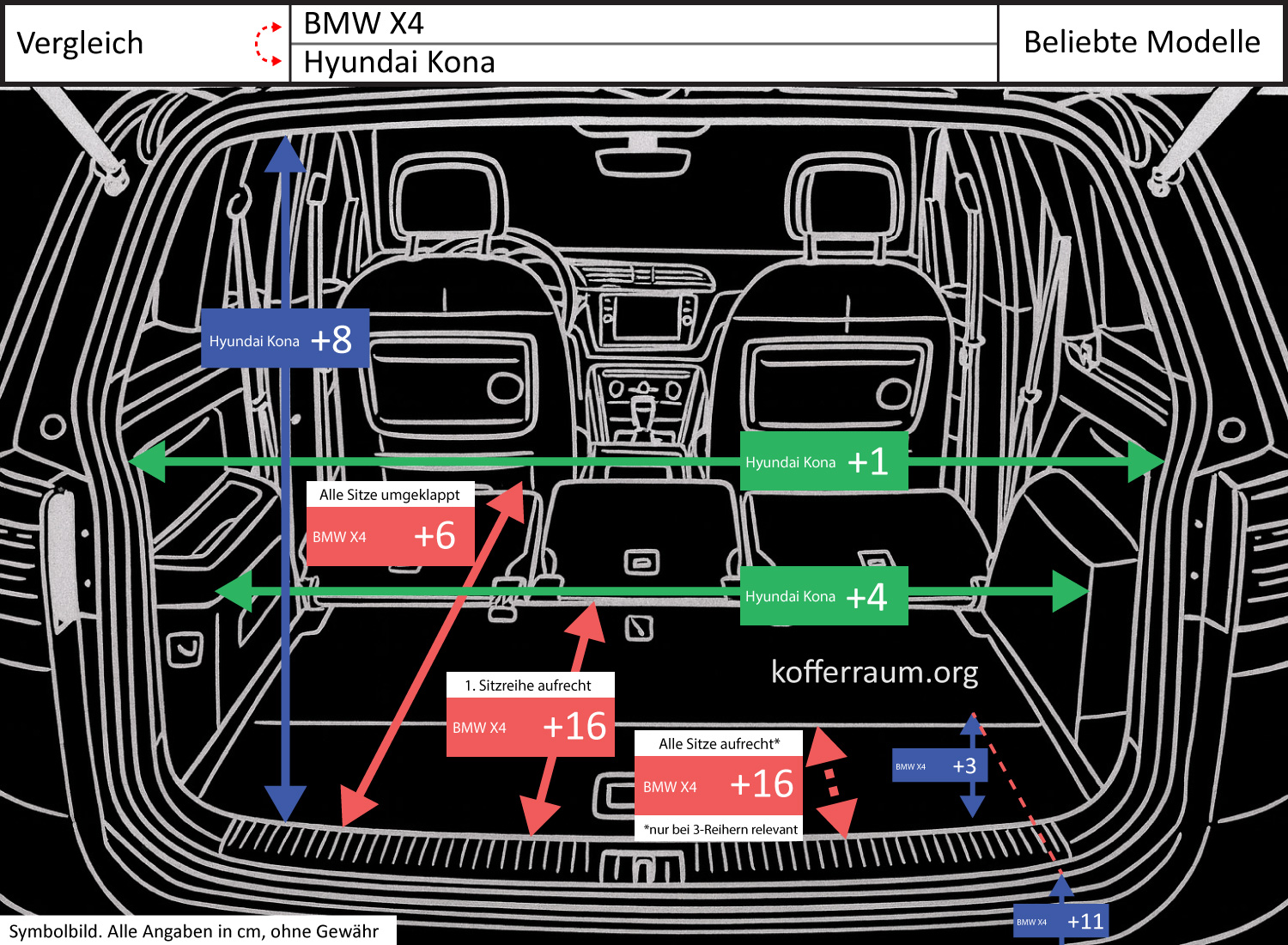
The BMW X4 has a significantly longer trunk with the first row of seats upright: it offers +6.3 in (19%) more cargo length than the Hyundai Kona. With the seats folded down, the X4's advantage shrinks to +2.4 in (4%).
The usable depth from the loading edge to the trunk floor is considerably greater in the BMW: +1.2 in, which corresponds to 60% — this means more usable interior height or storage space along the depth of the cargo area.
In contrast, the Hyundai Kona has a higher trunk opening height: the entry height is +3.1 in (11%) greater, making it easier to fit taller or bulky items.
The loading edge of the BMW X4 sits +4.3 in (16%) higher above the road, which makes lifting luggage into the trunk more strenuous but also represents a higher loading edge above road level.
In width, the Kona is slightly ahead: the narrowest point in the trunk is +1.6 in (4%) wider, and the opening width is +0.4 in (1%) larger — both minor advantages for the Kona.
What Are the Practical Implications of These Differences?
The BMW X4 is better suited when longer cargo volume with the rear bench upright and greater interior depth are important: the significantly longer loading floor with the first row upright and the >60% greater depth allow longer or deeper luggage to be better accommodated and stacked.
However, the 4.3 in higher loading edge above the road means lifting heavy suitcases or items into the X4 is more strenuous.
The Hyundai Kona, on the other hand, is more practical for bulky, tall items and frequent loading and unloading: the 3.1 in greater opening height and lower loading edge make it easier to load tall or bulky parts and reduce physical strain when lifting.
Small width advantages in the Kona are noticeable in everyday use when wide luggage must pass through the narrowest point or opening but remain marginal.
In summary: BMW X4 = more usable length and depth (better for volume and stacking), Hyundai Kona = better access height and slightly more width (easier loading of bulky/deep items and less lifting effort).