
Trunk comparison: BMW X4 vs Volvo XC40


Key Differences (>10%)
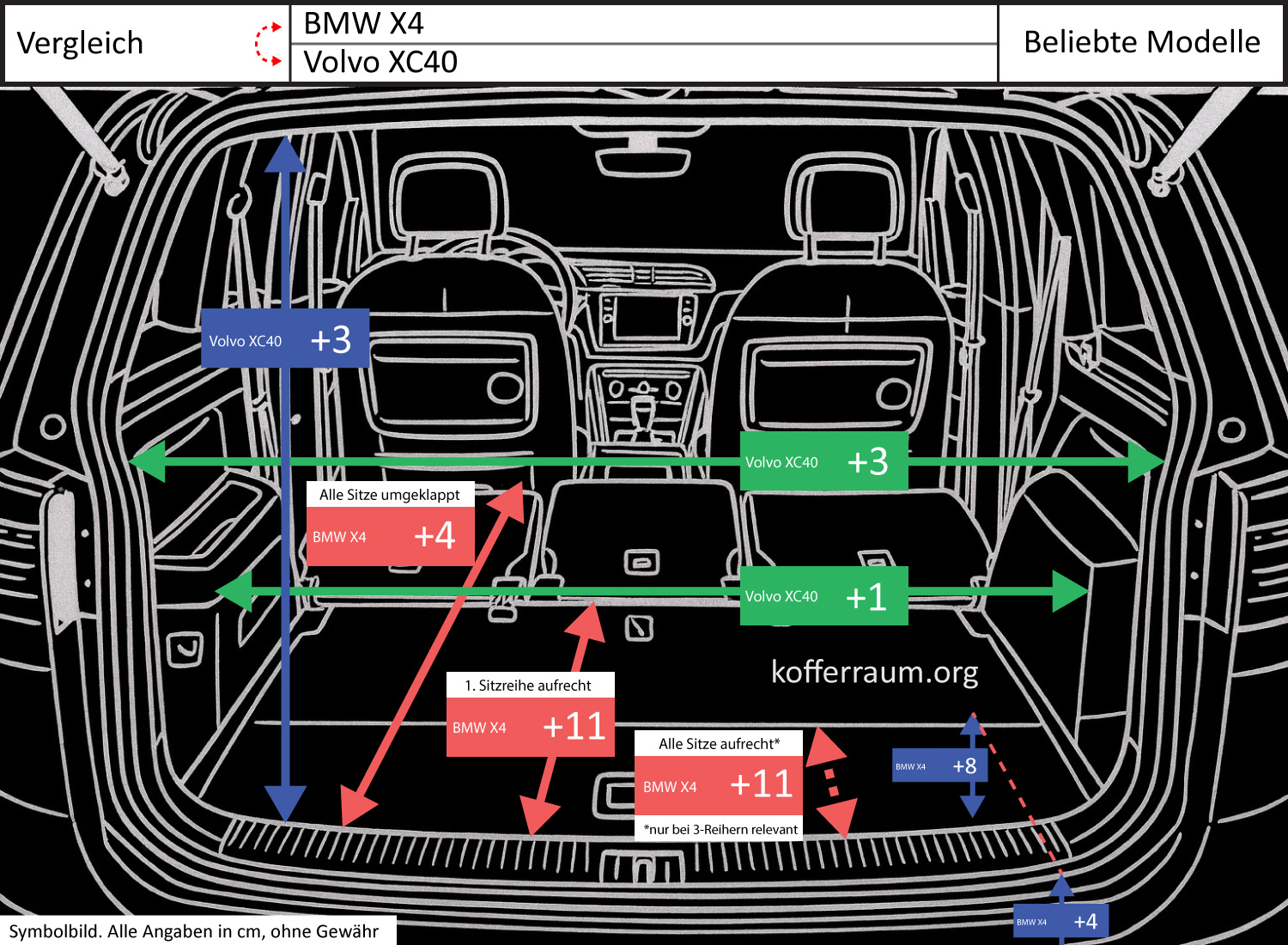
BMW X4: with the rear seat upright, the usable trunk space is 4.3 in (≈12%) longer than in the Volvo XC40.
BMW X4: the depth of the trunk (measured from loading edge → trunk floor) is given as 3.1 in, which appears proportionally very large (≈700%) compared to the XC40.
What practical effects do these differences have?
More trunk length with rear seat upright (BMW X4, +12%) – advantage in everyday use: - Longer items (e.g., skis, slats, longer boxes) can be transported more horizontally with the rear seat upright. - Practical when passengers regularly sit in the back seats and longer cargo still needs to be carried. - For pure volume comparisons (seats folded down), the advantage is smaller, as only a 2% difference is indicated.
Significantly larger trunk depth measurement (BMW X4, +3.1 in / ≈700%) – practical consequences: - More vertical interior space and a deeper loading floor allow higher stacking and more usable volume at floor level. - Items lie deeper in the trunk, which reduces shifting and enhances the impression of more storage space. - At the same time, loading and unloading heavy items can be more strenuous because they must first be lifted over the loading edge and then placed further down.
This effect is intensified by the slightly higher loading edge of the BMW (+1.6 in / 5%) compared to the Volvo.
Conclusion: - If you often need to transport longer items without folding down the rear seats, the BMW X4 offers a noticeable advantage. - If you frequently work with high stacking or luggage stored deep in the trunk, the BMW also offers more space but can be less practical when lifting heavy loads. - Smaller advantages of the Volvo (such as a slightly higher trunk opening and marginally greater width at narrow points) are more relevant for bulky, wide cargo or easy pass-through loading but are less decisive compared to the differences mentioned above.