
Trunk comparison: BMW X4 vs VW Tiguan
Key Statements
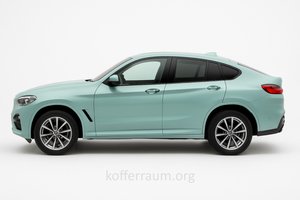
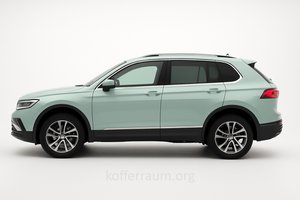
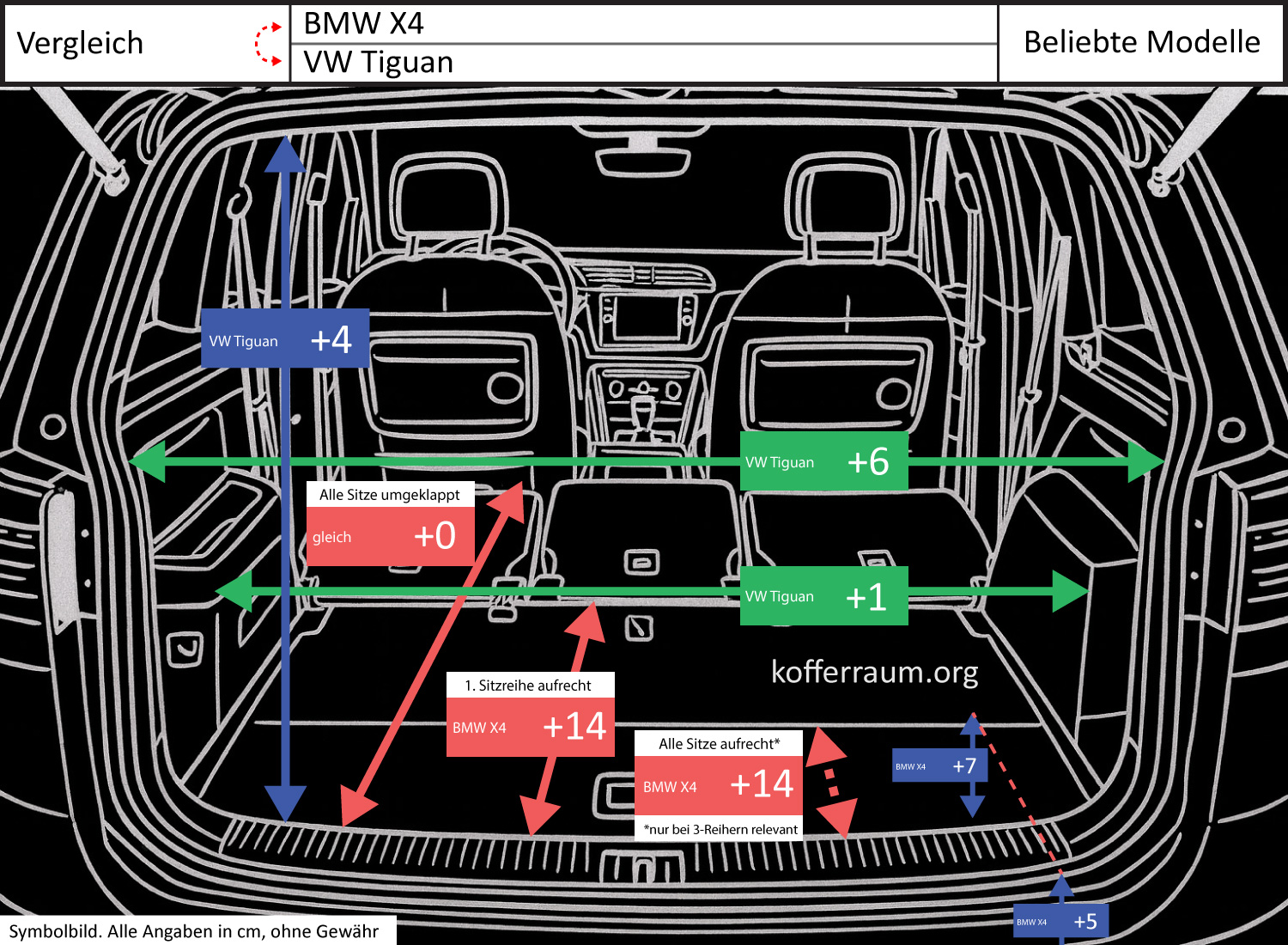
With the seats folded down, the usable lengths of both models are the same. However, with the first row of seats upright, the BMW X4 has a trunk that is 5.5 in (16%) longer than the VW Tiguan. Additionally, the depth of the BMW X4 (measured from the loading edge to the trunk floor) is 2.8 in (700%) greater.
Smaller differences: the Tiguan's trunk opening is 1.6 in (6%) higher, the BMW's loading edge is 2 in (7%) higher above the ground, the narrowest trunk width is 0.4 in (1%) larger in the Tiguan, and the opening width is 2.4 in (6%) larger in the Tiguan.
Impact on Usability
The significantly longer loading surface of the BMW X4 with upright rear seats (16%) makes it more practical for long items to be transported without folding down the rear seat — such as skis, long boxes, or slats.
The much greater depth of the BMW (700%) creates more usable interior height/volume behind the loading edge, which makes storing taller or better stackable cargo easier.
At the same time, two practical advantages are reduced with the BMW: the higher loading edge (+2 in) makes lifting heavy items in and out somewhat more strenuous, and the lower opening height/width compared to the Tiguan makes it more difficult to load very wide or tall parts.
Despite the shorter interior length, the Tiguan offers a slightly higher opening and a somewhat wider entry, which facilitates loading bulky or voluminous items (e.g., furniture parts).
In short: For longer items with the rear seat occupied and for better usable interior volume behind the loading edge, the BMW X4 has the advantage. For easier handling when lifting and loading very tall or wide cargo, the VW Tiguan offers slight advantages.