
Trunk comparison: BMW X5 vs Hyundai i10

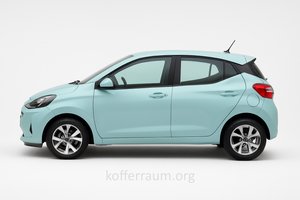
Main Differences
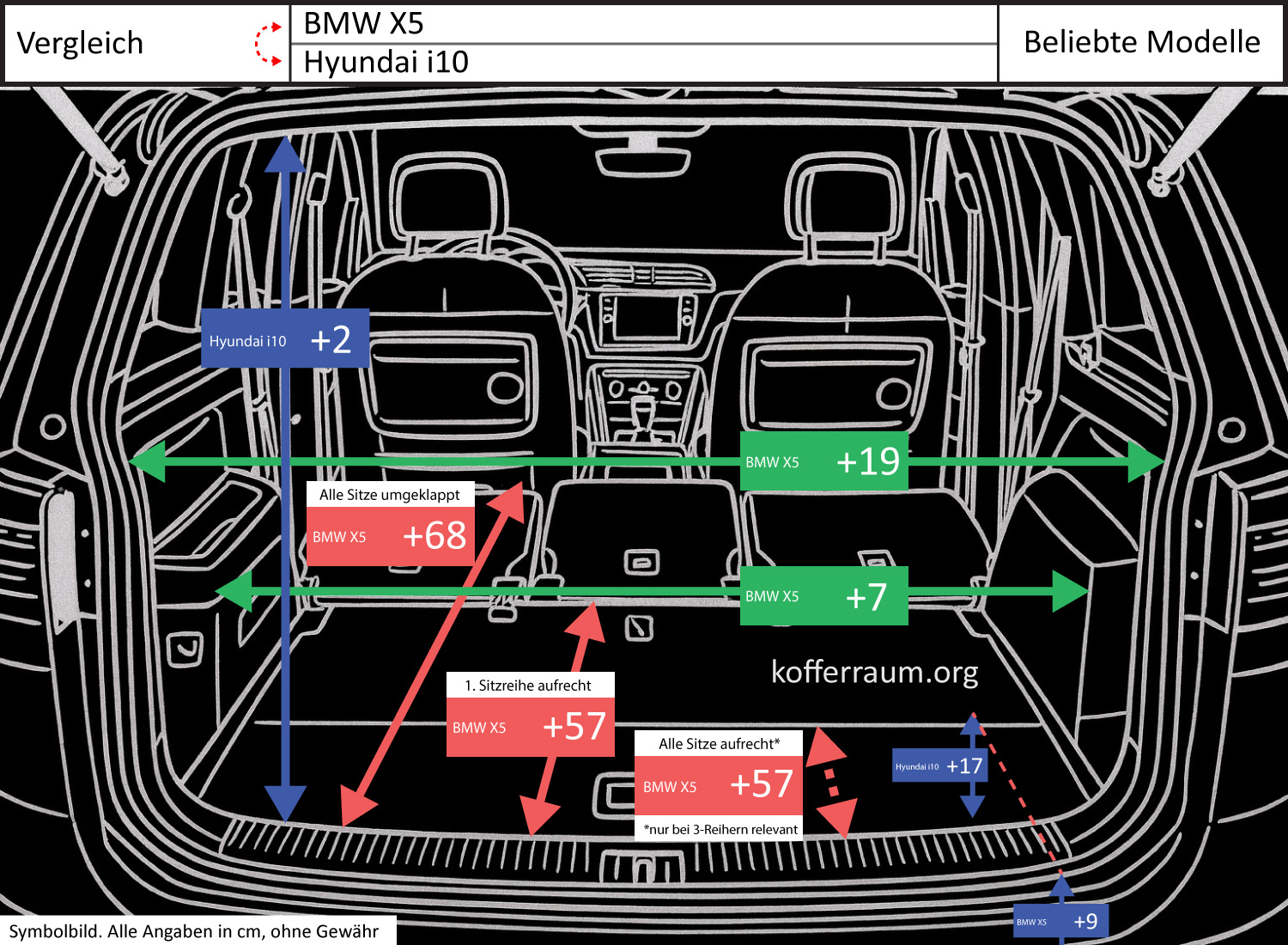
In terms of pure cargo dimensions, the length clearly favors the BMW X5: With the seats folded down, the X5 offers about +26.8 in (58%) more cargo length than the i10, and with the first row of seats upright, it's even +22.4 in (121%). The width of the trunk opening is significantly larger in the X5: +7.5 in (21%).
However, the loading edge of the X5 sits higher above the road (+3.5 in / 13%), while the i10 has a much greater depth between the loading edge and the trunk floor: +6.7 in (1700%).
Smaller differences such as the width at the narrowest point (+2.8 in / 7%) or the opening height (+0.8 in / 3%) are under 10% and are not highlighted here.
Impact on Usability
For transporting long or wide items, the BMW X5 is clearly advantageous: The significantly greater cargo length and wider opening make it easier to load furniture, sports equipment, or long building materials and allow for considerably more volume overall.
Those who regularly transport bulky loads will face fewer limitations with the X5.
The Hyundai i10, on the other hand, scores in handling when loading and unloading heavy items: The lower loading edge makes lifting into the trunk easier.
The greater depth (6.7 in more) creates a deeper cargo area, which can favor the secure stowing of tall, upright items; however, the overall length and opening width remain so limited that the i10 offers significantly less volume and flexibility in practice compared to the X5.
Conclusion: For cargo volume, long or wide items, the BMW X5 is the better choice. For frequent lifting of heavy items or occasional short transports in the city, the Hyundai i10 can be more practical due to its lower loading edge and deeper cargo well but remains overall significantly smaller.