Trunk comparison: BMW X5 vs Jeep Compass

Key Differences
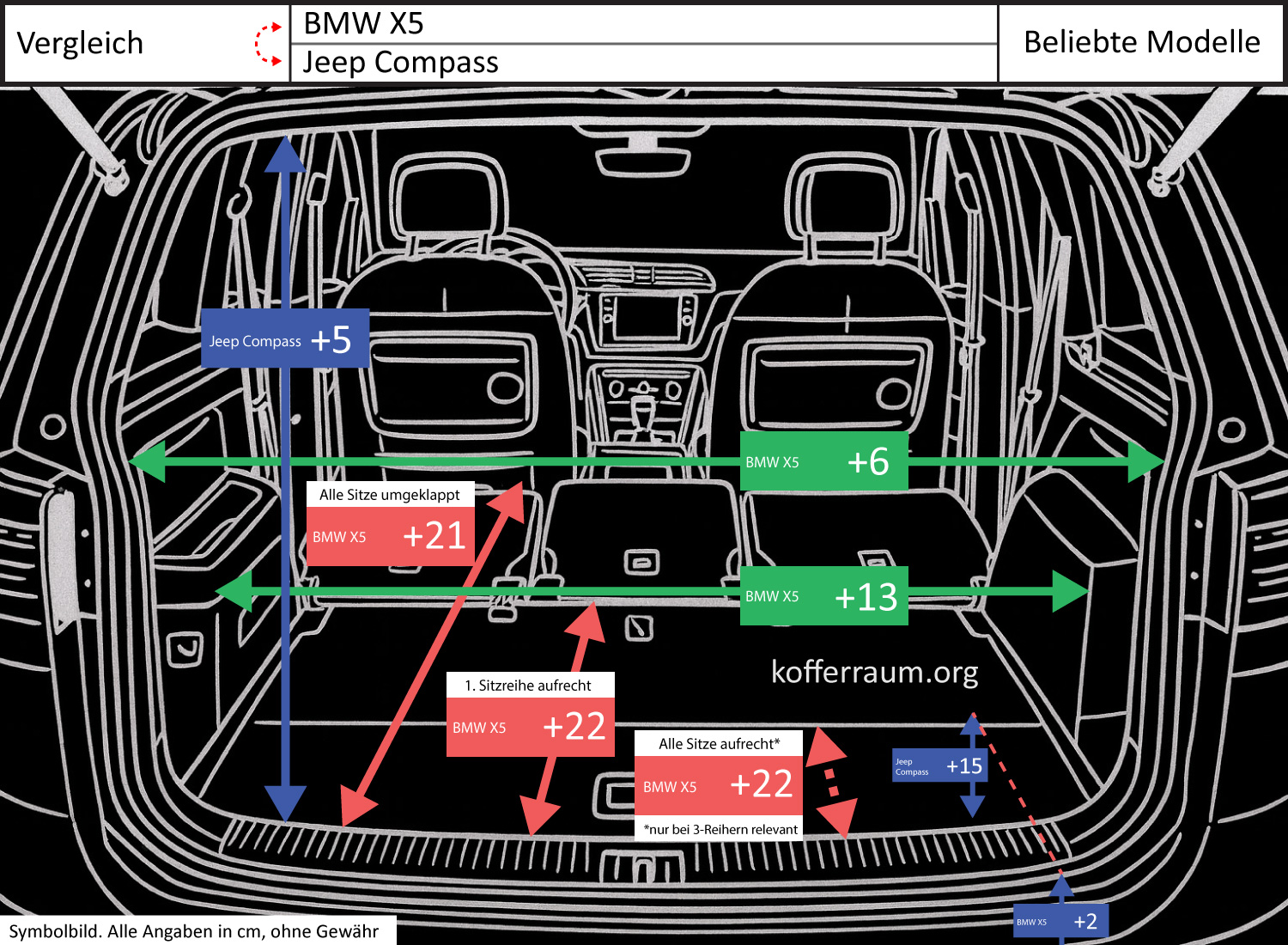
The BMW X5 offers a cargo space that is 8.3 in (13%) longer with the seats folded down compared to the Jeep Compass. With the first row of seats upright, the X5 is even 8.7 in (27%) longer.
The depth of the trunk (loading edge to trunk floor) of the Jeep Compass is 5.9 in (1500%) higher than that of the X5. Additionally, the narrowest interior width in the BMW X5 trunk is 5.1 in (13%) larger than in the Compass.
Smaller deviations below the 10% mark include: the height of the Jeep Compass trunk opening is +2 in (6%) higher, the loading edge of the BMW X5 is +0.8 in (3%) above the ground, and the width of the X5 trunk opening is +2.4 in (6%) larger.
Impact on Usability
More length and width in the X5 (21–8.7 in longer, 5.1 in wider at the narrowest point) practically means more usable cargo space for long and wide items like skis, furniture parts, or several large suitcases. This makes the X5 overall more flexible for families, longer transports, and loading bulky items.
The significantly greater depth in the Compass (loading edge → trunk floor) means the trunk floor sits lower relative to the loading edge. Advantage: bulky or tall cargo can be recessed further down and is better "supported" in the cargo area.
Disadvantage: heavier cargo must be lifted or lowered over a greater distance, loading and unloading can be more strenuous, and loading flat items over the loading edge is less convenient.
The slightly higher trunk opening of the Compass (+2 in) makes it somewhat easier to pass tall items through but is not a major advantage compared to the significantly larger interior dimension advantage of the X5. The slightly higher loading edge of the X5 (+0.8 in) is hardly relevant in practice.
Conclusion: The BMW X5 is the better choice when longer, wider, or larger quantities of cargo matter. The Jeep Compass offers a deeper cargo area that "recesses" items more, but loading can be less comfortable due to the greater height difference to the loading edge.