Trunk comparison: BMW X5 vs Nissan Rogue Sport

Key Differences and Impact on Usability
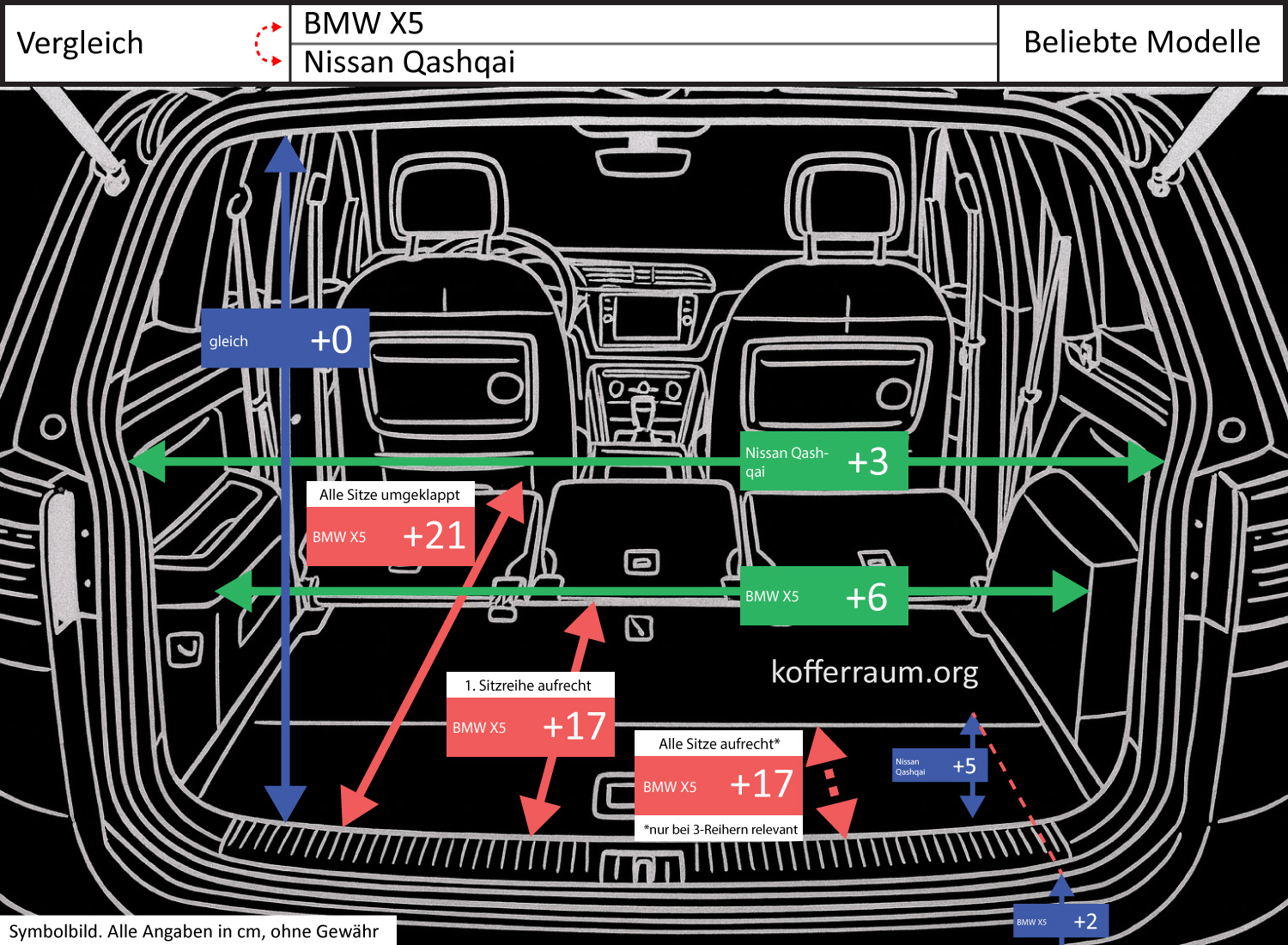
The BMW X5 offers significantly more length in cargo volume: with the seats folded down, the X5's trunk is 8.3 in (≈13%) longer and with the first row of seats upright, 6.7 in (≈20%) longer than the Nissan Qashqai.
This practically means that the X5 can transport longer items (e.g., slats, skis, furniture parts) more easily and without complex stowing — both with seats folded and upright.
The trunk depth (distance from loading edge to trunk floor) is 2 in (≈500%) greater in the Qashqai than in the X5. This indicates a deeper loading edge or a lower trunk floor in the Qashqai, which creates more usable depth behind the loading edge and can positively affect storing taller or stackable items.
At the same time, a deeper trunk floor can make lifting very heavy loads somewhat more demanding if the loading edge is high.
Other size differences are minor: The loading edge height of the X5 is only 0.8 in (≈3%) above that of the Qashqai — practically hardly noticeable, but slightly easier to load in favor of the Qashqai.
At the narrowest point, the X5's trunk is only 2.4 in (≈6%) wider, and the Qashqai's opening is 1.2 in (≈3%) wider; both have only a moderate practical effect on handling bulky items. The height of the trunk opening is the same in both models.
Conclusion on usability: For transporting long or bulky cargo, the BMW X5 is clearly advantageous.
Those who frequently transport bulky, long items or need more cargo space benefit from the X5. Those who value a lower loading floor (better stacking, somewhat easier loading of taller items) and a marginally lower loading edge height will find advantages in the Qashqai — especially for everyday use and frequent handling of suitcases or shopping bags.