
Trunk comparison: BMW X5 vs Skoda Elroq


Key Differences and Implications for Use
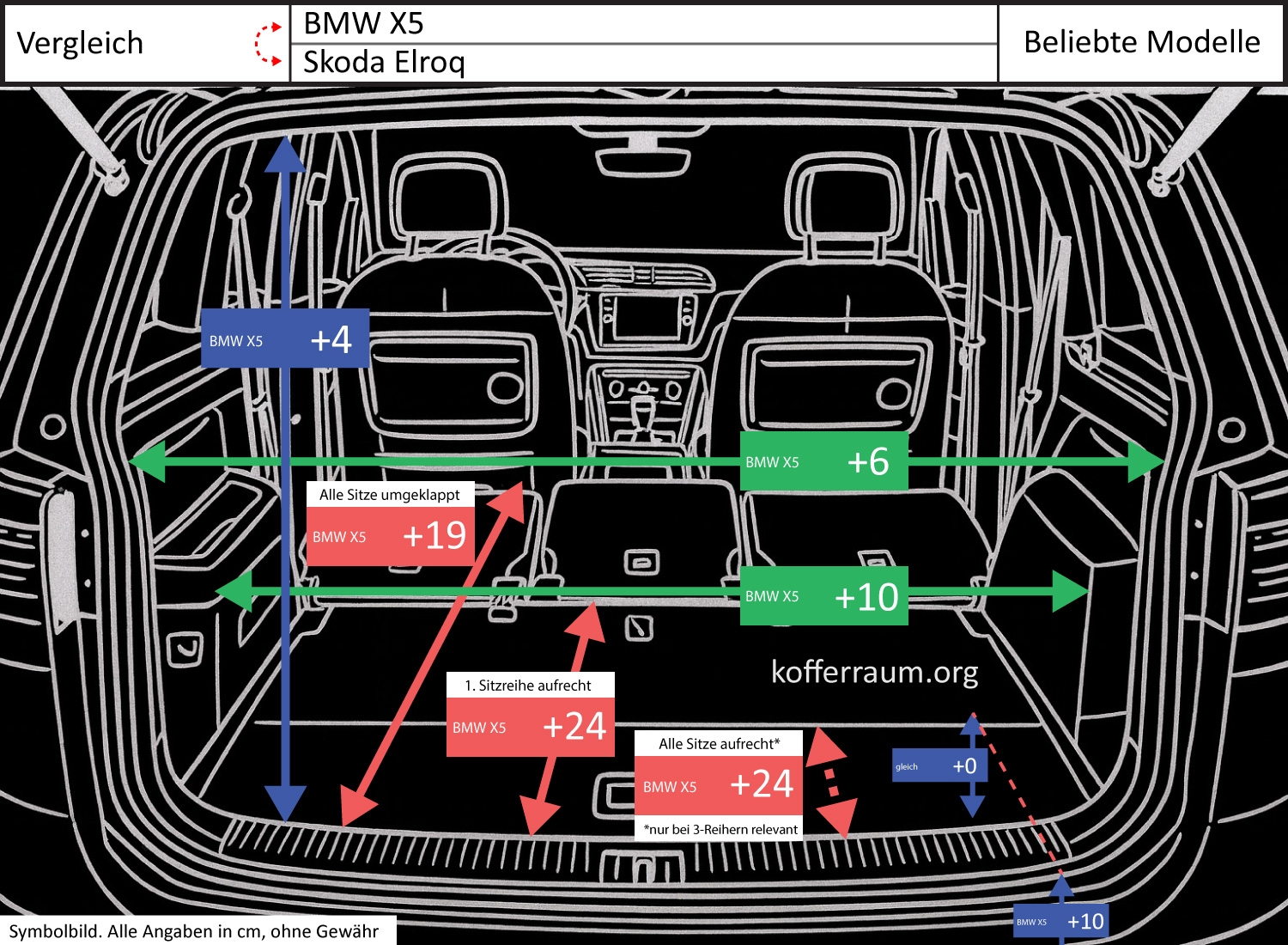
The most notable differences lie in the loading length and the height of the loading edge. Specifically, the BMW X5 has a loading area that is 7.5 in (11%) longer with the seats folded down and even 9.4 in (30%) longer with the first row of seats upright compared to the Škoda Elroq.
Additionally, the loading edge of the BMW X5 is 3.9 in (14%) higher above the ground.
In practice, this means: The greater loading length of the X5 (both folded and with the rear bench upright) makes it significantly better suited for long or elongated cargo – such as skis, furniture parts, or long boxes.
The +30% difference with the first row upright greatly improves everyday usability for luggage and bulky items because more length remains available without folding seats down.
However, the higher loading edge on the X5 increases the effort required to lift heavy items into the vehicle. Frequent loading and unloading of heavy loads, older users, or people with limited mobility therefore benefit more from the lower loading floor of the Elroq.
For very heavy or frequent transports, the higher loading edge of the X5 can partially offset the advantage of the larger loading area.
Other dimensions are less relevant: The trunk opening of the X5 is only slightly higher (+1.6 in, 5%), depth (loading edge to floor) is the same, and differences in width are around 6–10%, which is hardly decisive for most use cases.
In summary: If maximum usable loading length is the primary concern, the BMW X5 offers noticeable advantages. If easy, low-effort loading and unloading is more important, the Škoda Elroq often remains more practical in everyday use.