Trunk comparison: BMW X5 vs VW ID.4

Key Differences
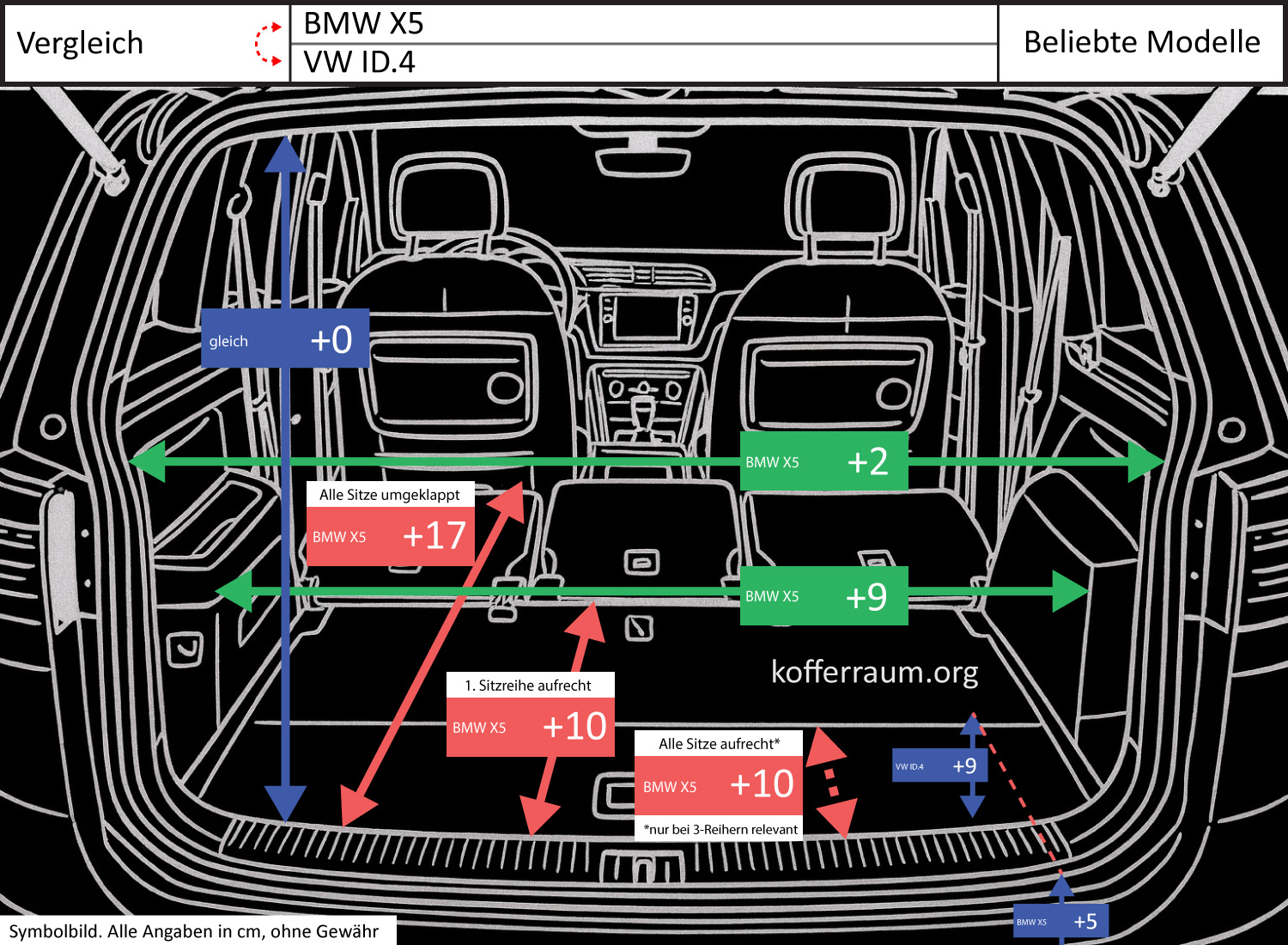
The BMW X5 offers a cargo space that is 3.9 in (+11%) longer with the first row of seats upright compared to the VW ID.4 (+11%). The depth of the trunk, measured from the loading edge to the trunk floor, is significantly greater in the VW ID.4: 3.5 in (+900%) deeper than in the X5 (+900%).
The trunk opening height is the same in both models; the width at the narrowest point is slightly larger in the X5 (+3.5 in / 9%) and the opening width is just wider (+0.8 in / 2%). The loading edge of the X5 is 2 in (7%) higher above the ground than that of the ID.4.
Impact on Usability
With an 11% longer cargo space with the first row upright, the X5 is better suited for transporting long items without folding down seats (e.g., slatted frames, skis, long boxes). The greater usable length makes it more practical for users who regularly need to carry longer loads with full seating.
The significantly deeper trunk floor of the ID.4, on the other hand, creates more vertical volume below the loading edge: bulky or tall items can be "sunk" further without reducing headroom inside the cabin.
This deeper recess increases total volume but can make loading heavier items more difficult because more lifting effort is required and items must be lifted higher when removing them.
Additional practical effects: The slightly larger narrow width and opening width of the X5 make it easier to fit wider boxes or luggage, even though the differences are under 10%.
The slightly higher loading edge of the X5 compared to the ID.4 (7%) means a marginally greater lift when loading from the curb into the trunk; combined with the shallower trunk floor of the X5, handling heavy loads can be easier or harder depending on the situation.
Overall: X5 = advantage in length and somewhat more usable width; ID.4 = advantage in deeper cargo volume but potentially less favorable handling when lifting heavy loads.