
Trunk comparison: BMW X5 vs VW Tiguan
Key Difference
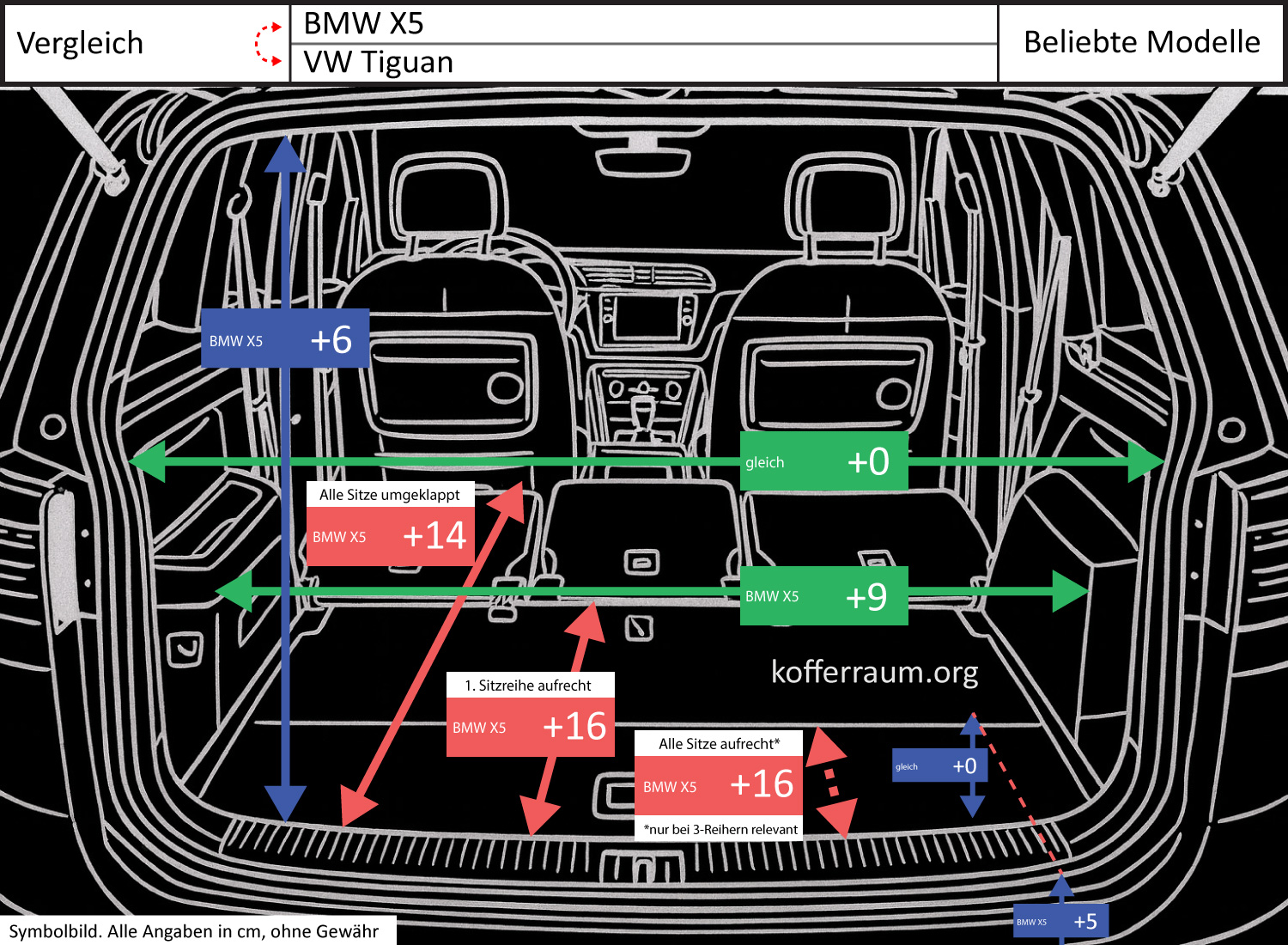
The key difference lies in the length of the trunk with the first row of seats upright: the BMW X5 offers +6.3 in (18%) more cargo space than the VW Tiguan. This deviation exceeds the 10% mark and is thus the most significant difference in the direct comparison.
Impact on Usability
Thanks to the longer cargo space with the first row upright, the BMW X5 is better suited for transporting longer items without folding down seats – such as skis, long furniture parts, or lumber.
This results in more flexibility in everyday use: you can combine longer loads with full passenger seating in the rear, whereas in the Tiguan the rear seat often needs to be folded down.
Other differences (below 10%) also affect practical use, though less significantly:
- Trunk length with seats fully folded down: X5 +5.5 in (8%) – noticeably more space, but no large advantage.
- Height of the trunk opening: X5 +2.4 in (8%) – slightly easier to load taller items.
- Width at the narrowest point: X5 +3.5 in (9%) – allows somewhat wider loads, but no distinctly different suitability.
- Loading edge height above the road: X5 +2 in (7%) – higher loading edge can make lifting heavy loads a bit more strenuous.
- Depth (loading edge to trunk floor) and width of the trunk opening: both equal – no difference in ground clearance and pass-through dimensions here.
Conclusion: If you often want to transport longer items without sacrificing rear seats, the BMW X5 is clearly advantageous.
For most everyday transports (suitcases, shopping, bicycles with folded seats), the differences are minor; the slightly higher loading edge of the X5 can make handling heavy loads a bit more difficult.