
Trunk comparison: Citroen C3 vs Hyundai IONIQ
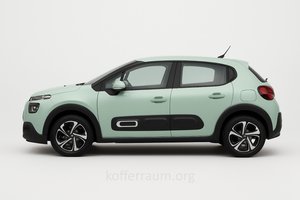
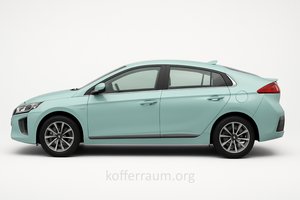
Key Differences
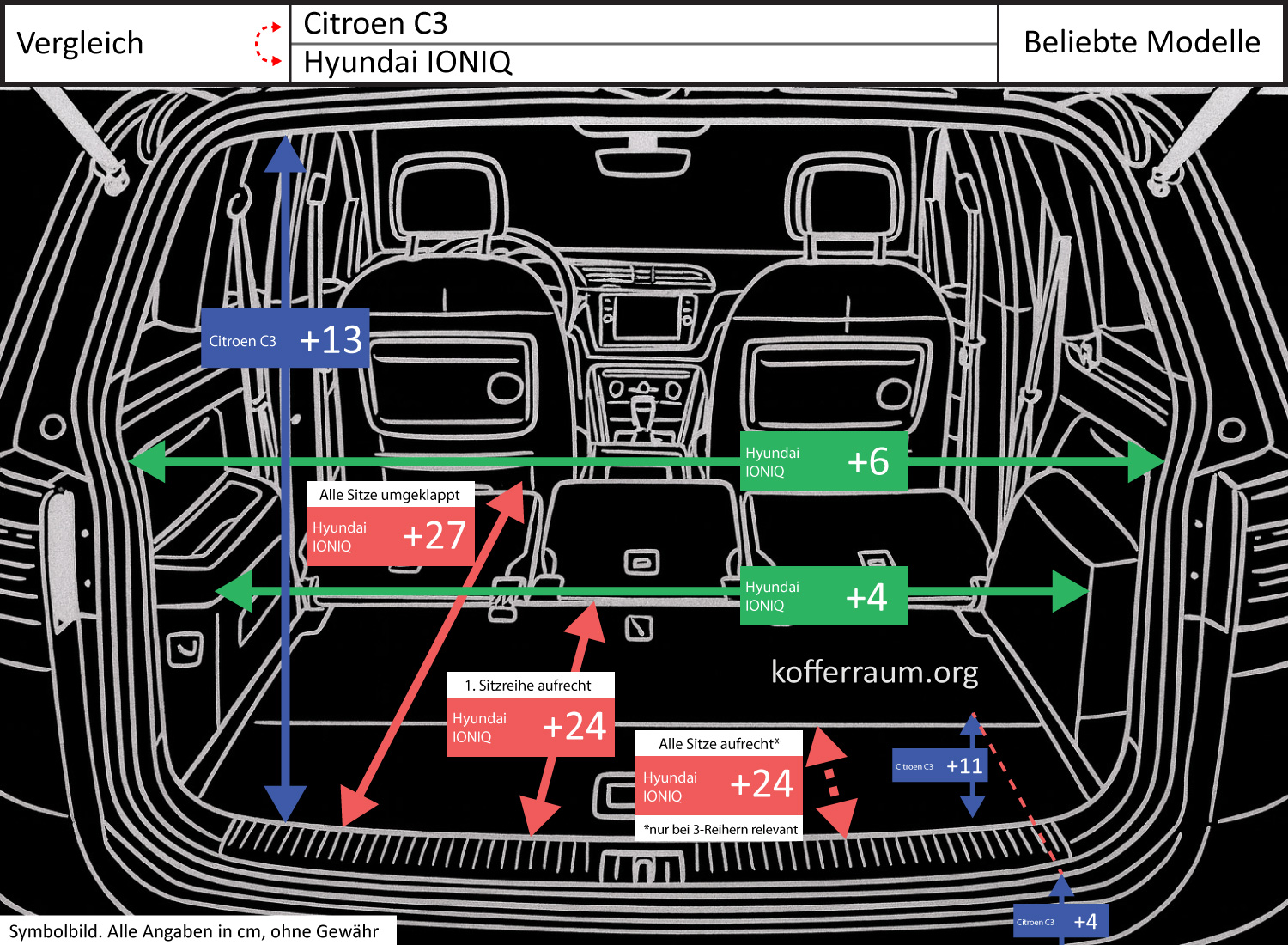
The Hyundai IONIQ offers significantly more cargo space in length: with the seats folded down, the trunk is 10.6 in (+20%) longer, and with the front seats upright, it is even 9.4 in (+36%) longer than the Citroën C3. The Citroën C3, on the other hand, wins in the vertical dimension: the height of the trunk opening is 5.1 in (+20%) larger in the C3, and the depth from the loading edge to the trunk floor is 4.3 in (+92%) greater than in the IONIQ.
Smaller differences (under 10%) exist in loading edge height (+1.6 in, Citroën) as well as in width and opening width favoring the IONIQ (+1.6 in and +2.4 in respectively), but these are less relevant.
Implications for Usability
Practically, this means: The IONIQ is better suited for longer items and more usable cargo space in length — for example, when transporting furniture parts, long sports equipment, or when the rear seats need to be folded down regularly.
The significantly longer cargo space with the rear seats upright also allows more luggage or volume to be transported without folding seats.
The C3 is better suited for tall or bulky items that require a lot of vertical space: the larger opening height and the significantly greater depth between the loading edge and trunk floor provide more room above and below, so bulky or tall cargo can stand more easily or be placed deeper.
However, the loading edge in the C3 is slightly higher above the ground, which makes lifting heavy items minimally more strenuous.
The narrower width measurements in the C3 and the slightly larger opening width in the IONIQ are minor differences; they only affect everyday usability with very wide items. In summary: IONIQ = advantage in length and usable cargo volume, C3 = advantage in vertical storage space and deeper loading area.