
Trunk comparison: Citroen C3 vs Volvo V90


Biggest Differences
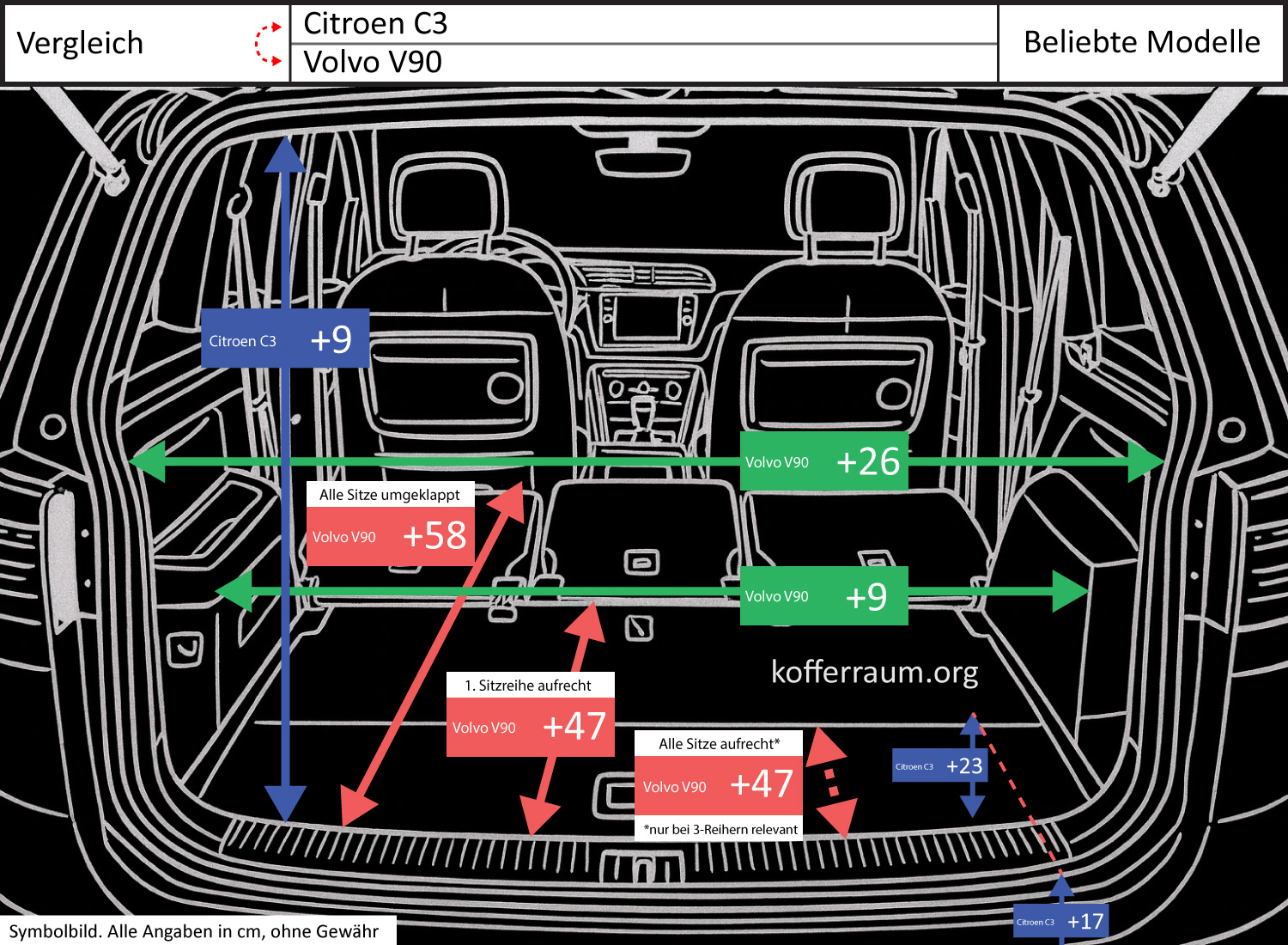
The Volvo V90 offers 22.8 in (43%) longer cargo space with the seats folded down than the Citroën C3. With the first row of seats upright, the difference is even more pronounced: the V90 has 18.5 in (70%) more length.
The loading opening width of the V90 is 10.2 in (30%) larger, while the narrowest width of the trunk is only 9% larger (no emphasis).
The Citroën C3, on the other hand, has a higher trunk opening: +3.5 in (13%). Additionally, the depth of the trunk (loading edge to trunk floor) is significantly greater in the C3: +9.1 in (2200%). The loading edge of the C3 is also positioned 6.7 in (28%) higher above the road than in the V90.
Impact on Usability
Volvo V90: The significantly greater length with folded and upright seats makes the V90 much better suited for long or bulky cargo (e.g., furniture, long boards, skis).
The wider loading opening facilitates loading wide items. The lower loading edge of the V90 reduces the effort required when loading heavy loads and makes loading and unloading more ergonomic.
Citroën C3: The higher trunk opening and greater depth from the loading edge to the trunk floor favor storing tall items and allow for deeper storage (more vertical space directly behind the loading edge).
However, due to the significantly higher loading edge, lifting heavy or bulky loads is more strenuous, and sliding large items sideways is more difficult.
Conclusion
For transport tasks involving long or wide items, the Volvo V90 is clearly advantageous (more length, wider opening, lower loading edge).
The Citroën C3 scores with vertical storage space directly behind the opening but is less suitable for long/bulky cargo due to the higher loading edge and significantly shorter cargo space. The differences in the narrowest width are minor and usually play a subordinate role in everyday use.