
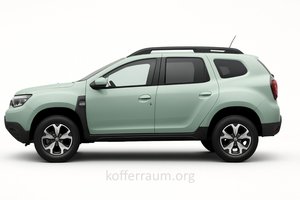
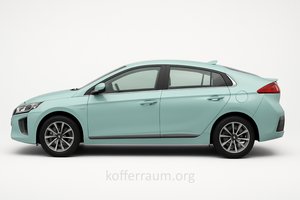
Trunk comparison: Dacia Duster vs Hyundai IONIQ
Key Differences (highlighted: >10%)
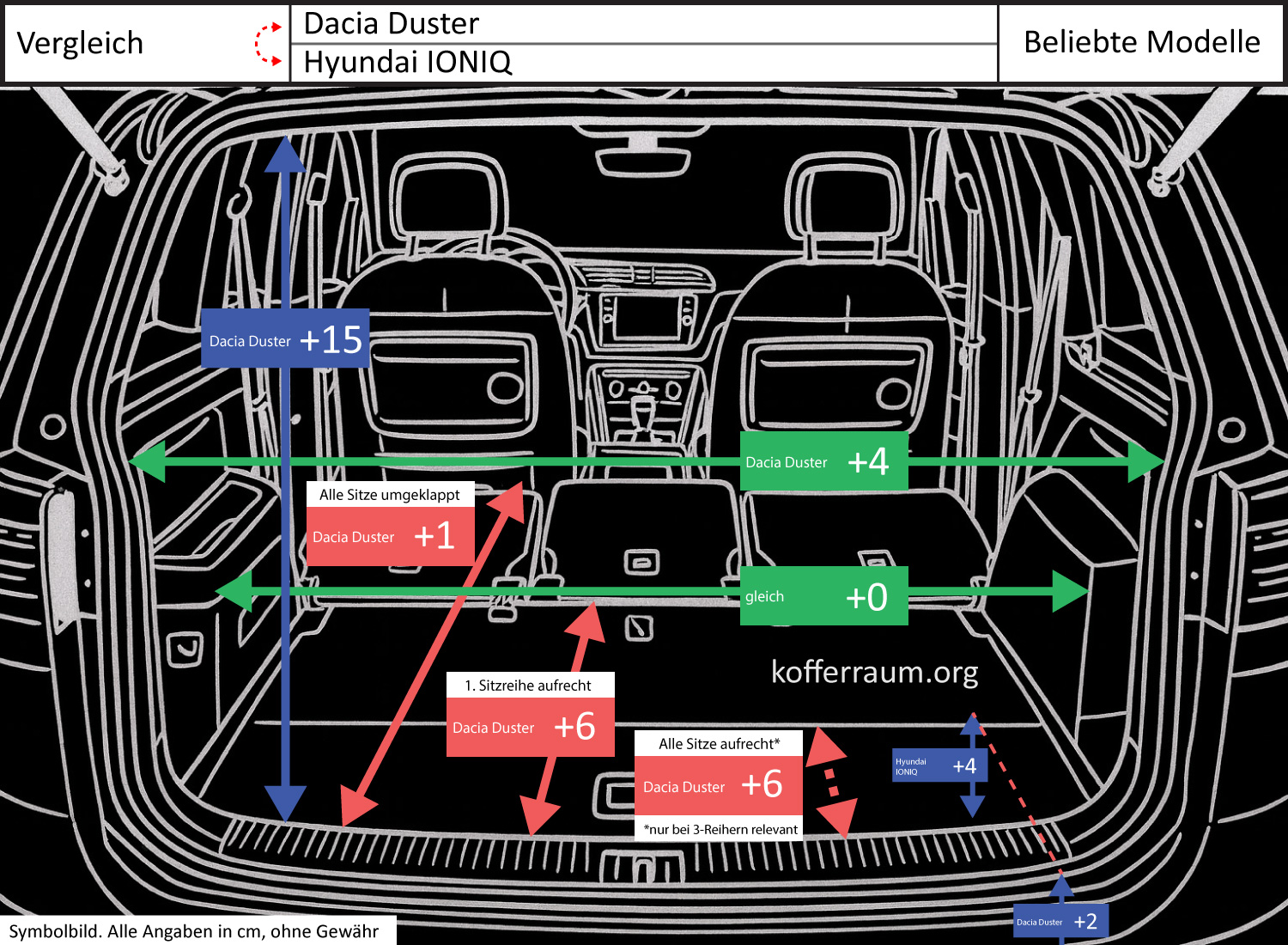
Height of the trunk opening: The Dacia Duster has a trunk opening that is 5.9 in (≈23%) higher than the Hyundai IONIQ.
This means: the Duster offers significantly more vertical space at the opening — tall or bulky items can be loaded and unloaded more easily without having to tilt or angle them strongly. For furniture pieces, tall boxes, or suitcases, this is a clear advantage.
Depth (loading edge to trunk floor): The Hyundai IONIQ has a depth between the loading edge and trunk floor that is 1.6 in (≈50%) greater. Specifically, the trunk floor in the IONIQ sits deeper below the loading edge.
Consequences: the IONIQ allows better use of internal storage space (more usable volume below the loading edge), bulky items can be placed deeper.
However, access and ergonomics when loading heavy items are somewhat less comfortable because you have to reach further down; at the same time, the deeper loading compartment can store items more stably.
Other, smaller differences (≤10%) and usability
- Length: With seats folded down, the Duster is only 1% longer; with the first row upright, the difference is 7% in favor of the Duster — both marginal and hardly noticeable in everyday use.
- Loading edge height above road: The Duster's loading edge is 0.8 in (≈3%) higher than the IONIQ's — minor impact on loading effort.
- Widths: At the narrowest point both are equally wide; the Duster's trunk opening is only 1.6 in (≈4%) larger — also a small advantage, but not decisive.
Summary of usability
The Duster is better suited for tall and bulky loads due to the significantly higher opening.
The IONIQ offers better usable interior volume and more stable storage of deeper-placed cargo thanks to the deeper trunk floor, but requires a bit more bending and reach when loading. All other differences are minor and hardly affect everyday practicality.