
Trunk comparison: Dacia Duster vs Skoda Elroq
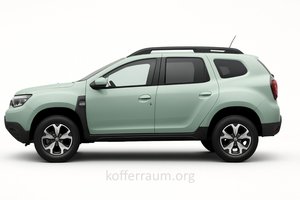

Key Differences
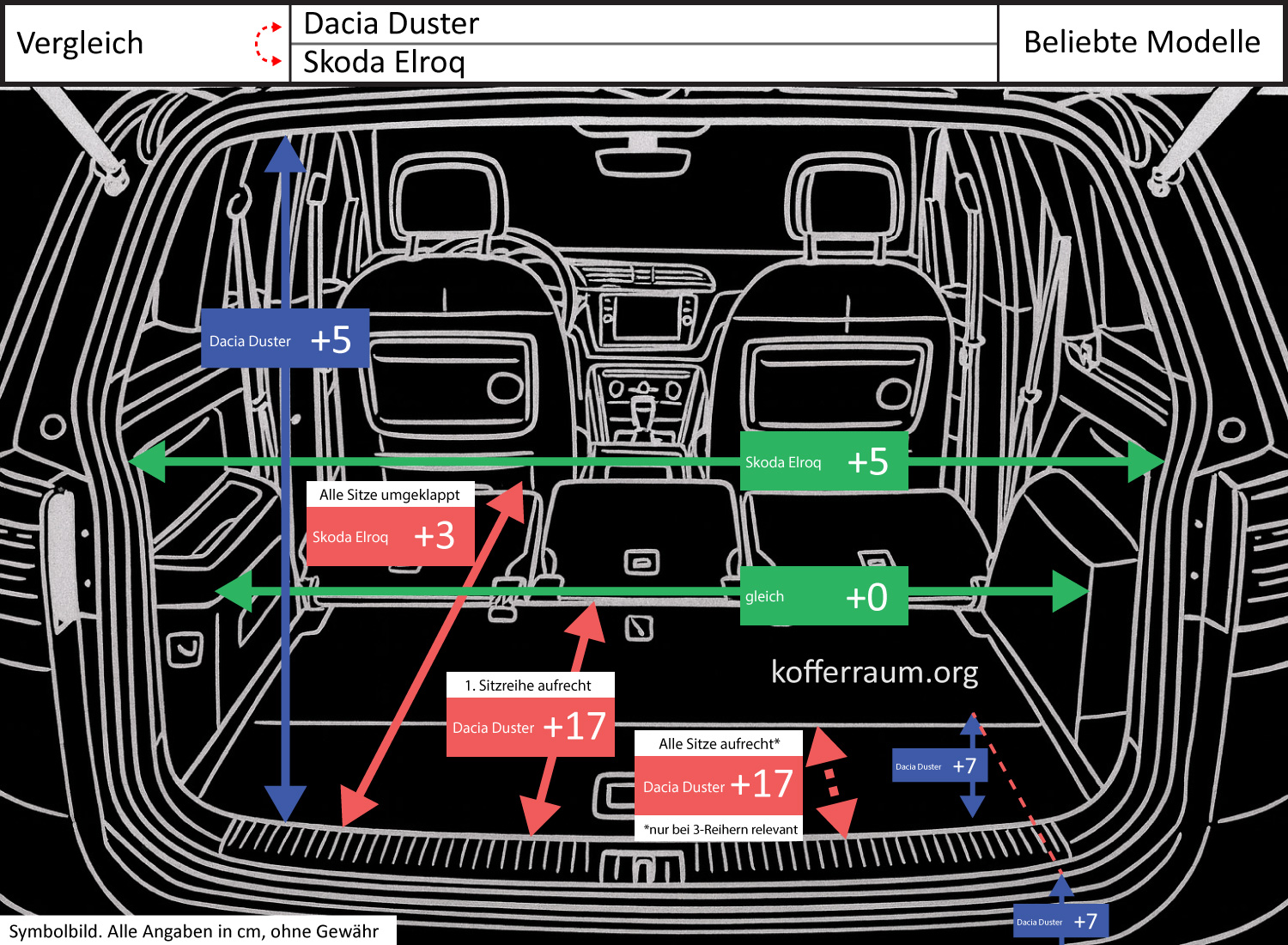
The two models mainly differ in usable trunk length with the rear seats upright and in the depth of the cargo area. Specifically, the Dacia Duster has a significantly longer trunk with the first row of seats upright: +6.7 in (≈21%) compared to the Škoda Elroq.
Even more notable is the depth between the loading edge and the trunk floor in the Duster: +2.8 in (≈700%) — making the Duster's cargo space considerably more generous vertically.
Other values differ only slightly: with the seats folded down, the Elroq is 1.2 in longer (2%), the Elroq's trunk opening is 2 in wider (5%), and the Duster's trunk opening height is 2 in higher (7%). The narrowest width in the trunk is the same for both models.
Impact on Usability
The greater usable length with the rear seats upright makes the Duster more practical for everyday use when passengers remain in the back seats: longer items (e.g., furniture boards, strollers, longer boxes) can be more easily accommodated with the seats in place.
The significantly greater depth between the loading edge and trunk floor in the Duster creates more vertical storage space and allows for storing bulky or stackable cargo below the loading edge — increasing the actual capacity and organization options in the cargo area.
The slightly wider opening of the Elroq (≈5%) makes loading very wide items easier, and with the seats fully folded down, the length differences are small (2%), thus practically negligible.
The somewhat higher loading edge of the Duster (≈10%) means a bit more lifting effort when raising heavy loads over the sill, but this is partially offset by the larger interior space and deeper cargo well.
Conclusion: For everyday users who often need to transport larger or bulky cargo with rear seats occupied, the Dacia Duster offers noticeable advantages. Those who primarily require very wide cargo or maximum continuous length with folded seats benefit only slightly from the Elroq.