
Trunk comparison: Dacia Duster vs Volvo V90
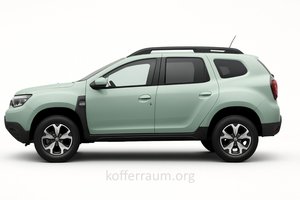
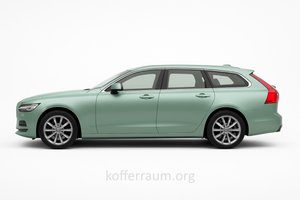
Key Statements
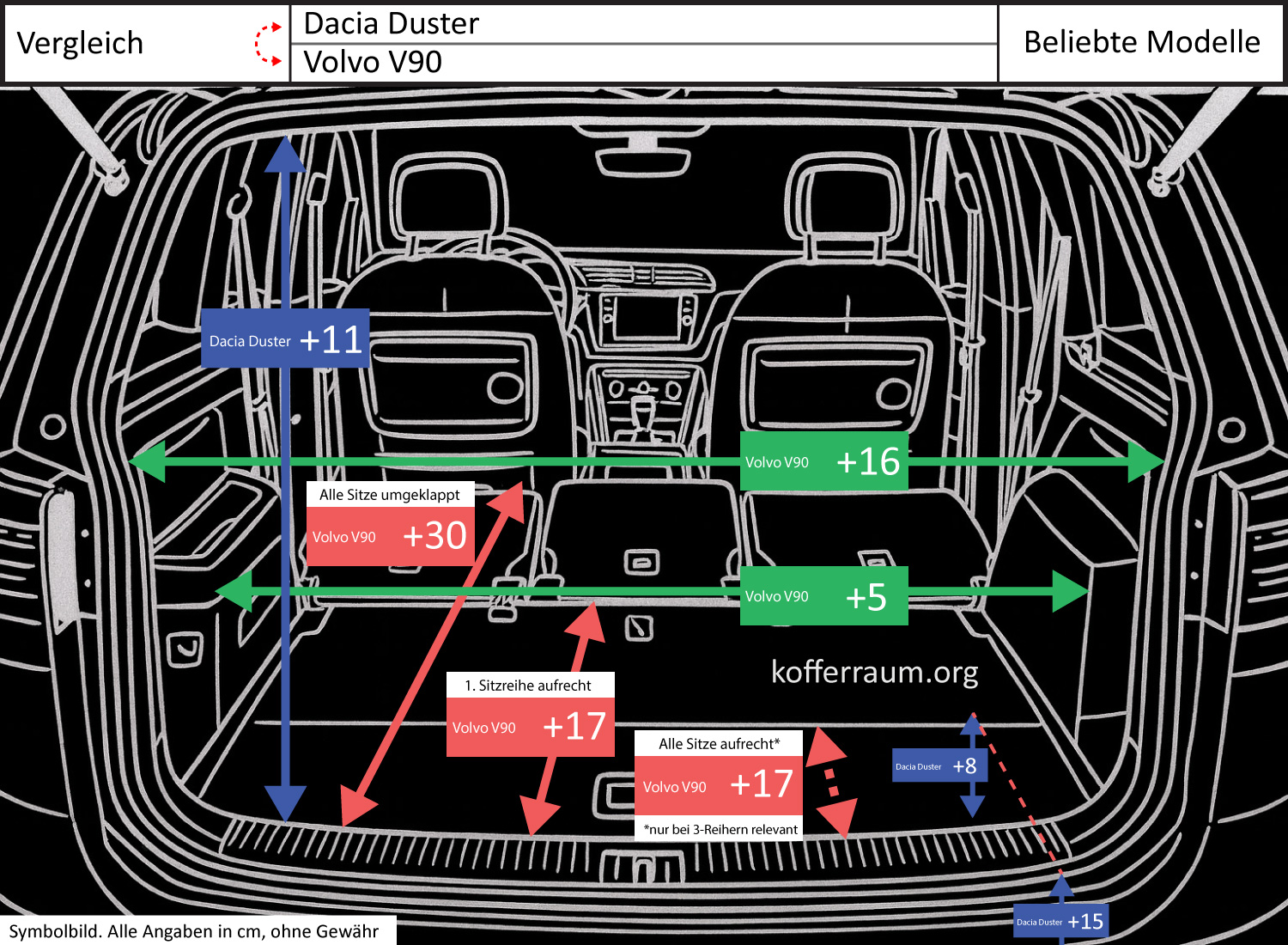
Clear strengths emerge on both sides in the relevant dimensions: The Volvo V90 offers significantly more cargo length, both with folded seats (+11.8 in / 18%) and with the first row upright (+6.7 in / 18%). The Volvo also has a wider trunk opening (+6.3 in / 16%), which makes loading wider items easier.
The Dacia Duster scores points with a higher trunk opening (+4.3 in / 16%), a significantly greater depth from the loading edge to the trunk floor (+3.1 in / 700%), and a higher loading edge above the road (+5.9 in / 25%).
Implications for Usability
Volvo V90 — better for long and wide cargo: The additional length with folded seats and with normal seating makes the V90 clearly more suitable for long items (e.g., furniture, long packages, skis) and larger luggage volumes.
The wider opening width facilitates loading bulky or wide parts because there are fewer lateral restrictions.
Dacia Duster — advantages in height, securing cargo, and off-road capability: The higher trunk opening allows taller items to be placed without constant tilting.
The greater depth between the loading edge and trunk floor creates a "recess" that holds small items more securely and provides additional usable space below the loading edge.
The significantly higher loading edge above the road is double-edged: it increases ground clearance (practical off-road and on unpaved roads) but makes lifting heavy loads into the trunk more strenuous than with the lower V90.
Practical consequence: For users who frequently transport long or wide cargo, the Volvo V90 is more convenient in everyday use. For users who often drive on uneven terrain, load tall items, or appreciate the additional "recess" in the trunk, the Dacia Duster is more practical.
Smaller differences, such as the minimal narrow point in width (≈5%, not highlighted), usually have only minor effects in practice.