
Trunk comparison: Durchschnitt Wagon vs Durchschnitt Subcompact

Key Differences
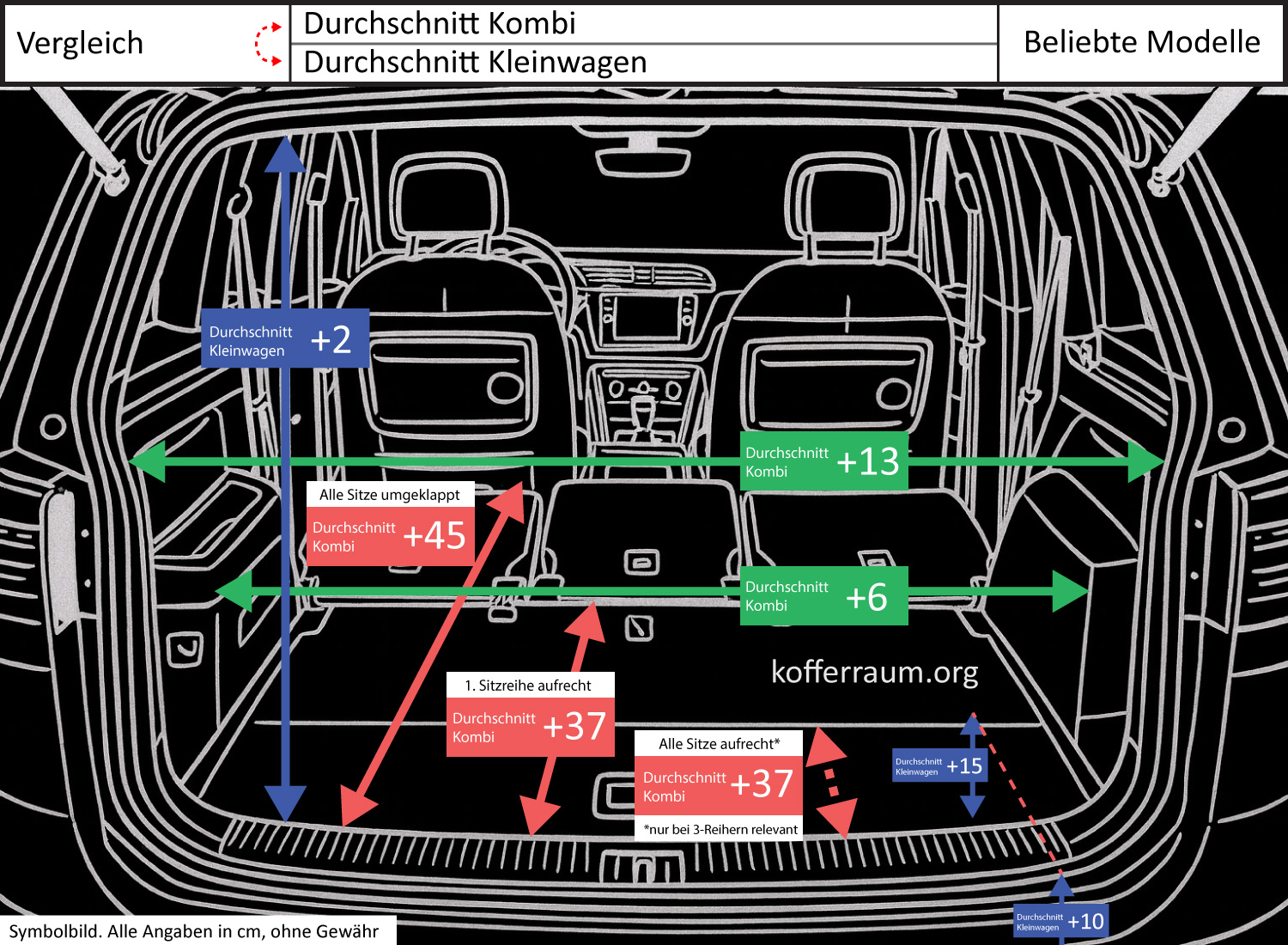
The average wagon offers a significantly longer cargo area with the seats folded down: +17.7 in (35%) compared to the average subcompact. Even with the front seat row upright, the wagon remains noticeably longer: +14.6 in (59%). The width of the trunk opening is larger in the wagon: +5.1 in (14%).
Two factors stand out in the subcompact: the vertical depth of the trunk (loading edge → trunk floor) is +5.9 in (375%) greater, and the loading edge is higher above the road: +3.9 in (16%) than in the wagon.
Smaller differences, which are less practical, include the trunk opening height (+0.8 in / 3% in favor of the subcompact) and the narrowest width (+2.4 in / 6% in favor of the wagon).
Impact on Usability
For long items (slats, skis, short furniture parts) and transport with folded seats, the wagon is clearly advantageous: the significantly larger cargo area and wider opening make loading easier and allow longer cargo without complicated shifting.
The lower loading edge of the wagon makes lifting heavy items easier and reduces the risk of damage when setting down.
The subcompact scores with the deeper trunk well: in practice, more volume can be utilized vertically below the loading edge (e.g., with stacked boxes or bulky but shorter items).
However, the higher loading platform increases the effort required to lift heavy loads and can make loading bulky, long parts more difficult because of the greater entry height.
In short: Those who frequently transport long or wide items or place great value on easy lifting are better served by the wagon.
Those who mainly want to accommodate volume-heavy but not particularly long cargo in depth will find an advantage in the subcompact — albeit at the cost of a higher loading edge and thus more difficult loading.