
Trunk comparison: Durchschnitt SUV vs Durchschnitt Compact SUV


Key Differences and Impact on Usability
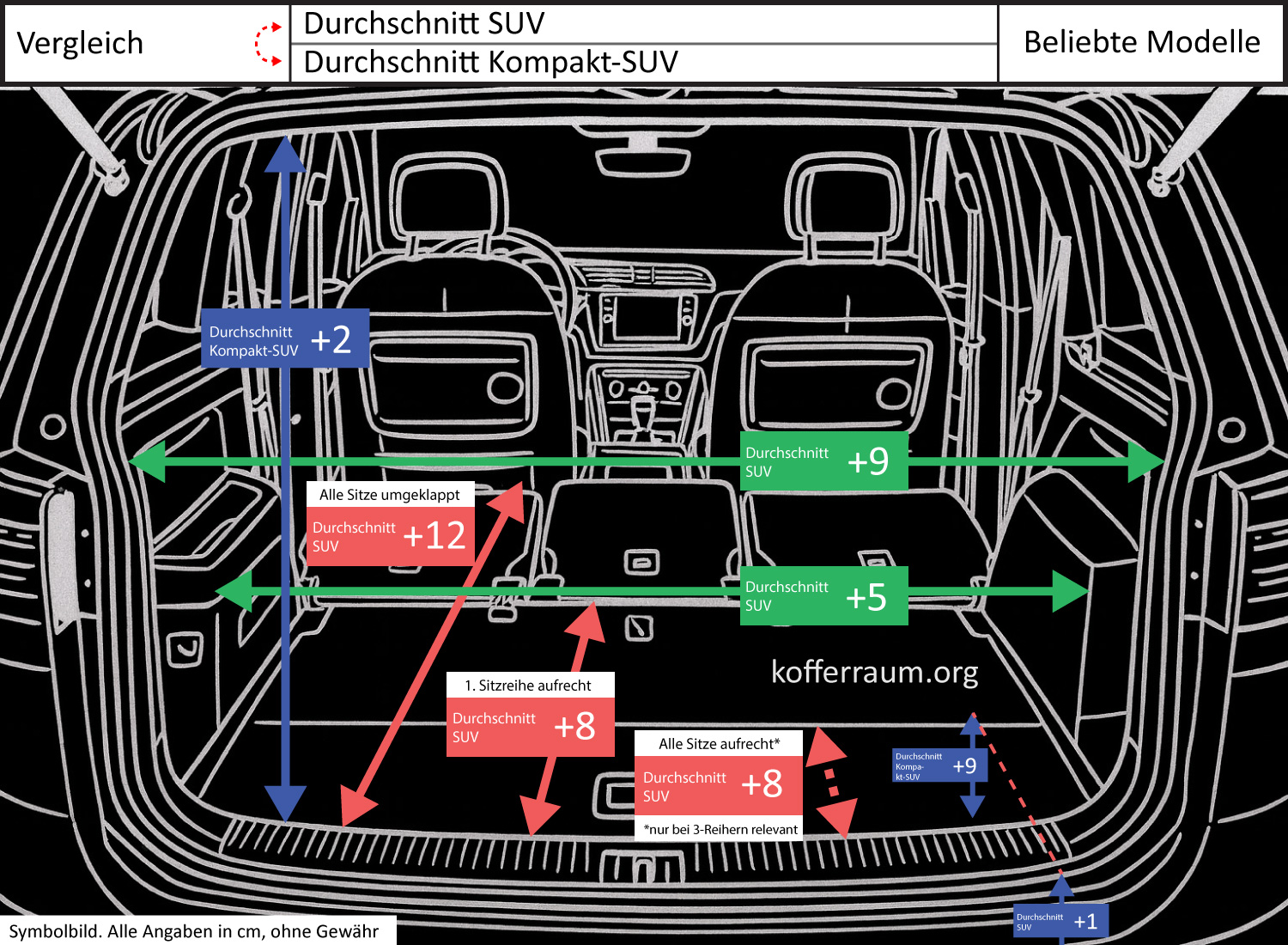
The average SUV offers overall wider and longer cargo areas: the width at the narrowest point is 2 in greater and the width of the trunk opening is 3.5 in larger, additionally the trunk is 4.7 in longer with the seats folded down and 3.1 in longer with the first row upright.
These advantages tend to make the SUV more practical for wide or long loads (e.g., furniture parts, wide boxes, bicycles without disassembly) and facilitate loading bulky items due to the larger opening.
The most significant difference, however, lies in the depth of the trunk: The compact SUV has a 3.5 in (+180%) greater depth (distance from loading edge to trunk floor) than the SUV. In practice, this means that items in the compact SUV sit deeper and can be better "recessed" into the trunk.
Advantages include more vertical storage space within the cargo area and better securing of taller cargo (less rearward visibility obstruction, less shifting over the loading edge). Disadvantages are a lower floor, which can make reaching in and lifting heavy items further into the cargo area more strenuous.
Other smaller differences affect everyday usability: The trunk opening of the compact SUV is slightly higher (+0.8 in), which can make loading very tall items easier, while the loading edge of the SUV is minimally higher above the ground (+0.4 in), which hardly affects lifting onto the cargo floor.
Overall, the SUV is the better choice when width and openness of the cargo area are decisive; the compact SUV scores with the significantly deeper cargo well when items should be stored securely and as low as possible in the vehicle — at the expense of somewhat more cumbersome handling of heavy loads.