
Trunk comparison: Fiat Panda vs Hyundai Kona
Key Differences
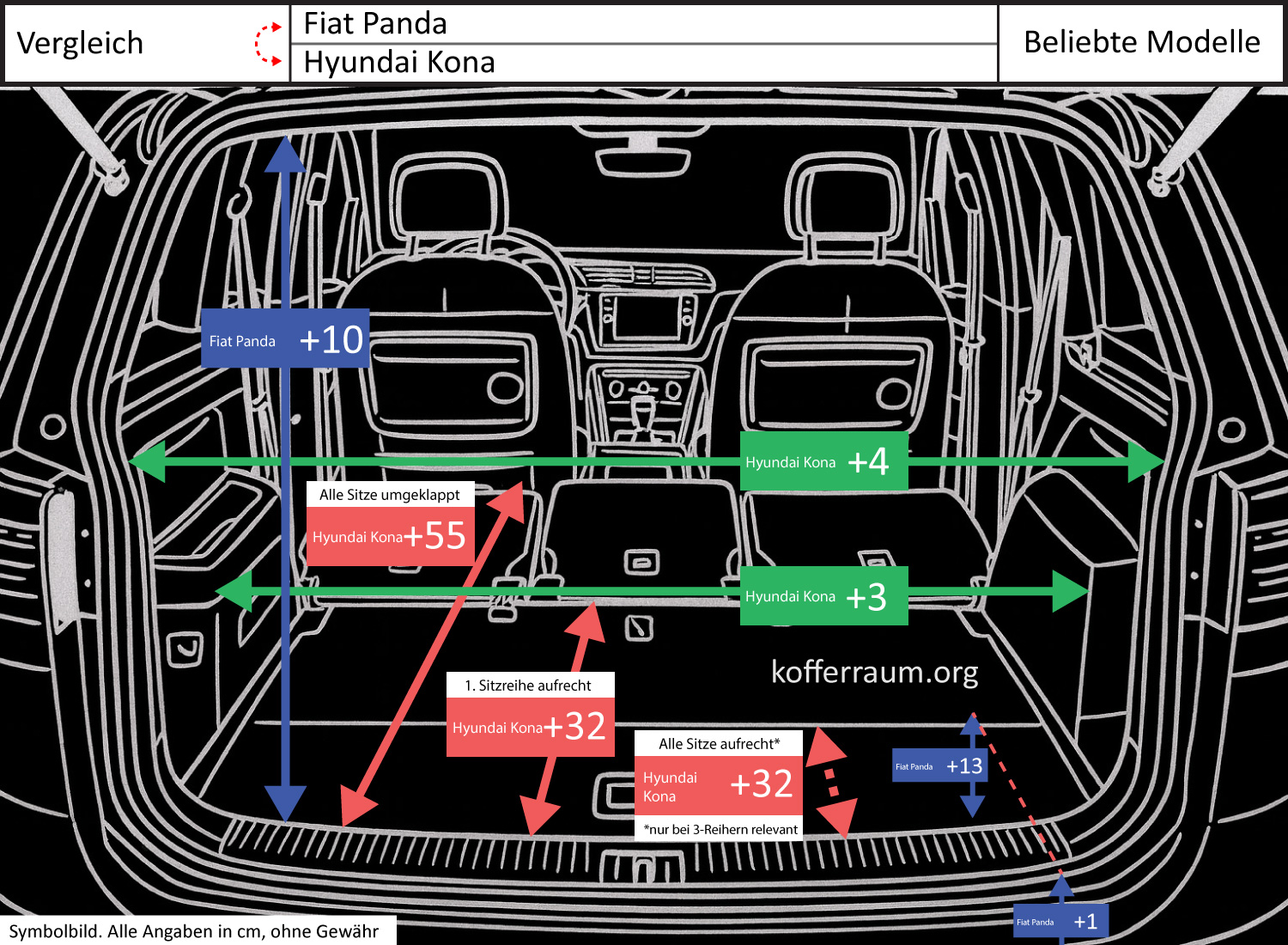
The Hyundai Kona offers significantly more loading length: with the rear seats folded down, the trunk is +21.7 in (50%) longer and with the first row of seats upright, the advantage is +12.6 in (59%) compared to the Fiat Panda.
The Fiat Panda, on the other hand, has a considerably higher opening height and interior height in the trunk: the height of the trunk opening is +3.9 in (13%) higher and the depth from the loading edge area to the trunk floor is even +5.1 in (260%) greater than in the Kona.
Smaller differences: the loading edge of the Panda is only +0.4 in (1%) higher above the road, the narrowest width in the trunk is +1.2 in (3%) larger in the Kona, and the width of the trunk opening in the Kona is +1.6 in (4%) — these values are under 10% and less significant.
Impact on Usability
The greater loading length of the Kona makes it better suited for long or flat items (e.g., slats, skis, long furniture parts, or bulky panels), especially when the rear seats are folded down. The slightly greater width of the Kona also helps with wider loads but is only a minor advantage.
The Panda scores with vertical space and handling tall or stackable goods: the higher trunk opening and the significantly greater depth from the loading edge area to the floor allow loading taller items and provide more usable interior volume vertically.
However, the deeper cargo well can make lifting heavy items somewhat more difficult (greater height difference to road level), while the slightly higher loading edge of the Panda (only +0.4 in) hardly matters.
In short: Those who regularly transport long, flat, or wide parts benefit from the Hyundai Kona. Those who more often need to accommodate tall, bulky, or stackable cargo vertically are better served by the Fiat Panda.