Trunk comparison: Fiat Panda vs VW T-Roc
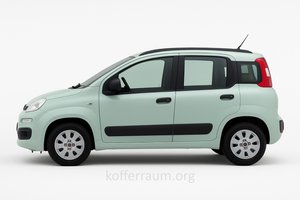
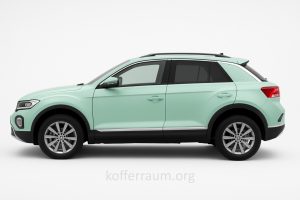
Key Differences
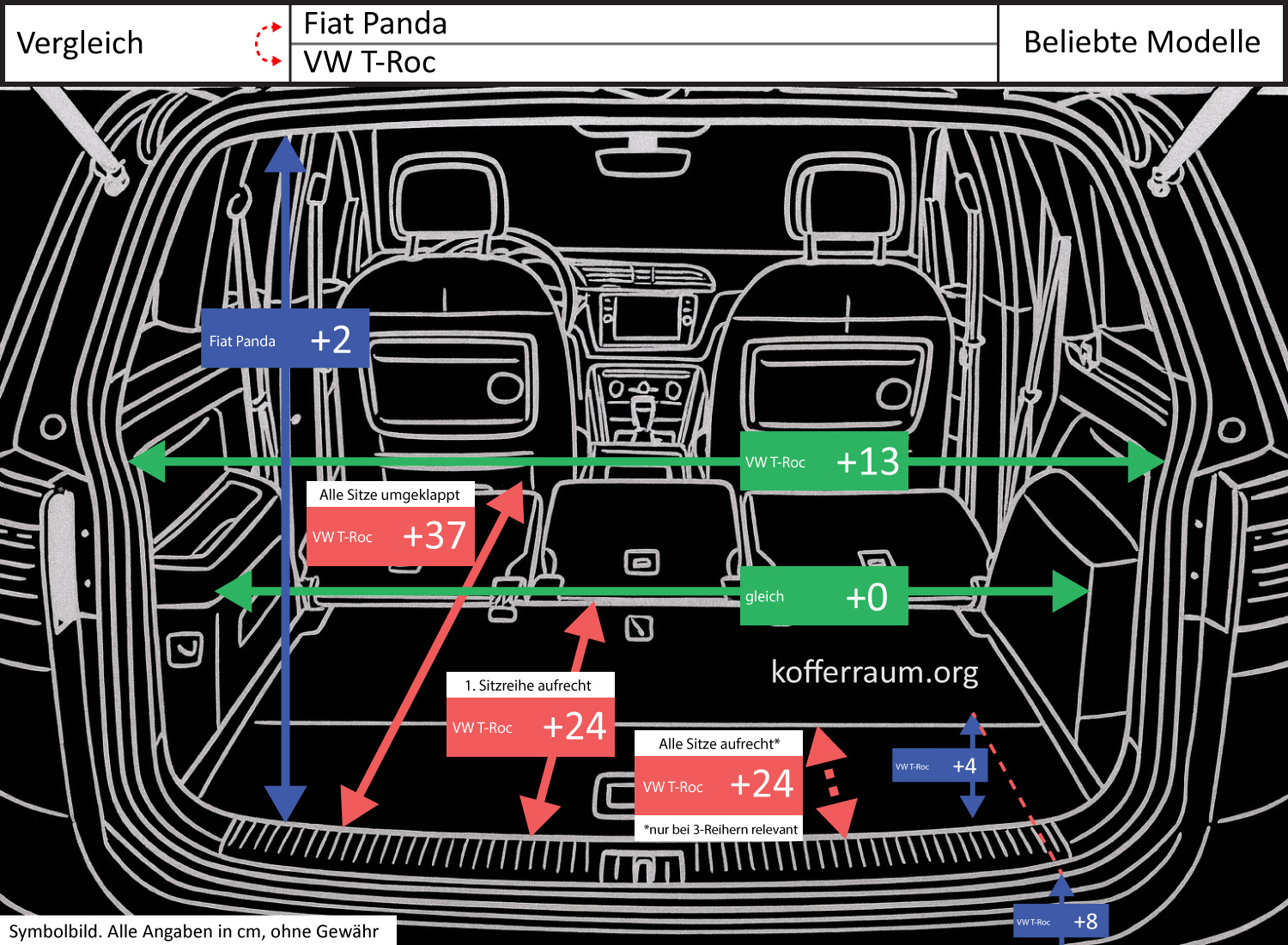
The VW T‑Roc offers a 14.6 in (33%) longer cargo area with the rear seatbacks folded down compared to the Fiat Panda. With the front seats upright, the T‑Roc's cargo area is 9.4 in (44%) longer. The depth of the trunk (loading edge to trunk floor) is 1.6 in (22%) greater in the T‑Roc.
The loading edge of the T‑Roc is 3.1 in (12%) higher above the ground. The width of the trunk opening in the T‑Roc is 5.1 in (13%) wider than in the Panda. (Not significantly larger: the height of the trunk opening is only 0.8 in / 2% higher in the Panda; the narrowest interior width is the same in both models.)
Impact on Usability
- Longer cargo area (T‑Roc): Significantly better suited for long items (e.g., slats, skis, furniture parts) and larger amounts of luggage, especially when the rear seats are folded down. The Panda reaches its limits sooner with long or longer cargo.
- Greater depth (T‑Roc): More usable interior space from the loading edge to the floor allows for higher or deeper storage of bulky items. This increases practical cargo capacity for stackable or voluminous loads.
- Higher loading edge (T‑Roc): The 3.1 in higher loading edge makes lifting heavy or bulky items more challenging; regular loading and unloading (e.g., groceries, heavy boxes, strollers) is more ergonomic in the Panda.
- Wider opening (T‑Roc): The wider opening facilitates loading wide items. However, since the narrowest interior width is the same, very bulky items may still get stuck at tight spots inside.
Conclusion: The VW T‑Roc is significantly more generous in almost all relevant dimensions and better suited for longer, taller, or wider cargo.
The Fiat Panda, on the other hand, scores with a lower loading edge (more comfortable lifting) and remains more practical for frequent, ergonomic loading and unloading of light to medium-sized loads.