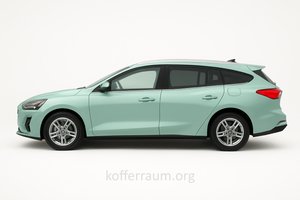
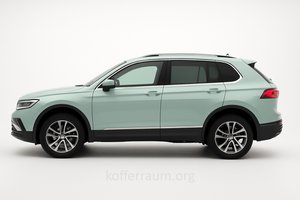
Trunk comparison: Ford Focus Wagon vs VW Tiguan
Key Differences
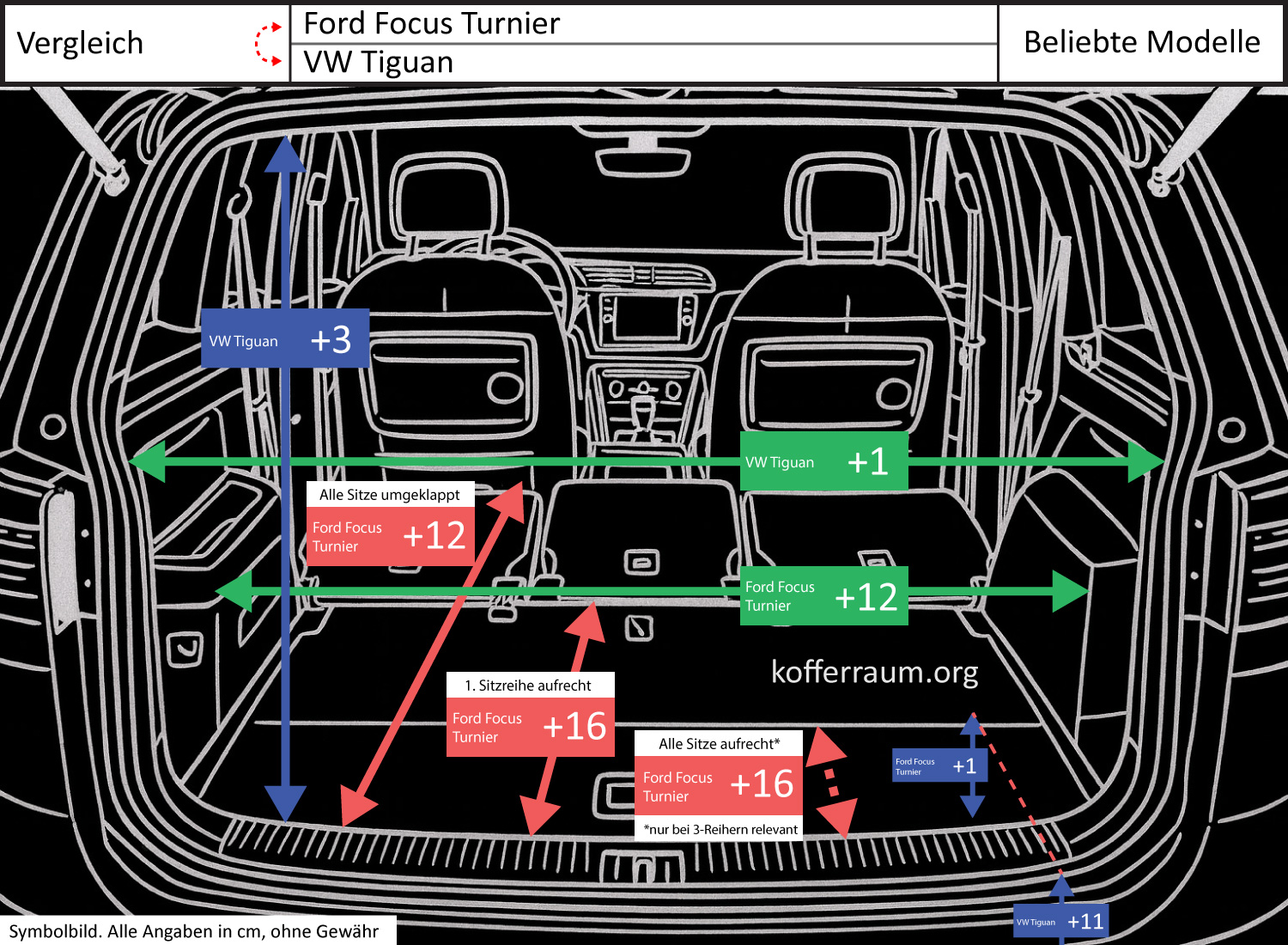
The Ford Focus Wagon offers significantly more usable length when loaded, especially with the rear seat upright: +6.3 in (≈18%) compared to the VW Tiguan.
At the narrowest point in the trunk, the Ford is also noticeably wider: +4.7 in (≈12%). The Tiguan's loading edge is considerably higher above the road than the Focus: +4.3 in (≈17%) – this directly affects loading and unloading.
An unusual measurement is the depth from the loading edge to the trunk floor, which is given as +0.4 in (100%) larger for the Ford; in absolute terms, this is only 0.4 in, with the high percentage resulting from the Tiguan's value being very small/negligible.
Impact on Usability
Due to the longer usable cargo area with the rear seat upright (+6.3 in/18%), the Focus can transport longer items without folding down the rear seats (e.g., skis, long boxes, or furniture parts).
The greater minimum width in the Ford (+4.7 in/12%) increases the chance of placing bulky or wide-format cargo directly into the trunk without needing to modify or cut it.
The significantly higher loading edge in the Tiguan (+4.3 in/17%) makes lifting heavy items more strenuous and can complicate loading bulky or heavy loads (e.g., crates, groceries, strollers). The lower loading edge in the Focus facilitates handling during loading and unloading.
The stated 0.4 in difference in depth from the loading edge to the trunk floor in the Ford is hardly noticeable in absolute terms; the high percentage only indicates that the Tiguan practically has no difference there.
In summary, the Focus Wagon has advantages in many practical everyday situations (longer items without folding seats, wider cargo, easier lifting), while the Tiguan only scores in details such as a minimally larger trunk opening width (+0.4 in) or a slightly higher opening.