
Trunk comparison: Ford Focus vs Hyundai Elantra GT Wagon
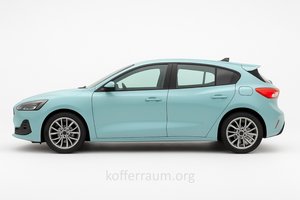
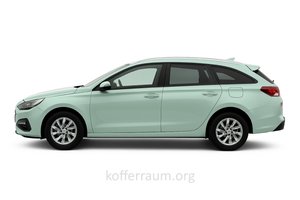
Key Differences
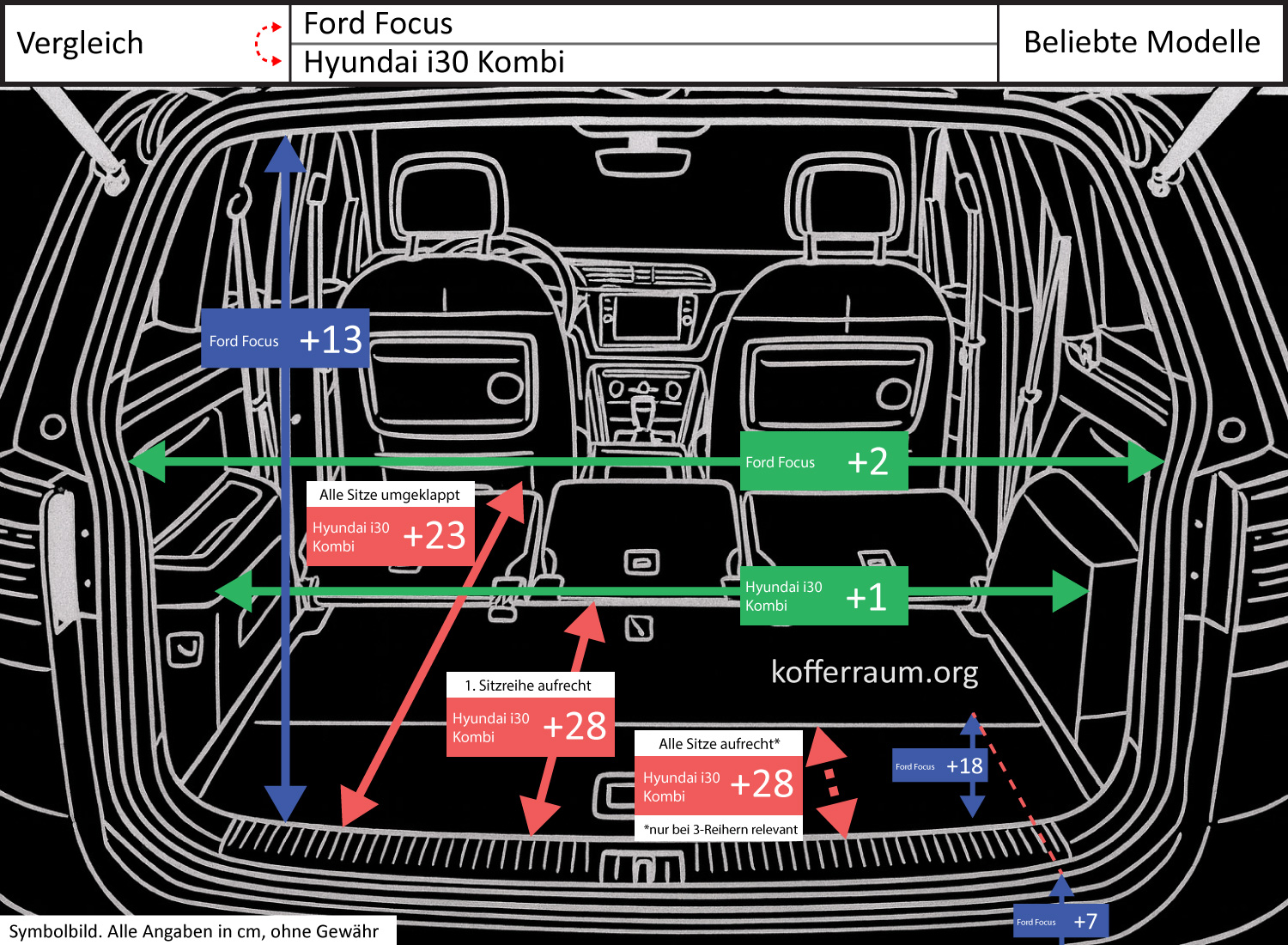
Clear focuses emerge in cargo capacity and accessibility: The Hyundai i30 Wagon offers a longer cargo floor when the seats are folded down (+9.1 in / +15%) and especially when the first row of seats is upright (+11 in / +36%).
The Ford Focus scores points with the opening and interior height: the height of the trunk opening is +5.1 in / +19% larger on the Ford, the depth from the loading edge to the trunk floor is significantly greater on the Ford (+7.1 in / +1700%), and the loading edge is +2.8 in / +11% higher above the ground.
Smaller differences (width at the narrowest point +1% in favor of Hyundai; width of the trunk opening +2% in favor of Ford) are negligible.
Impact on Usability
Hyundai i30 Wagon: Due to the longer usable cargo floor—both with folded seats and with the rear bench upright—the i30 is better suited for long items (e.g., slats, furniture parts, long boxes) and for transporting longer loads without folding down the rear seats.
This reduces effort for length-heavy transports and increases everyday practicality for bulky, flat goods.
Ford Focus: The larger trunk opening height and especially the significantly greater depth from the loading edge to the trunk floor create more vertical space inside and allow for accommodating taller or bulkier items.
However, the loading edge on the Ford is higher above the ground, and the greater depth results in a larger height difference when lifting items in—meaning more effort is required when lifting heavy loads and loading is somewhat more cumbersome compared to the lower i30.
Conclusion: For long, flat, or frequently changing cargo loads, the Hyundai i30 Wagon is more practical for everyday use. For taller/bulkier cargo and more usable interior height, the Ford Focus offers advantages but requires more effort when loading and unloading.