
Trunk comparison: Ford Focus vs Hyundai IONIQ
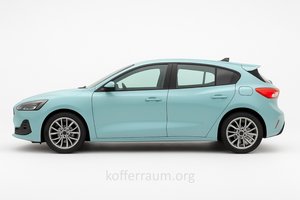
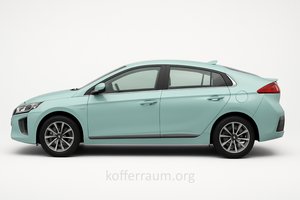
Key Differences
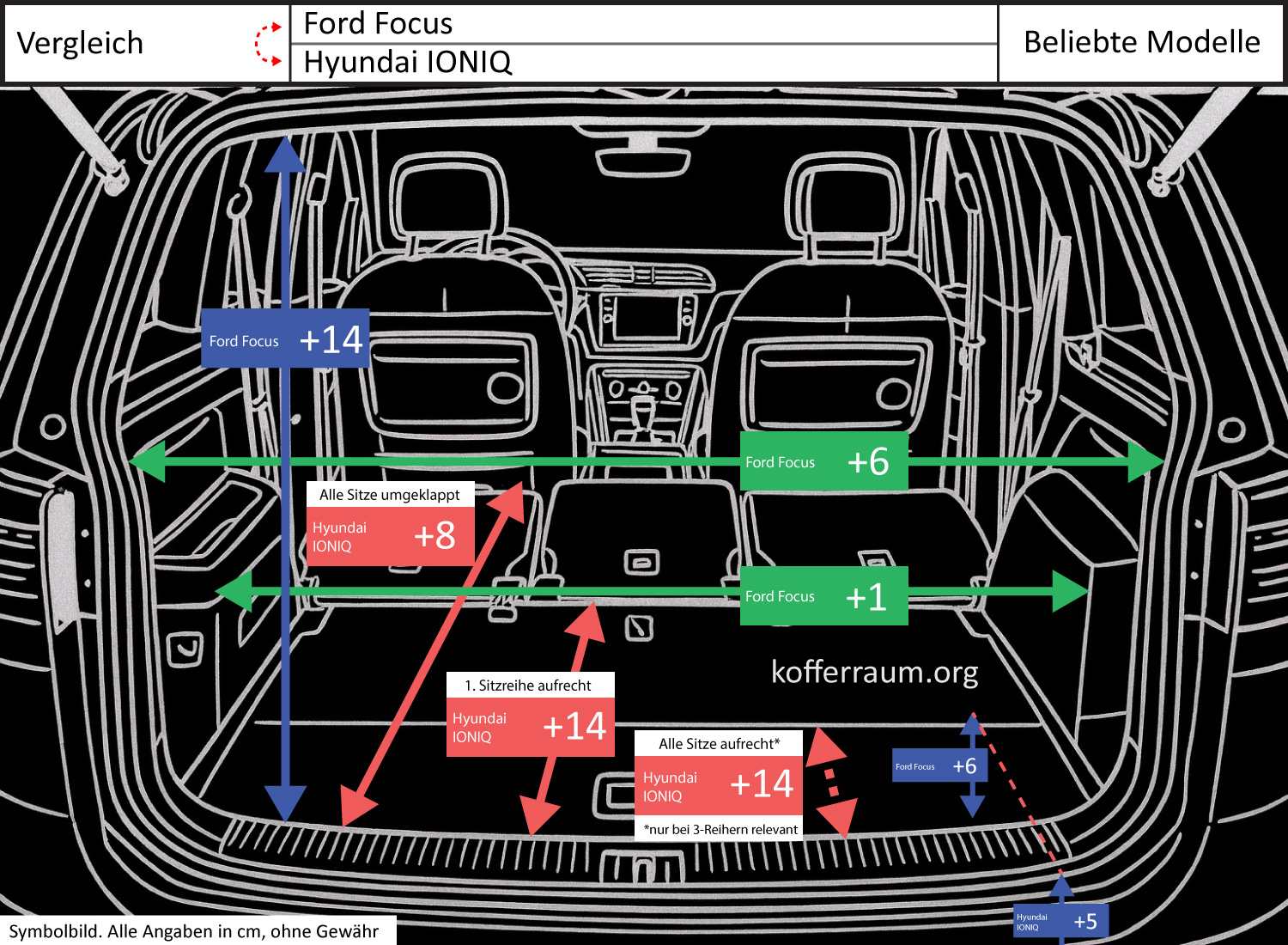
Hyundai IONIQ offers a cargo space that is 5.5 in (≈18%) longer with the rear seats upright than the Ford Focus. This means longer items fit better in the IONIQ while keeping all seats in use.
The Ford Focus has a trunk opening that is 5.5 in (≈21%) higher than the IONIQ. This makes it easier to load taller items through the opening.
The depth of the trunk (from loading edge to trunk floor) is 2.4 in (≈50%) greater in the Ford Focus than in the IONIQ. This provides more usable interior height behind the loading edge and allows for bulkier or higher-placed cargo.
Implications for Practical Use
For transport tasks with the rear seats upright (with passengers on the back seat), the Hyundai IONIQ clearly has the advantage: The 18% longer cargo space makes it easier to accommodate longer items like skis, long boxes, or bulky tools without folding down seats.
When it comes to lifting in and fitting tall or bulky items (such as tall boxes, suitcases, plants, or bulky furniture parts), the Ford Focus is more favorable: The significantly higher trunk opening combined with the greater depth behind the loading edge offers more room in height and depth, so bulky parts fit more easily and require less turning or tilting.
The loading edge of the IONIQ is about 2 in higher above the road (more effort when lifting), but this difference is relatively small. The width differences – at the narrowest point +0.4 in and opening width +2.4 in in favor of the Focus – are minor and rarely affect everyday usability.
Conclusion
In short: For longer cargo with the rear seats occupied, the Hyundai IONIQ is the more practical choice. For loading tall or bulky items and for overall more flexible accommodation of bulky cargo, the Ford Focus scores thanks to its higher opening and significantly greater depth behind the loading edge.