
Trunk comparison: Ford Focus vs Skoda Superb Wagon
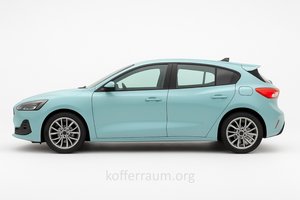
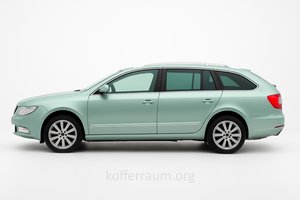
Key Differences
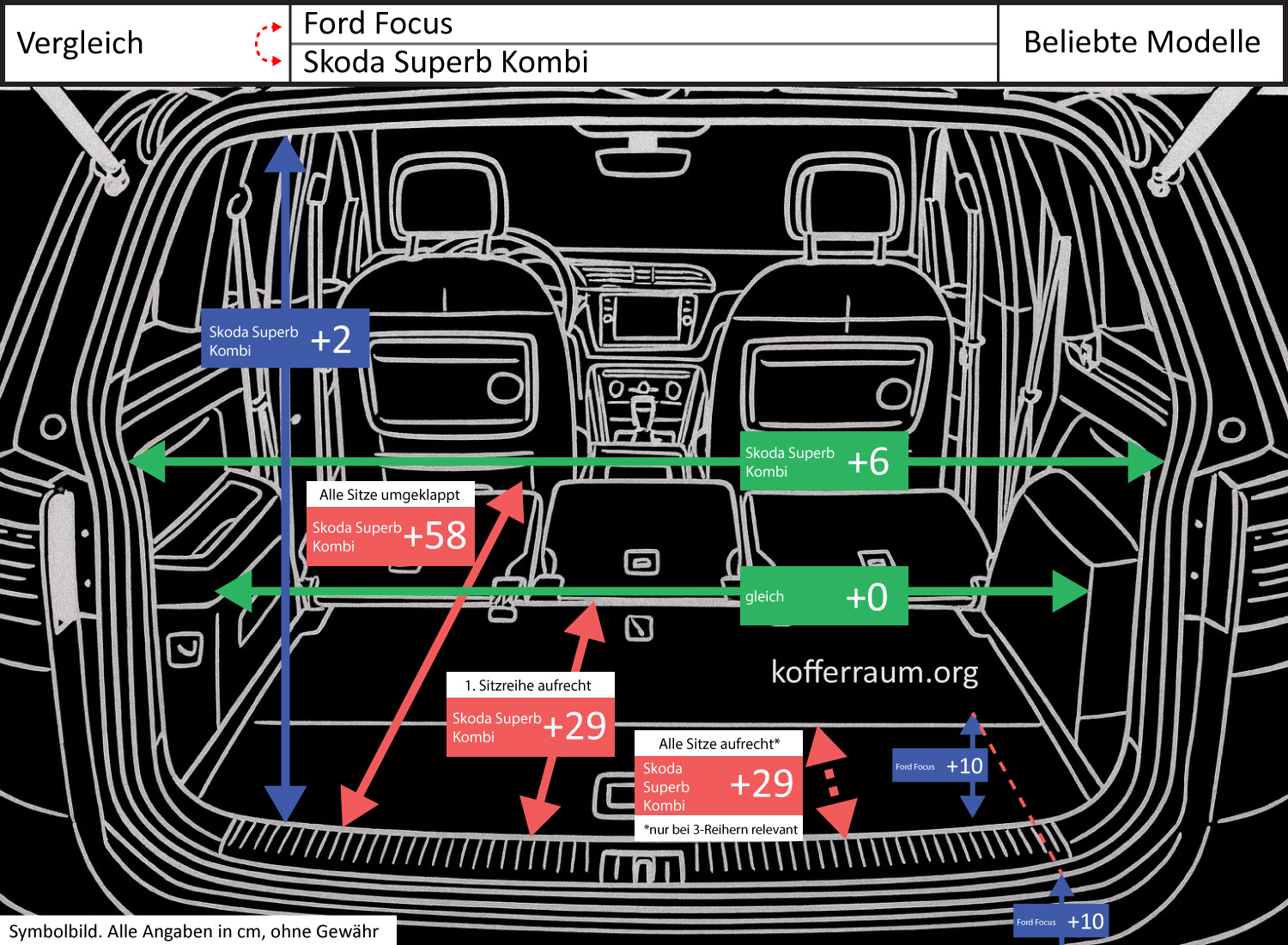
The Škoda Superb Wagon offers significantly more cargo length: with the seats folded down, the trunk is +22.8 in (≈+37%) longer than the Ford Focus, and with the first row of seats upright, it is +11.4 in (≈+38%) longer.
The Ford Focus, on the other hand, has a significantly greater trunk depth difference and a higher loading sill: the depth (loading sill → trunk floor) is +3.9 in (≈+125%) greater in the Focus, and the loading sill is +3.9 in (≈+17%) higher above the road than in the Superb.
The width at the narrowest point is the same; the opening width of the Superb is only +2.4 in (≈6%) larger and the height of the trunk opening only +0.8 in (≈3%) — both under 10% and therefore not highlighted.
Implications for Usability
The significantly longer loading area of the Škoda Superb results in noticeably better usability for long items (e.g., slats, skis, long furniture parts) and for situations where loading is done without or with minimal seat folding.
More length makes it easier to load long packages and increases flexibility when organizing luggage or transporting bulky but narrow objects.
The Ford Focus presents challenges in handling: the higher loading sill (+3.9 in) makes loading and unloading more difficult, especially with heavy or awkward items (more lifting instead of sliding or pushing).
The significantly greater depth between the loading sill and trunk floor does provide more vertical space under the sill (useful for stackable, bulky but shorter items), but it can make pulling out large or long cargo more difficult because a greater height difference must be overcome.
Conclusion: For transporting long or longitudinally stored items and for overall versatility in loading, the Škoda Superb Wagon is advantageous.
The Ford Focus can offer more usable volume for compact, stackable cargo due to the deeper loading zone but requires more effort to load and unload because of the higher loading sill.