
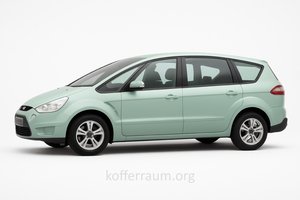
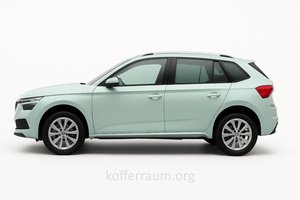
Trunk comparison: Ford S-MAX vs Skoda Kamiq
Key Differences and Their Impact on Usability
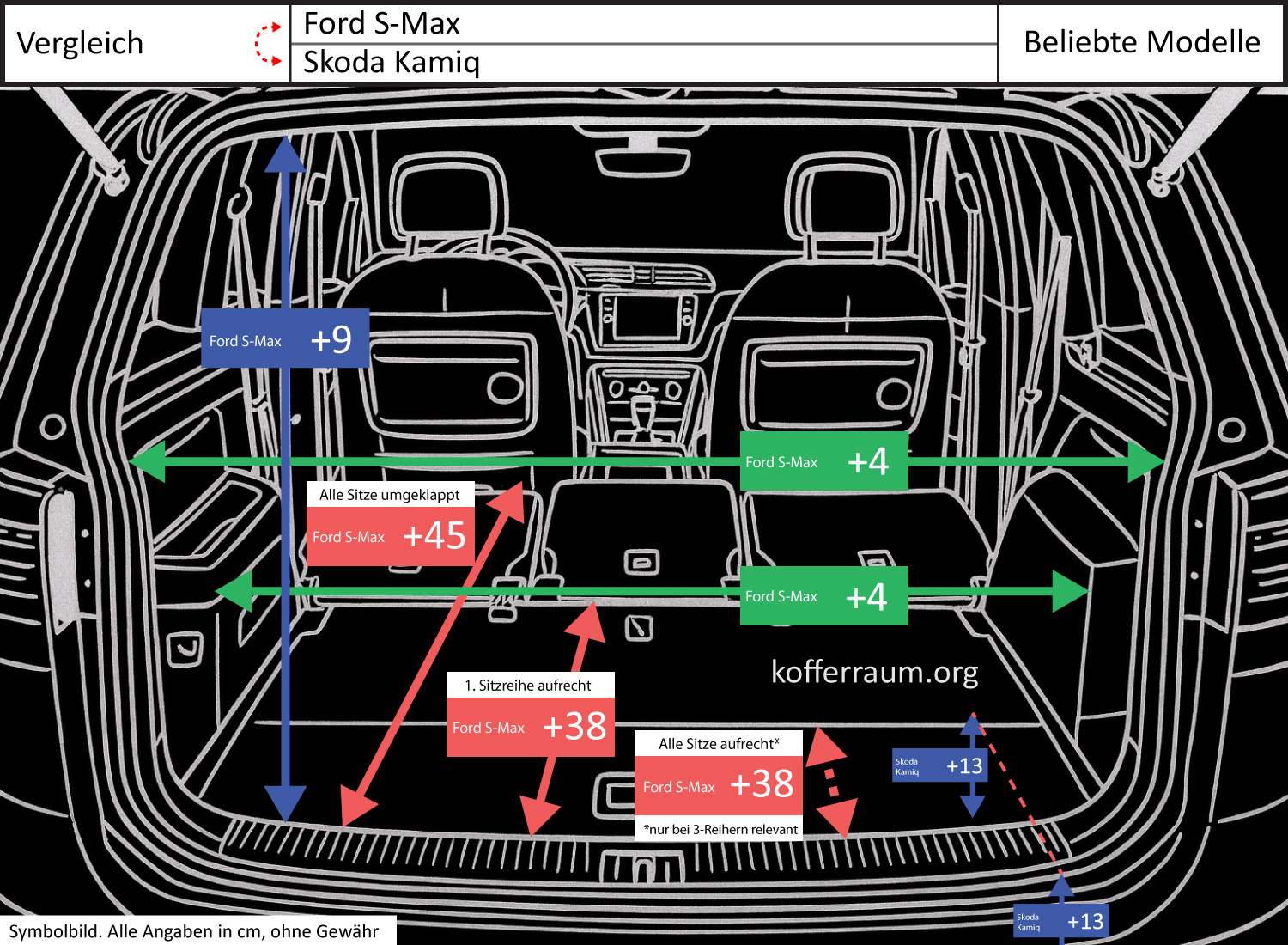
The Ford S‑Max offers a cargo space that is 17.7 in (29%) longer with the seats folded down and a cargo space that is 15 in (51%) longer with the first row of seats upright than the Škoda Kamiq.
This makes the S‑Max significantly better suited for long items (e.g., slats, long furniture parts, skis) and for users who regularly need to transport large or bulky cargo.
The trunk opening of the S‑Max is 3.5 in (11%) higher than that of the Kamiq. This makes it easier to slide taller items in, and loading or unloading bulky cargo is generally less problematic.
In the Škoda Kamiq, the depth from the loading edge to the trunk floor is 5.1 in (433%) greater than in the S‑Max.
Combined with the fact that the loading edge of the Kamiq is 5.1 in (23%) higher off the ground, the following picture emerges: in the Kamiq, the cargo sits lower inside the vehicle, but the loading edge is significantly higher.
For loading, this means a greater vertical lift over the threshold—especially when lifting heavy items, which is disadvantageous. The lower floor position can help to store items somewhat "recessed" (less risk of sliding forward), but it does not compensate for the higher effort required to lift over the loading edge.
The width of the trunk at its narrowest point as well as the width of the trunk opening are each only 1.6 in (4%) larger in the S‑Max than in the Kamiq. These differences are minor (<10%) and usually negligible in practice.
Brief conclusion: Those planning regular transport of long, bulky, or tall items or needing family flexibility (a lot of cargo space with seats folded down) are better served by the Ford S‑Max.
The Škoda Kamiq, due to its lower cargo floor and higher loading edge, offers no advantages for handling heavy or bulky cargo and is more suited for everyday use and smaller city transports.