Trunk comparison: Hyundai i10 vs Durchschnitt Wagon
Key Differences
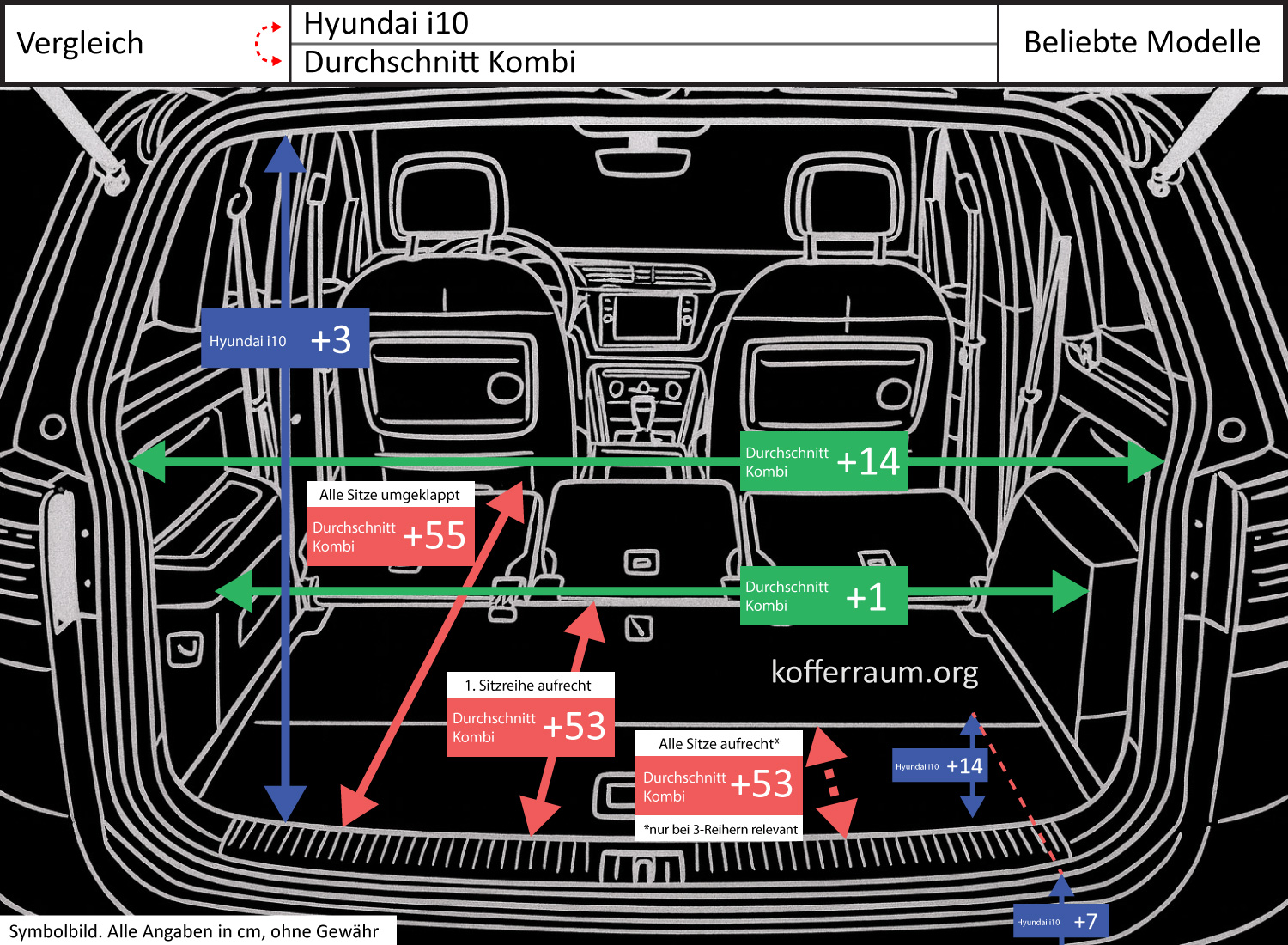
The average wagon offers +21.7 in (+47%) more cargo length with the seats folded down than the Hyundai i10. With the first row upright, the wagon's cargo area is even +20.9 in (+113%) longer. The width of the trunk opening is significantly larger on the wagon: +5.5 in (+16%) compared to the i10.
On the Hyundai i10, the depth from the loading edge to the trunk floor is +5.5 in (+350%) greater than on the wagon; the loading edge itself is +2.8 in (+11%) higher above the ground on the i10.
Impact on Usability
Long and bulky items: Due to the significantly greater cargo length (both with folded seats and with the first row upright), the wagon clearly has the advantage.
Furniture, long construction or sports equipment (e.g., slats, skis, long boxes) can be transported more easily and often without folding down the front seats in the wagon. The i10 quickly reaches its length and space limits here.
Width and loading access: The wider opening of the wagon (+16%) makes it easier to load wide items; bulky parts often have to be angled or disassembled in the i10. For rolling carts or bulky cargo, the wagon is more practical.
Vertical capacity and lifting effort: The i10 offers a significantly deeper cargo well (5.5 in more), allowing relatively tall but narrower items to be recessed lower in the trunk — this can help when overall height is limited.
At the same time, the i10's loading edge is higher (+2.8 in), making lifting heavy loads into the trunk more strenuous and loading with rolling aids (e.g., hand truck) more difficult.
Conclusion: For transport tasks involving long or wide items, the wagon is clearly more suitable. The i10 offers advantages with its deeper cargo well for low, compactly stackable loads but has overall less flexibility when loading large or heavy items due to shorter length, narrower opening, and higher loading edge.