
Trunk comparison: Hyundai i10 vs Jeep Compass
Summary of the Biggest Differences
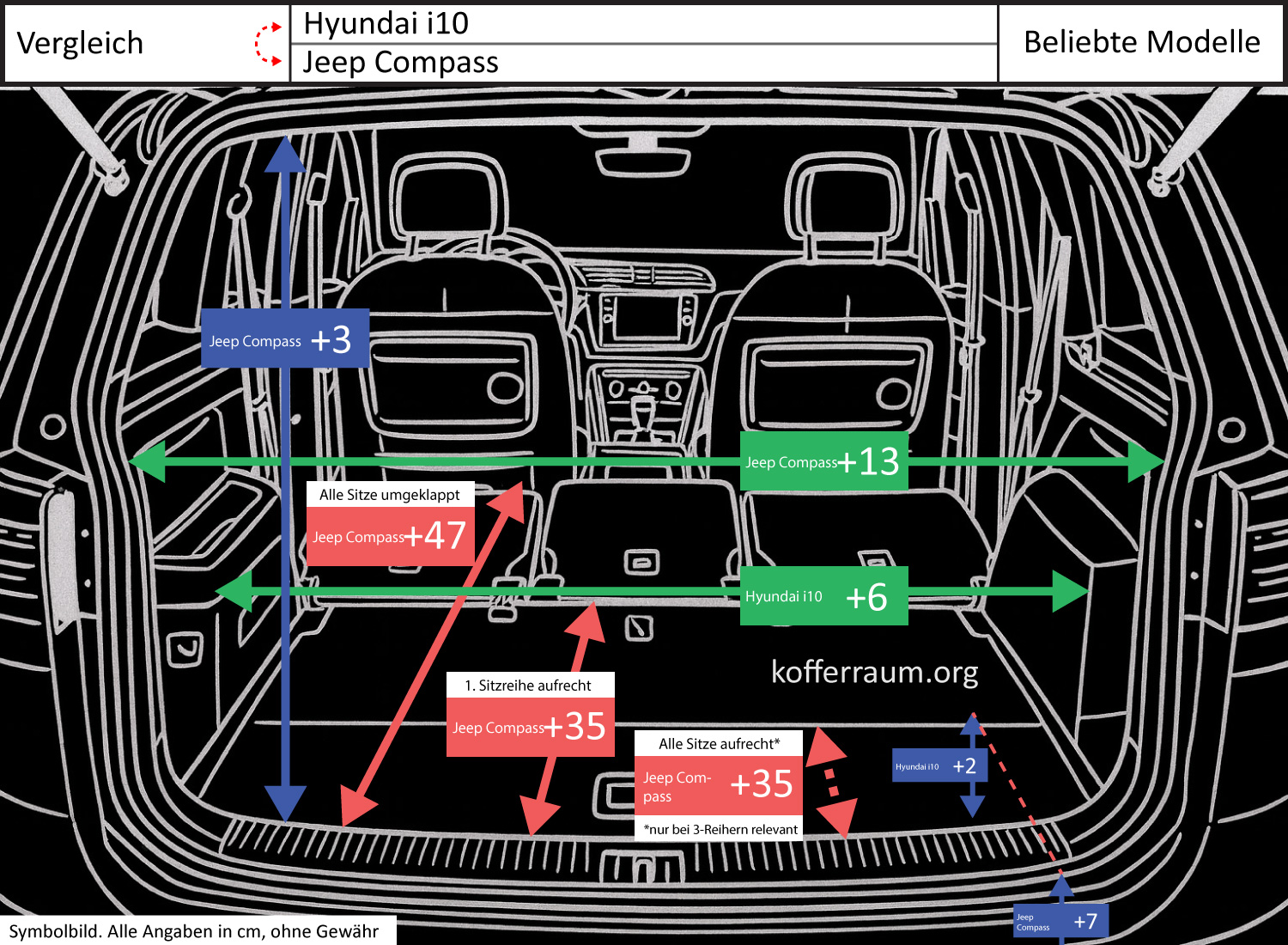
The Jeep Compass offers a 18.5 in (40%) longer cargo space with the seats folded down than the Hyundai i10. With the first row of seats upright, the Compass is even 13.8 in (74%) longer.
The width of the trunk opening is 5.1 in (14%) larger on the Compass compared to the i10. In contrast, the Hyundai i10 has a 0.8 in (13%) greater depth measured from the loading edge to the trunk floor.
What Are the Implications of These Differences for Usability?
- Loading length (seats folded / seats upright): The significantly longer loading area of the Compass makes it much better suited for longer items (e.g., slats, furniture parts, skis) and for situations requiring high flexibility between passenger and cargo configurations. The i10 is clearly more limited here.
- Trunk opening: The wider opening width of the Compass facilitates loading wider items (boxes, strollers, furniture parts) and reduces maneuvering when loading. The more compact opening size of the i10 restricts wide cargo more.
- Trunk depth (loading edge → floor): The slightly deeper interior of the i10 means that items sit further "down" — this can provide more usable space and better lateral stability when transporting loose or stackable luggage.
However, loading and unloading very heavy items might be somewhat less convenient due to the lower position.
- In summary: For transport tasks involving long or wide loads and for variable use, the Jeep Compass is clearly advantageous.
The Hyundai i10 remains more compact but offers a small advantage for storing smaller, lower-lying luggage due to the somewhat deeper loading floor; overall, it is sufficient for everyday shopping and city use but less suitable for larger transports.