
Trunk comparison: Hyundai i10 vs Kia Ceed
Main Differences (highlighted, >10%)
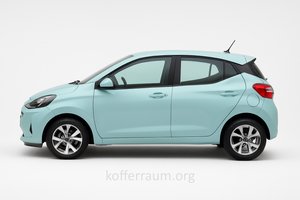
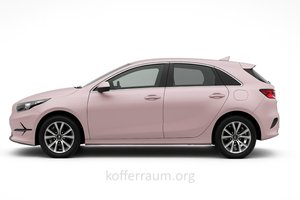
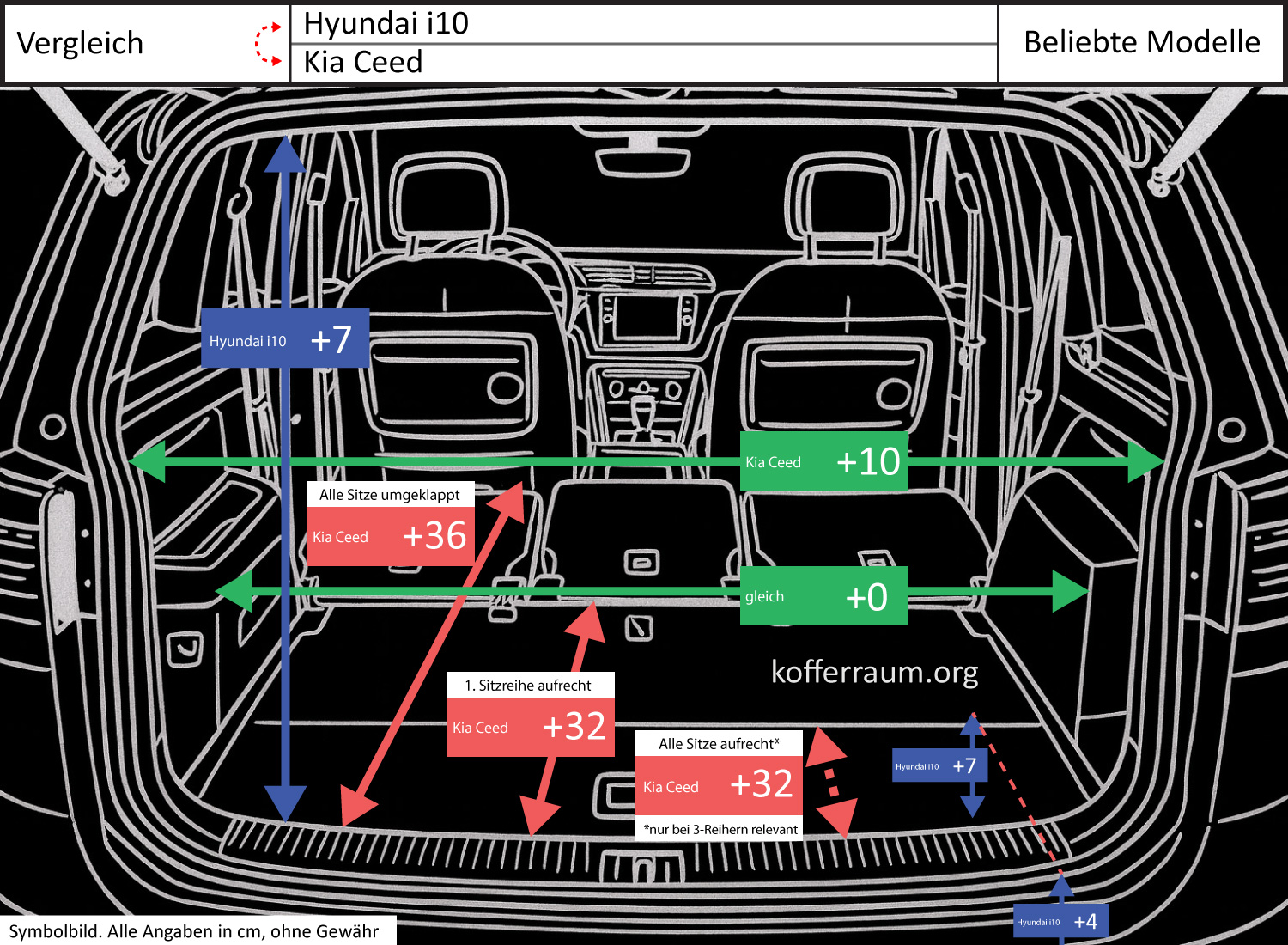
In terms of cargo space, the Kia Ceed has clear advantages: with the rear seats folded down, the Ceed's trunk is 14.2 in (31%) longer and with the front seats upright, even 12.6 in (68%) longer than the Hyundai i10. Additionally, the opening of the Ceed is wider: the width of the trunk opening is 3.9 in (11%) larger on the Ceed.
On the other hand, the Hyundai i10 offers greater depth from the loading edge area to the trunk floor (+2.8 in / 64%).
Impact on Usability
These differences significantly affect practical use:
- Kia Ceed: The longer cargo floor (both with folded seats and with upright seat row) makes the Ceed clearly better suited for long or bulky items (skis, long boxes, furniture parts) and for larger cargo volumes overall. The wider trunk opening facilitates loading and unloading of wide objects.
- Hyundai i10: The greater depth from the loading edge area to the trunk floor means the i10 has a "deeper well" in the cargo area — this can be useful for securely stacking smaller, taller items or transporting bulky but not very long loads.
Due to the overall shorter cargo floor, the i10 is better suited for short shopping trips, suitcases, or small moves, but not for long/bulky cargo.
Smaller or Neutral Differences
Some values differ only slightly and have minor practical relevance: The trunk opening height of the i10 is 2.8 in (9%) higher than that of the Ceed, and the loading edge of the i10 sits 1.6 in (6%) higher above the road — both below the 10% threshold and thus rather secondary.
The minimum width in the trunk is the same for both models.
Conclusion
For transport tasks where length and width of the cargo space are important, the Kia Ceed is the better choice. The Hyundai i10 scores with a deeper cargo well but clearly lags behind the Ceed in usable total volume and for long items.