
Trunk comparison: Hyundai i10 vs Peugeot 308 SW 3-row
Key Differences (only >10%)
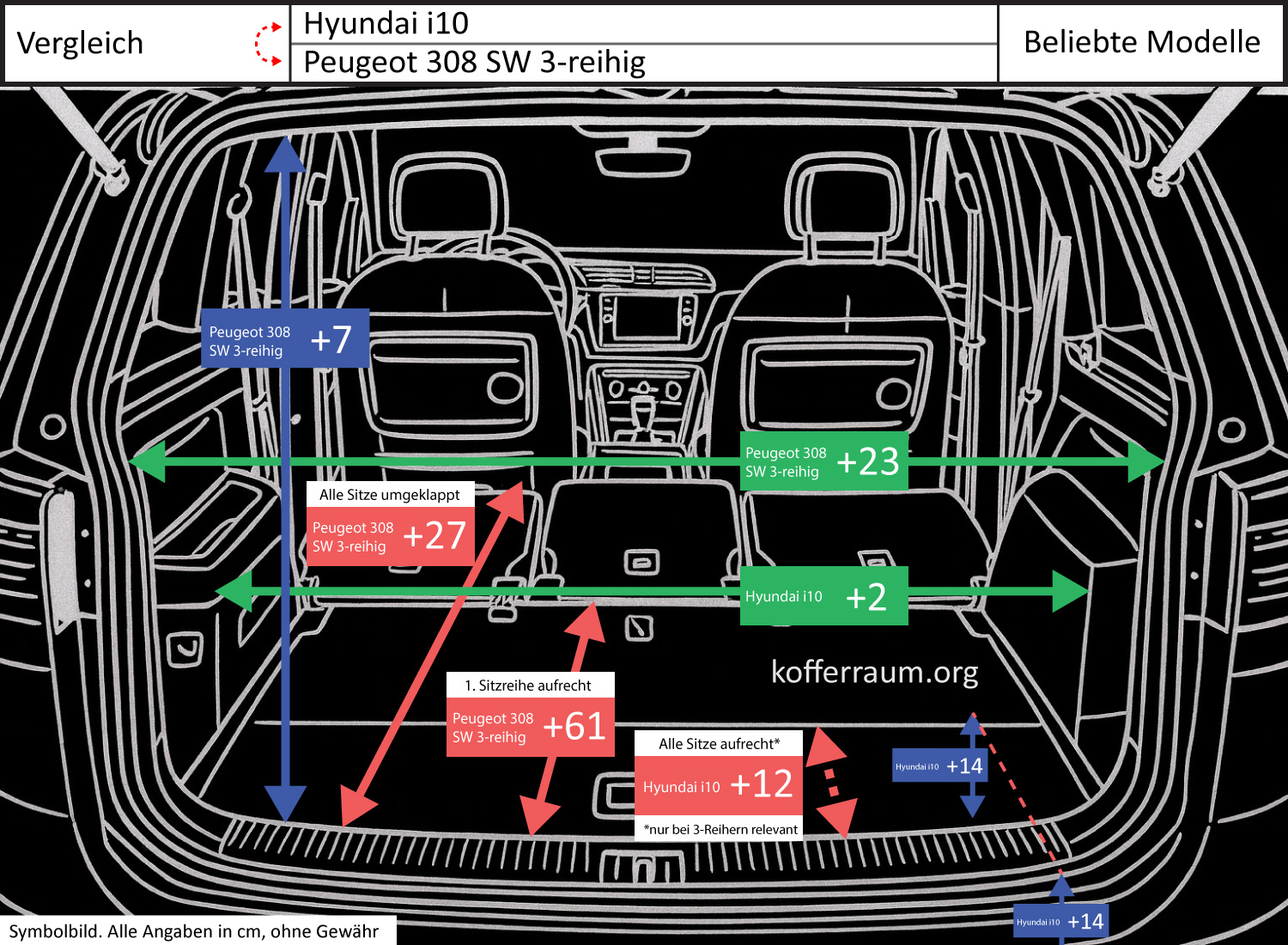
The Peugeot 308 SW offers significantly more cargo length with the seats folded down (+10.6 in / +23%) and especially with the first row upright a very large advantage (+24 in / +130%). The width of the trunk opening is also significantly larger on the Peugeot (+9.1 in / +26%), which makes loading wider items easier.
The situation is different with the Hyundai i10: with all seats upright, the i10 has more trunk length (+4.7 in / +34%).
In addition, the depth of the trunk (distance from loading edge → trunk floor) is significantly greater in the i10 (+5.5 in / +350%) and the loading edge above the road is higher in the i10 (+5.5 in / +25%).
Impact on Usability
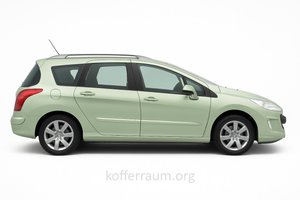
Peugeot 308 SW (3-row): Significantly more cargo space with folded seats and a wider opening make the 308 SW better suited for long and wide loads, furniture, or bulky transport tasks.
The large length advantage with the first row upright suggests that even with a partially seated configuration, there is still plenty of cargo volume. Overall, the Peugeot is the more practical choice when frequently transporting large items or when trunk opening and width are important.
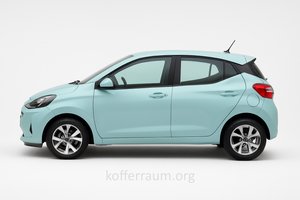
Hyundai i10: With all seats upright, the i10 offers slightly more cargo length, and the interior is significantly deeper (greater distance from loading edge to trunk floor), allowing for more vertical storage or stacking options.
However, the higher loading edge makes loading and unloading heavy items more strenuous and less practical, especially for heavy loads. The i10 is better suited for everyday use with full occupancy and for deeper stacked, more compact cargo but is less suitable for long or very wide goods.
Conclusion: For flexible, long, or wide transports, the Peugeot 308 SW is clearly advantageous. For compact, deeply stacked cargo with full occupancy, the Hyundai i10 can offer benefits but must expect more manageable loads due to the higher loading edge.