Trunk comparison: Hyundai i10 vs VW Golf Wagon
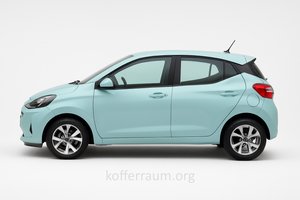
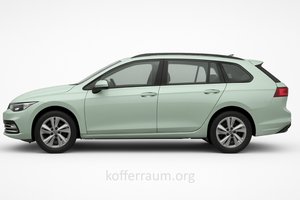
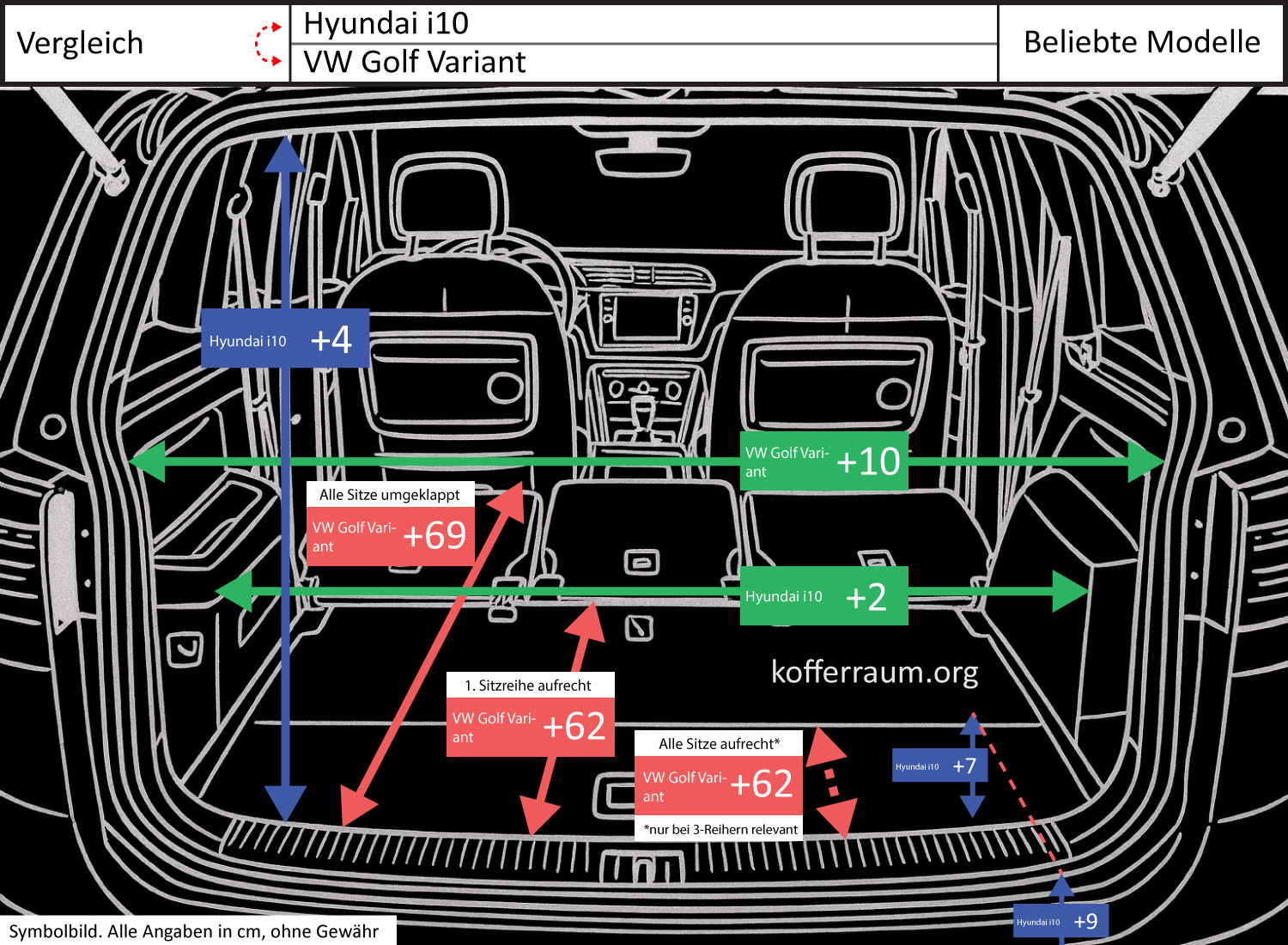
Biggest Differences (Highlighted)
The VW Golf Wagon offers significantly more cargo length:
than the Hyundai i10 and
. The width of the trunk opening also favors the Golf noticeably:
, making it easier to load wider items. In contrast, the Hyundai i10 has a significantly greater cargo depth (distance from loading edge to trunk floor) and a higher loading edge above the road:
and the loading edge is
than in the Golf Wagon. Smaller differences such as the trunk opening height (+1.6 in / 5%) or the narrowest width (+0.8 in / 2%) are comparatively insignificant and are not highlighted here.
Impact on Usability
The greater cargo length and wider opening of the Golf Wagon make it clearly better suited for long or wide loads — such as furniture, skis, long packages, or frequent transport of larger items. Even with the rear seat upright, the Golf offers significantly more usable cargo space, making it more practical for families or tradespeople. The Hyundai i10, on the other hand, scores with a greater measured cargo depth and a higher loading edge: the deeper loading floor provides more vertical space for stackable or bulky but not too wide items. However, the 3.5 in higher loading edge is a clear disadvantage when lifting heavy or bulky loads — loading becomes more strenuous and less practical compared to the lower Golf sill. In short: for regular transport of long or wide items, the VW Golf Wagon is the more practical choice; for occasional, deeply stackable loads in a compact city car, the Hyundai i10 may be sufficient but makes loading physically more demanding due to the higher loading edge.