
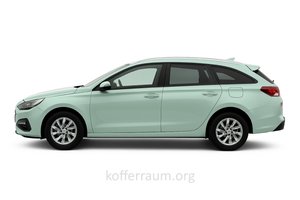
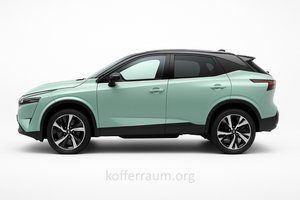
Trunk comparison: Hyundai Elantra GT Wagon vs Nissan Rogue Sport
Key Differences
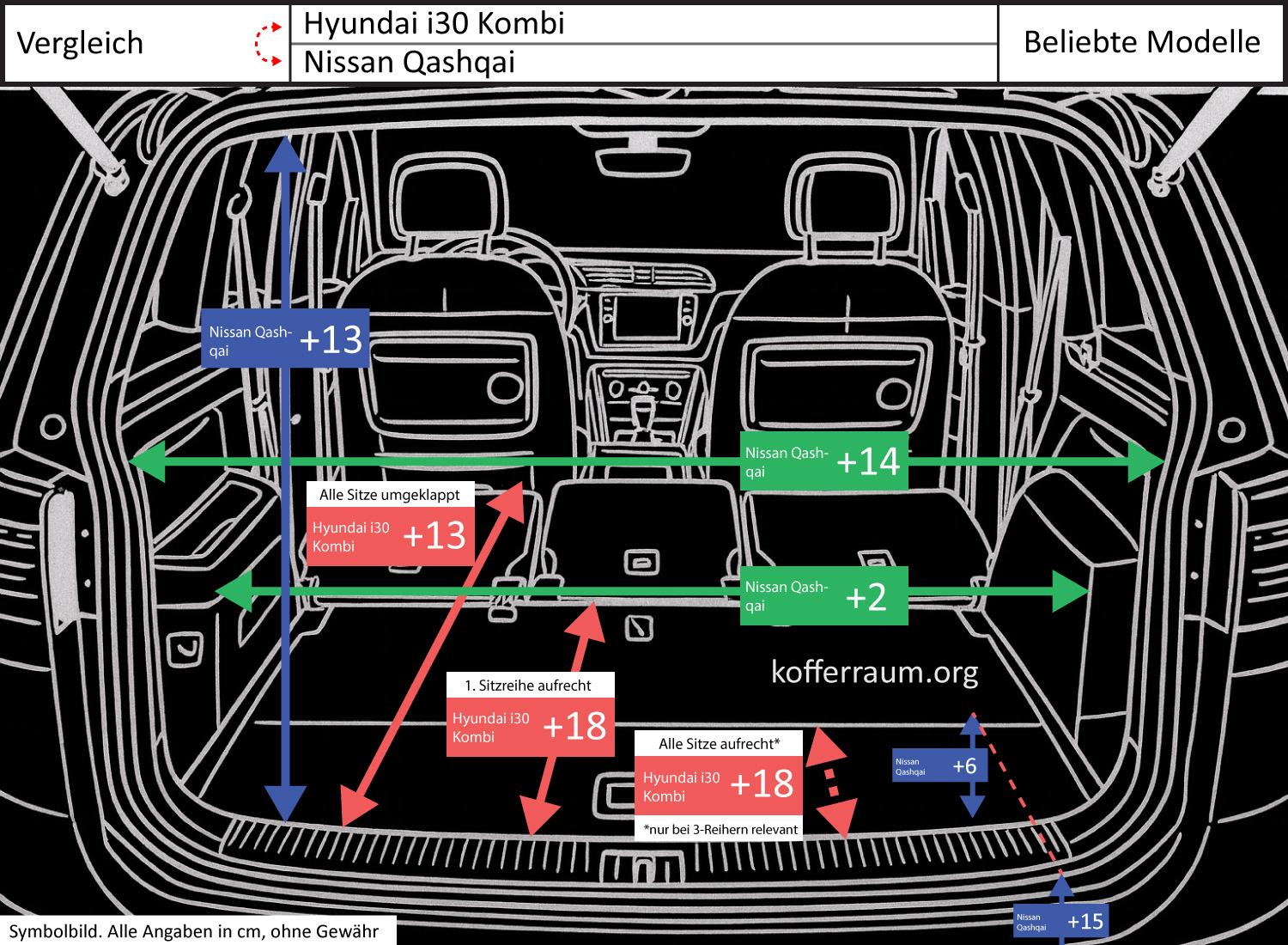
The Hyundai i30 Wagon offers a cargo floor length that is +7.1 in (21%) longer than the Nissan Qashqai with the first row of seats upright. In contrast, the Qashqai has a trunk opening that is +5.1 in (19%) higher and +5.5 in (14%) wider – making it significantly easier to load tall and wide cargo.
Additionally, the depth from the loading edge to the trunk floor is +2.4 in (500%) greater in the Qashqai; the loading edge of the Qashqai is also +5.9 in (24%) higher above the ground.
Smaller differences: the i30 has slightly more length with the rear seats fully folded down (+5.1 in / 8%), and the narrowest trunk width is only marginally larger in the Qashqai (+0.8 in / 2%).
Impact on Usability
The greater usable length of the i30 (especially with the seatbacks upright) makes it more practical for long, flat items like slats, skis, or longer furniture pieces, and for trunk use without folding down the seats. The lower loading edge of the i30 also makes lifting heavy loads in and out easier.
The Qashqai excels with tall and bulky cargo: the higher and wider opening as well as the greater interior height/depth allow for better loading of bulky, tall, or wide items.
However, the significantly higher loading edge increases the effort needed to lift heavy loads; the deeper trunk floor may also require reaching further in or lifting items from a lower position.
Conclusion: Those who frequently load long, flat, or heavy items and prefer ease of handling are better served by the i30 Wagon. Those who need more vertical volume and a larger opening for bulky items benefit more from the Qashqai but must accept a higher loading edge.