
Trunk comparison: Hyundai Elantra GT Wagon vs Volvo XC40
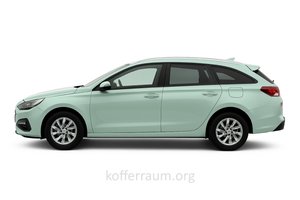
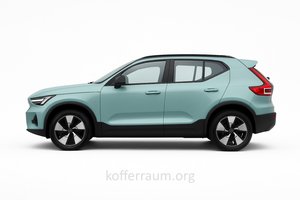
Key Differences
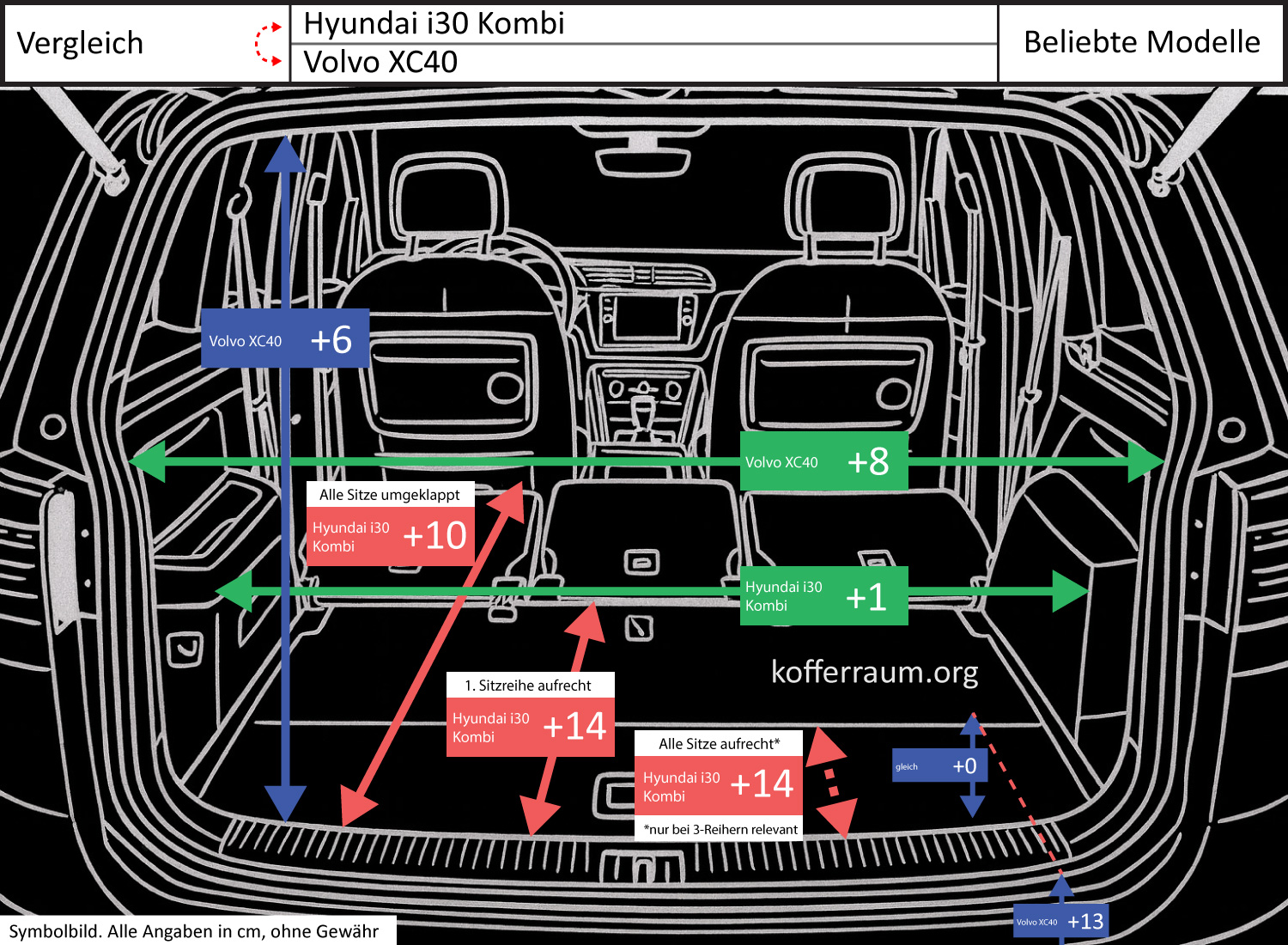
The two models differ most noticeably in usable loading length and the height of the trunk lip.
The cargo area of the Hyundai i30 Wagon with the rear seats upright is 5.5 in (15%) longer than that of the Volvo XC40. In contrast, the trunk lip of the Volvo XC40 is 5.1 in (21%) higher above the ground than that of the Hyundai.
Impact on Usability
The longer cargo area of the Hyundai makes it more practical if you often need to transport longer items without folding down the rear seats – for example, skis, boards, or long boxes while still carrying passengers. The 15% advantage means noticeably more depth space in the trunk for everyday use.
The higher trunk lip on the Volvo, on the other hand, negatively affects loading and unloading heavy or bulky items: a 5.1 in higher lifting angle increases the effort required when lifting and maneuvering.
At the same time, the Volvo offers a slightly larger opening height (+2.4 in / 9%) and a wider opening (+3.1 in / 8%), which makes sliding in tall or wide cargo easier – however, this effect is smaller than the two differences mentioned above.
Additional points: The depth of the trunk (from trunk lip to floor) is the same, and the narrowest width differs hardly at all (+0.4 in in favor of the Hyundai).
In summary: For longer cargo with the rear seats occupied, the Hyundai is better suited for everyday use; for loading bulky but not necessarily heavy items, the Volvo may have an advantage due to the larger opening, but this advantage comes at the cost of the higher trunk lip when lifting.