
Trunk comparison: Hyundai Elantra GT Wagon vs VW Caddy Wagon
Key Differences
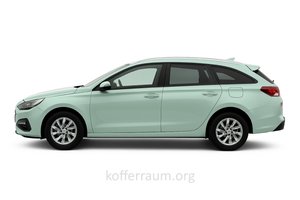
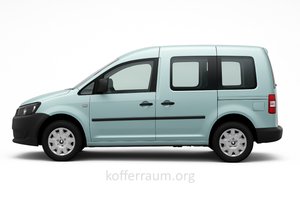
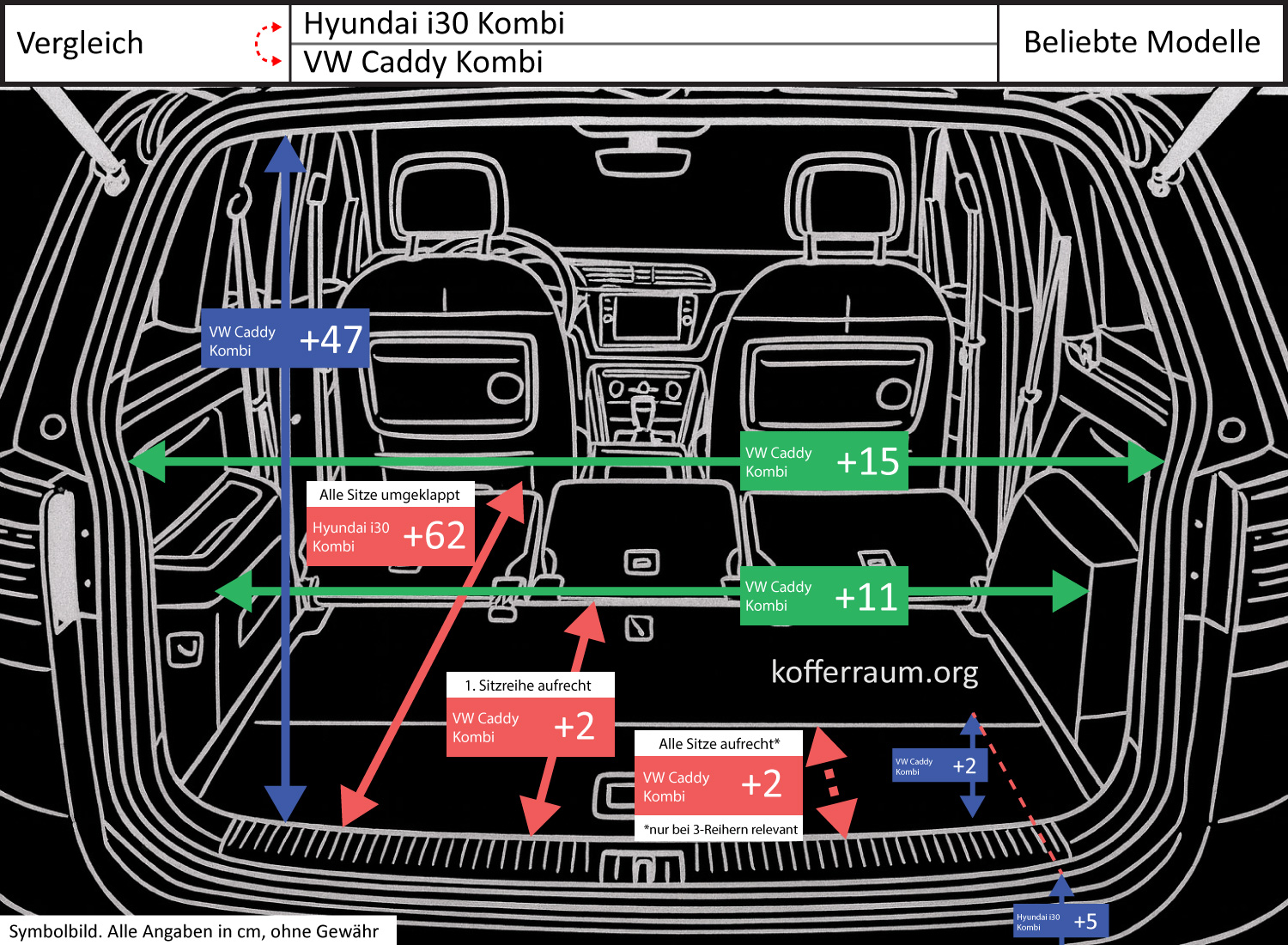
With the rear seats folded down, the Hyundai i30 Wagon offers +24.4 in (53%) significantly more cargo length than the VW Caddy Wagon. In contrast, the trunk opening of the VW Caddy Wagon is +18.5 in (70%) higher, and the width at the narrowest point is +4.3 in (11%) greater on the Caddy.
Also notable is the width of the trunk opening on the Caddy with +5.9 in (15%). The depth of the trunk (loading edge to trunk floor) is +0.8 in (100%) greater on the Caddy.
Impact on Usability
The larger cargo length in the Hyundai i30 Wagon makes it more practical for long items (e.g., slats, long furniture parts, skis), especially when the rear seats are folded down. The vehicle is better suited for accommodating flat-lying, elongated cargo.
The VW Caddy Wagon, on the other hand, scores points for easy loading and unloading of tall or wide items: The significantly higher trunk opening facilitates loading bulky, tall cargo (e.g., boxes, equipment, plants), and the larger opening width as well as the wider narrow point make it easier to maneuver wider objects or pallets through the opening.
The 0.8 in greater depth (loading edge to floor) is minimal in practice and has little noticeable impact on everyday usability.
In short: For elongated, flat-loaded goods, the i30 Wagon is the better choice; for tall or wide cargo and easier loading, the Caddy Wagon is more advantageous in daily use.
Smaller differences such as the 2% longer loading edge with the first row of seats upright or the 2 in higher loading edge of the i30 (each <10%) are rarely decisive in everyday life.