
Trunk comparison: Hyundai Elantra GT Wagon vs VW ID.4
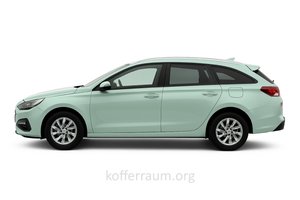
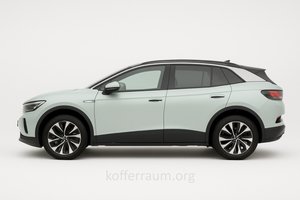
Key Differences
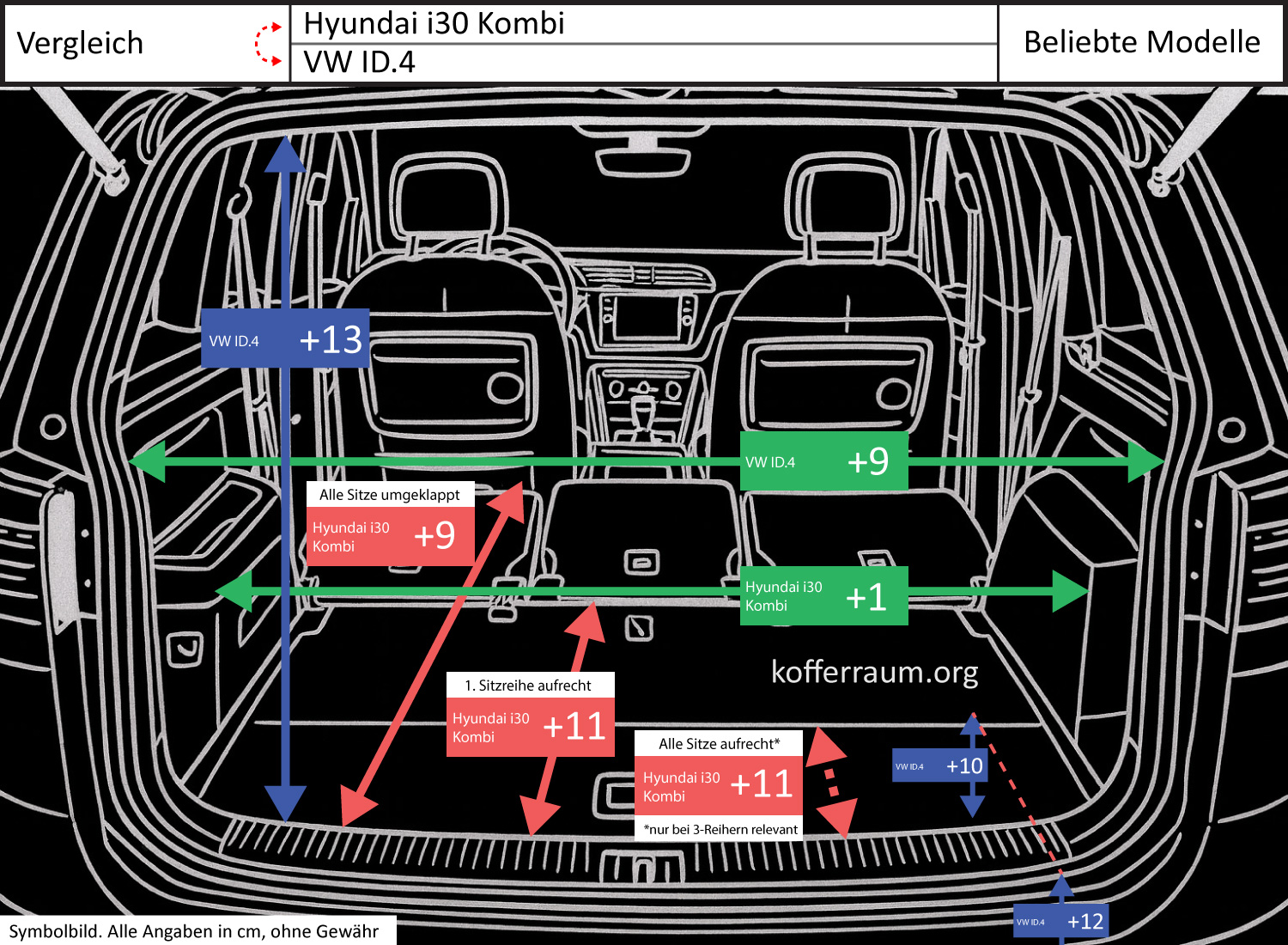
Several clear differences stand out in a direct comparison. The Hyundai i30 wagon is 4.3 in (12%) longer with the first row of seats upright, meaning longer items can be transported without folding down the rear seats.
On the other hand, the VW ID.4 offers advantages in several vertical dimensions: the trunk opening of the ID.4 is 5.1 in (19%) higher, the depth from the loading edge to the trunk floor is 3.9 in (900%) greater in the ID.4, and the loading edge of the ID.4 is 4.7 in (19%) higher above the ground.
These three values show that the ID.4 overall has significantly more vertical space or a deeper cargo floor relative to the loading edge.
Impact on Usability
The longer cargo floor of the i30 with rear seats upright makes it more practical when frequently transporting long items with passenger seating needed (e.g., slats, long skis, furniture parts) without folding seats.
This is a clear advantage in everyday use when flexibility between passenger and cargo needs is required.
The ID.4 offers a larger usable interior space vertically due to the higher opening and significantly greater depth: bulky, tall, or voluminous items can be more easily placed into the opening and pushed deeper into the cargo area.
However, this comes with two drawbacks: the higher loading edge increases the lifting effort required when loading heavy items, and the deeper cargo floor makes reaching in and removing small items less comfortable.
Smaller differences such as the 3.5 in wider trunk opening on the ID.4 or the 0.4 in greater narrowest width on the i30 are comparatively insignificant and only marginally affect everyday use.
Conclusion: Those who often transport long items without sacrificing rear seats are better served by the i30 wagon. Those who need more vertical volume and a deeper cargo floor for bulky/tall loads (and accept the higher lifting) will find the ID.4 the more practical solution.