
Trunk comparison: Hyundai Elantra GT Wagon vs VW Polo
Key Differences and Impact on Usability
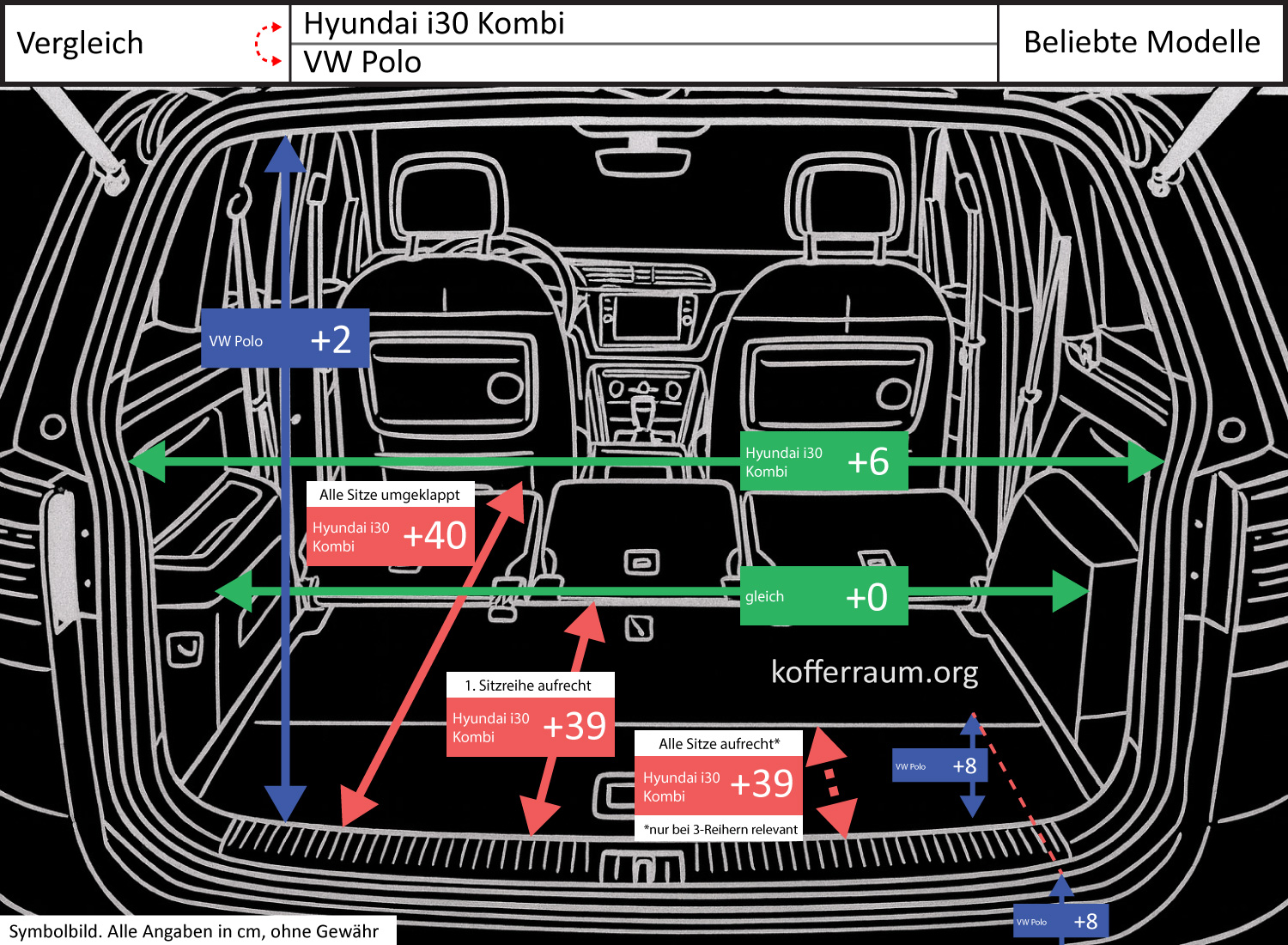
The Hyundai i30 wagon offers significantly more cargo space in length: With the seats folded down, the trunk is 15.7 in (29%) longer than the VW Polo, and with the front row upright, the advantage is even 15.4 in (59%).
This makes the i30 wagon clearly more suitable for transporting long items like slats, furniture parts, or larger luggage, as they fit flatter and without complicated stowing.
The VW Polo, on the other hand, has different advantages and disadvantages: The depth of the trunk (loading edge to trunk floor) is 3.1 in (700%) greater in the Polo, and the loading edge itself is 3.1 in (13%) higher above the ground than in the i30 wagon.
Practically, this means that when loading heavy items in the Polo, more lifting height must be overcome — increasing physical strain when lifting.
The greater depth between loading edge and floor can create a larger "vertical volume" directly behind the loading edge, but often makes loading and unloading less practical because items must be lowered or lifted more.
Other dimensions are less relevant: The height of the Polo's trunk opening is only 0.8 in (3%) larger and the width of the i30 wagon's opening only 2.4 in (7%) wider — both below the 10% threshold and thus hardly decisive in practice.
The narrowest width of the trunk is the same in both models, so narrow items fit equally well.
In summary: For users who frequently transport long or bulky cargo, the Hyundai i30 wagon is the more practical choice due to the significantly greater loading length.
Those who place less value on length but need a deeper trunk bed directly behind the loading edge (though lifting is more strenuous due to the higher loading edge) will find a different, but less cargo-friendly solution in the Polo.