
Trunk comparison: Hyundai IONIQ vs Durchschnitt Wagon
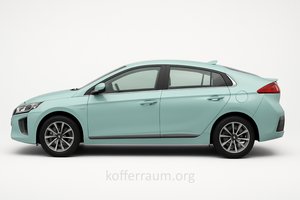
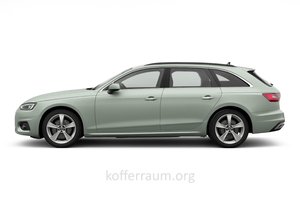
Key Differences (>10%)
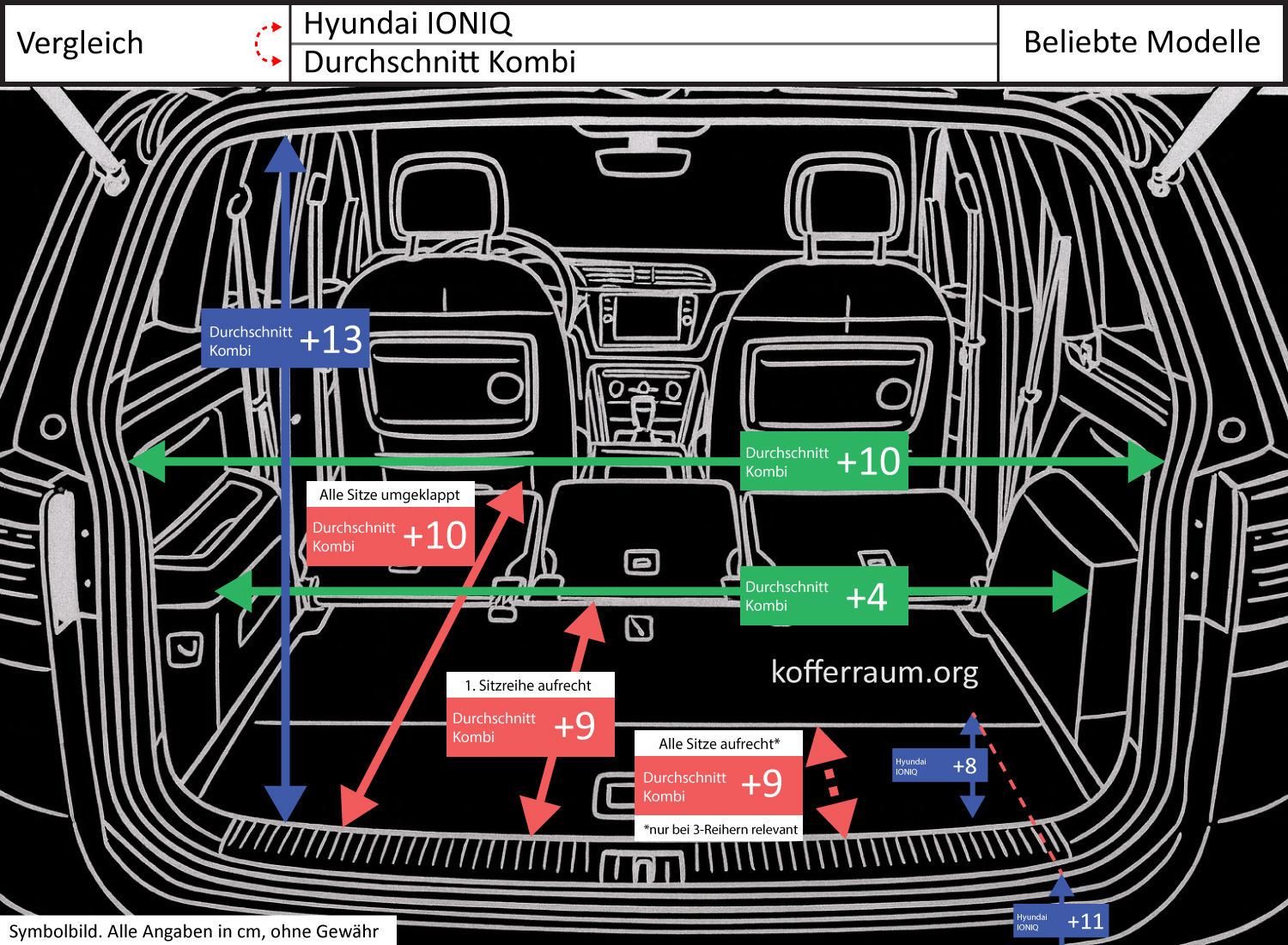
The average wagon has a significantly larger trunk opening: +5.1 in / +20% compared to the Hyundai IONIQ. The width of the trunk opening is also noticeably larger on the wagon: +3.9 in / +11%.
In contrast, the Hyundai IONIQ has a significantly greater depth between the loading edge and the trunk floor: +3.1 in / +200%, and the loading edge itself sits higher above the road on the IONIQ: +4.3 in / +17%.
Impact on Usability
The higher and wider opening of the wagon makes it easier to load bulky or tall items (e.g., furniture parts, crates, larger boxes): larger approach angles and more space when maneuvering the cargo. For people who frequently transport bulky, tall, or awkward items, the wagon is therefore more practical.
The Hyundai IONIQ offers more storage space "inside" due to the greater depth (floor significantly lower below the loading edge) and allows flatter items to be recessed deeper.
On the other hand, the higher loading edge makes lifting heavy loads from road/ground level into the trunk more difficult: loading heavy items requires more strength or aids.
The deeper loading floor can also cause very tall items in the opening to have less upward space at once, even if the total height of the cargo area remains unchanged.
The moderate length and width differences of the wagon (cargo length about +6–10%, narrowest width only +4%) are less decisive in everyday use: they give the wagon somewhat more usable length but only slightly change everyday practicality.
Conclusion: For frequent loading of wide or tall items, the wagon is the more practical choice due to its larger opening height and width. For users who prefer flatter storage or a deeper cargo well (with a simultaneously higher loading edge), the IONIQ makes sense — but with disadvantages when lifting heavy loads.