
Trunk comparison: Hyundai IONIQ vs Durchschnitt Compact SUV

Key Differences and Impact on Usability
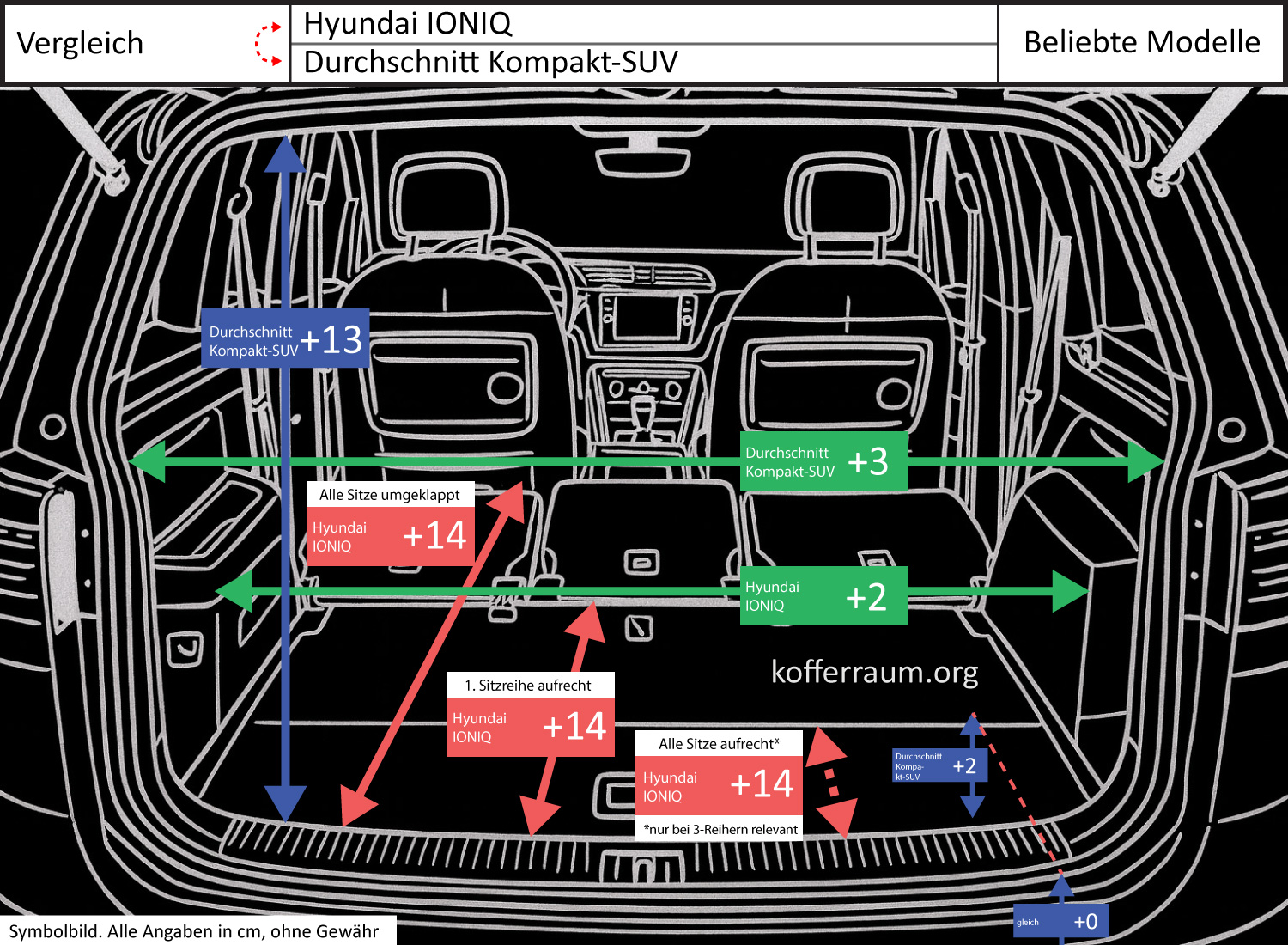
The Hyundai IONIQ offers significantly more loading length with the front seats upright: +5.5 in (18%) compared to the average of compact SUVs. This makes the IONIQ more practical in everyday use for long luggage or bulky, elongated cargo (e.g., skis, longer boxes or suitcases) without folding down the rear seats.
The average compact SUV, on the other hand, surpasses the IONIQ in vertical accessibility: the trunk opening is +5.1 in (20%) higher and the depth between the loading edge and trunk floor is +0.8 in (17%) greater.
Specifically, this means SUVs are easier to load with tall or bulky items (more headroom when sliding items in, better space for tall boxes) and overall offer more vertical cargo volume.
Smaller differences (trunk width at the narrowest point +0.8 in in favor of the IONIQ; opening width +1.2 in in favor of the SUV; loading edge height equal) are marginal and hardly affect practical use.
Conclusion: For longer items in everyday use, the IONIQ is more practical. If you frequently transport tall or very bulky cargo, the average compact SUV is better suited due to the higher opening and greater vertical depth.