Trunk comparison: Hyundai IONIQ vs Opel Grandland
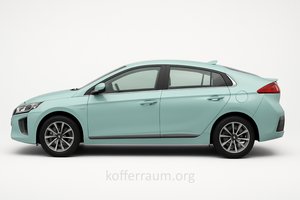
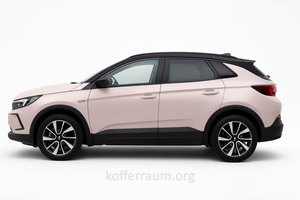
Key Differences
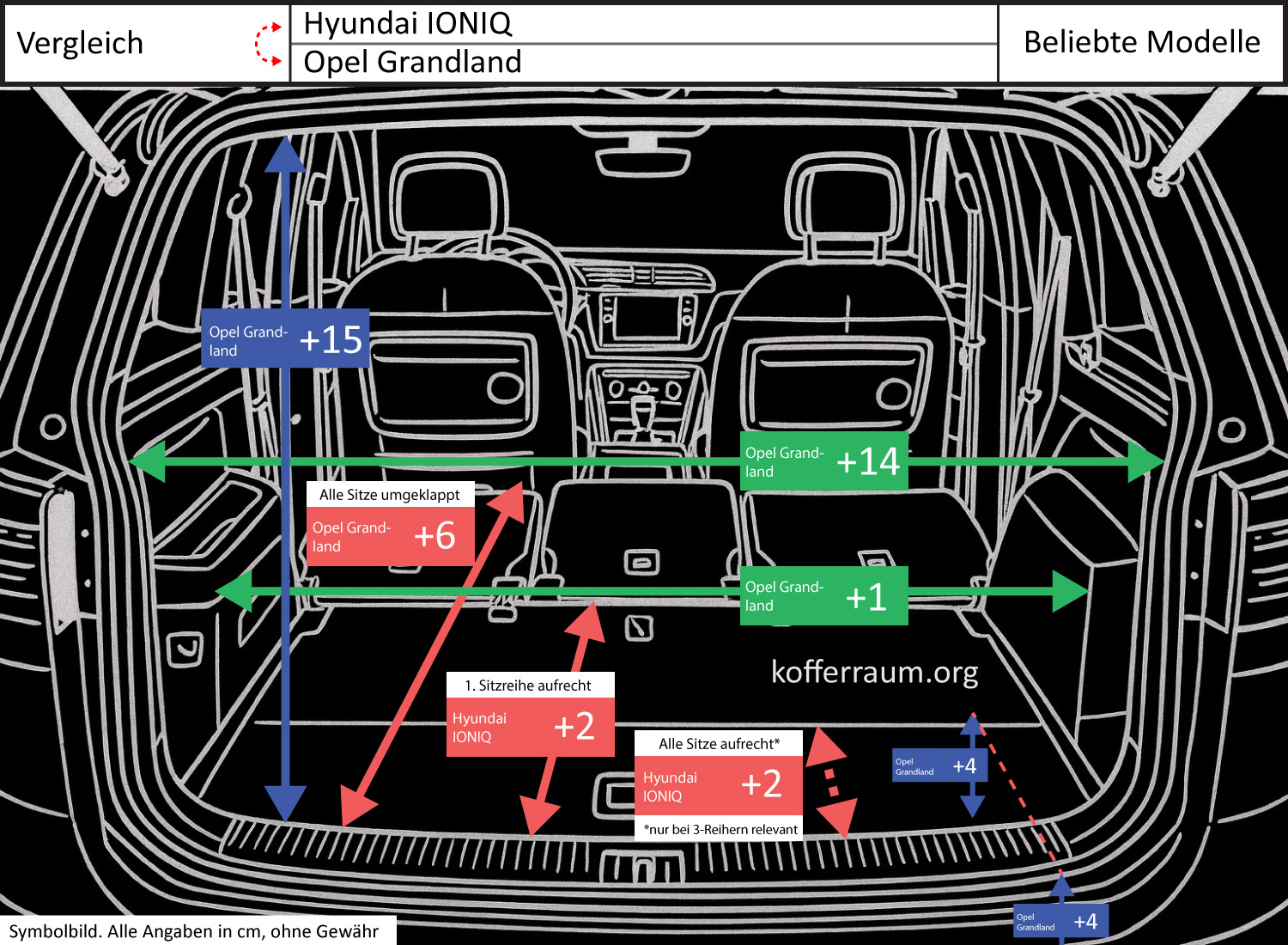
When comparing the loading geometry, three differences clearly exceeding 10% in favor of the Opel Grandland stand out: The height of the trunk opening is +5.9 in (≈23%) larger in the Grandland, the depth from the loading edge to the trunk floor is +1.6 in (≈33%) greater, and the width of the trunk opening is +5.5 in (≈15%) wider than in the Hyundai IONIQ.
Smaller deviations exist in the overall length with folded seats (+2.4 in/4% in favor of the Grandland) and with the first row upright (+0.8 in/2% in favor of the IONIQ), in the loading edge height (+1.6 in/5% higher in the Grandland), as well as in the narrowest width (+0.4 in/1% in favor of the Grandland).
Impact on Usability
The larger trunk opening of the Grandland (+5.9 in height, +5.5 in width) makes loading and unloading bulky or voluminous items easier: tall boxes, furniture parts, or suitcases fit more easily through the opening, and bulky cargo needs less turning or tilting.
The greater depth between the loading edge and trunk floor (+1.6 in) means that cargo sits deeper in the cargo space, making it more stable and less likely to shift sideways — practical for loose items or stackable cargo.
At the same time, the slightly higher loading edge of the Grandland increases the required lifting height when loading (physically more demanding than with the IONIQ), because the support edge is closer to the vehicle's underside.
The minor length differences (slightly favoring the IONIQ with the rear seat upright, slightly favoring the Grandland with seats folded) are hardly relevant in practice; they only affect very long, flat loading objects.
Overall, the Opel Grandland is better suited for regular transport of bulky and tall items due to the significantly larger opening and deeper loading well, while the Hyundai IONIQ may be slightly easier to load and unload at a lower loading edge, provided the lifting over the road surface is considered.