
Trunk comparison: Hyundai IONIQ vs Seat Leon
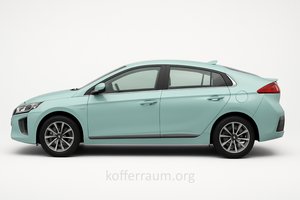
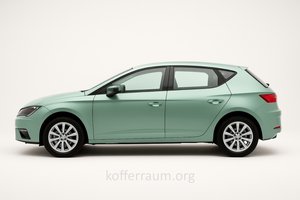
Significant Differences (>10%)
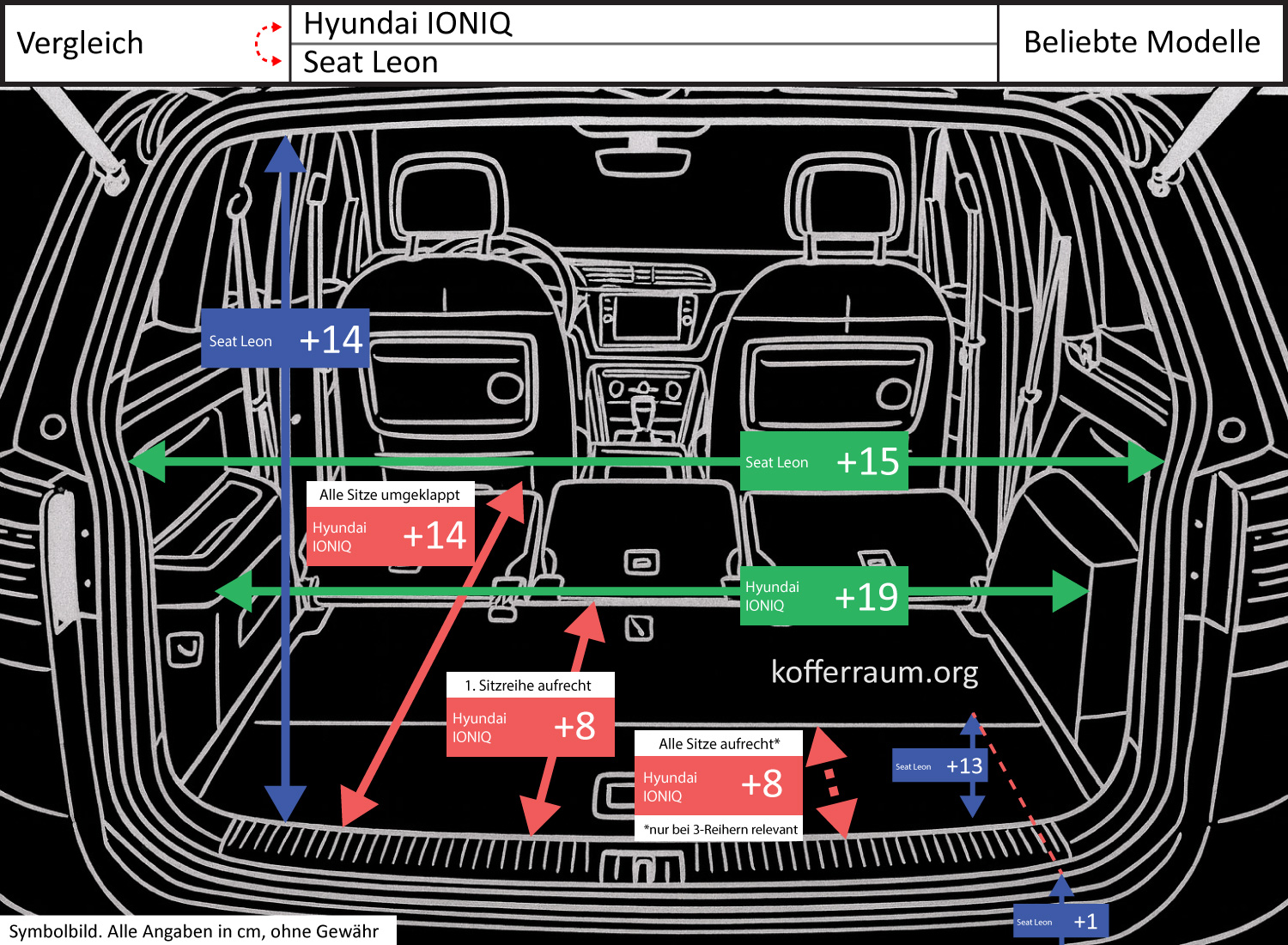
In the SEAT Leon, the trunk opening is designed significantly higher and deeper: the opening height is 5.5 in (21%) higher and the trunk depth (loading edge to trunk floor) is 5.1 in (108%) greater than in the Hyundai IONIQ.
Additionally, the narrowest interior width in the Hyundai IONIQ is 7.5 in (23%) larger, while the width of the trunk opening in the SEAT Leon is 5.9 in (16%) larger.
Implications for Usability
The combination of a higher opening and significantly greater depth makes the SEAT Leon more advantageous in practice for tall or bulky items that need to be loaded standing up or with greater height through the rear opening: more pass-through height and more interior height behind the loading edge make it easier to insert and stack tall cargo.
The wider opening enhances this advantage when directly lifting larger parts in.
The Hyundai IONIQ is noticeably wider inside at the narrowest point. This means that especially wide items that need to be maneuvered "through the narrow spot" in the trunk fit better in the IONIQ.
Despite the slightly longer loading floor (see below), the narrower opening of the Leon can make it difficult to load very wide items, even though the Leon is overall wider at the opening.
The loading edge height difference of 0.4 in is negligible and hardly affects lifting. Overall: the Leon is better suited for tall/vertical or stackable cargo; the IONIQ has the advantage for very wide items or those that must pass through narrow interior spots.
Other, Smaller Differences (≤10%)
The IONIQ offers a somewhat greater trunk length: with the seats folded down, 5.5 in (+9%) and with the first row upright, 3.1 in (+10%) more than the Leon.
These length advantages are moderate and mainly affect the transport of very long, flat items, but have less impact when height or interior widths limit actual cargo capacity.