
Trunk comparison: Hyundai Kona vs Jeep Renegade
Key Differences
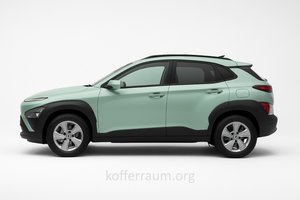
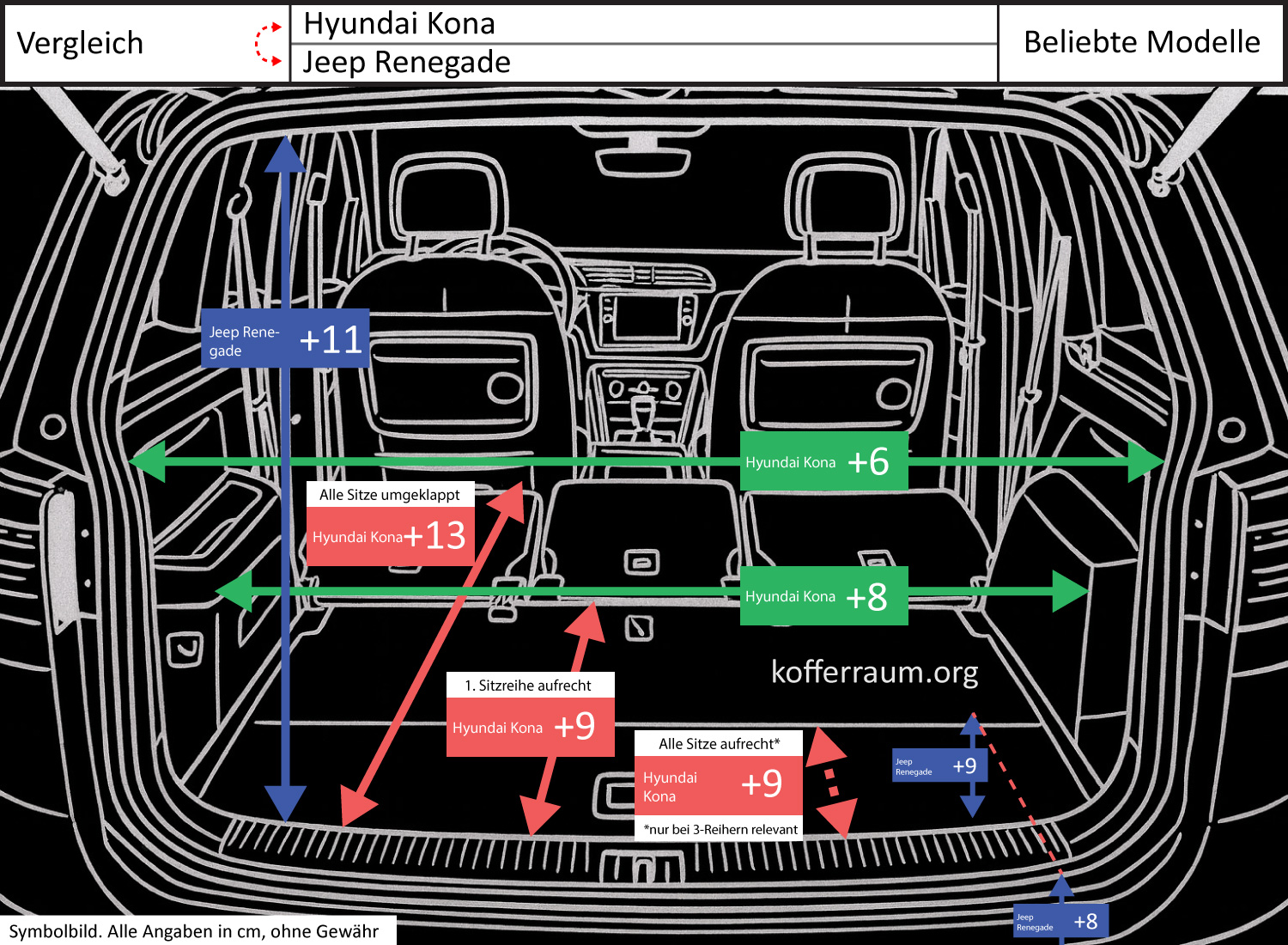
When comparing, it is noticeable: The Hyundai Kona offers more loading length with the first row of seats upright – specifically, the Kona's trunk is +3.5 in (≈12%) longer.
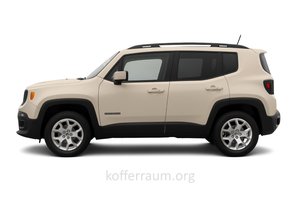
The Jeep Renegade's advantages lie in vertical orientation: The height of the trunk opening is +4.3 in (≈14%) higher in the Renegade, the depth of the trunk (distance from loading edge to trunk floor) is +3.5 in (≈180%) greater in the Renegade, and the loading edge itself is +3.1 in (≈12%) higher above the ground in the Renegade.
Impact on Usability
These differences lead to clearly different usage advantages: The longer cargo space of the Kona with the rear seat upright makes it more practical for elongated items (e.g., skis, long boxes, or furniture parts) that can be transported without folding the seats down.
Since the width differences (narrowest point +3.1 in, opening width +2.4 in in favor of the Kona) are under 10%, they are less decisive in everyday use but do allow somewhat easier sliding of wider cargo in the Kona.
The Renegade, on the other hand, offers more vertical space and a deeper cargo well: The higher opening makes loading taller items easier, the deeper floor position creates more usable volume downward at the same exterior height.
At the same time, the loading edge about 3.1 in higher makes lifting heavy items into the trunk more strenuous and requires more strength or aids (e.g., loading assist or ramp) when regularly loading heavy cargo. The greater depth can also cause smaller items to lie lower and be harder to reach.
In summary: Those who frequently transport long items and prefer easier loading benefit more from the Kona. Those who need taller or bulkier cargo and more vertical space will find the Renegade the more suitable choice but must accept a higher loading edge and deeper cargo floor.