
Trunk comparison: Hyundai Kona vs Renault Austral
Key Differences (Summary)
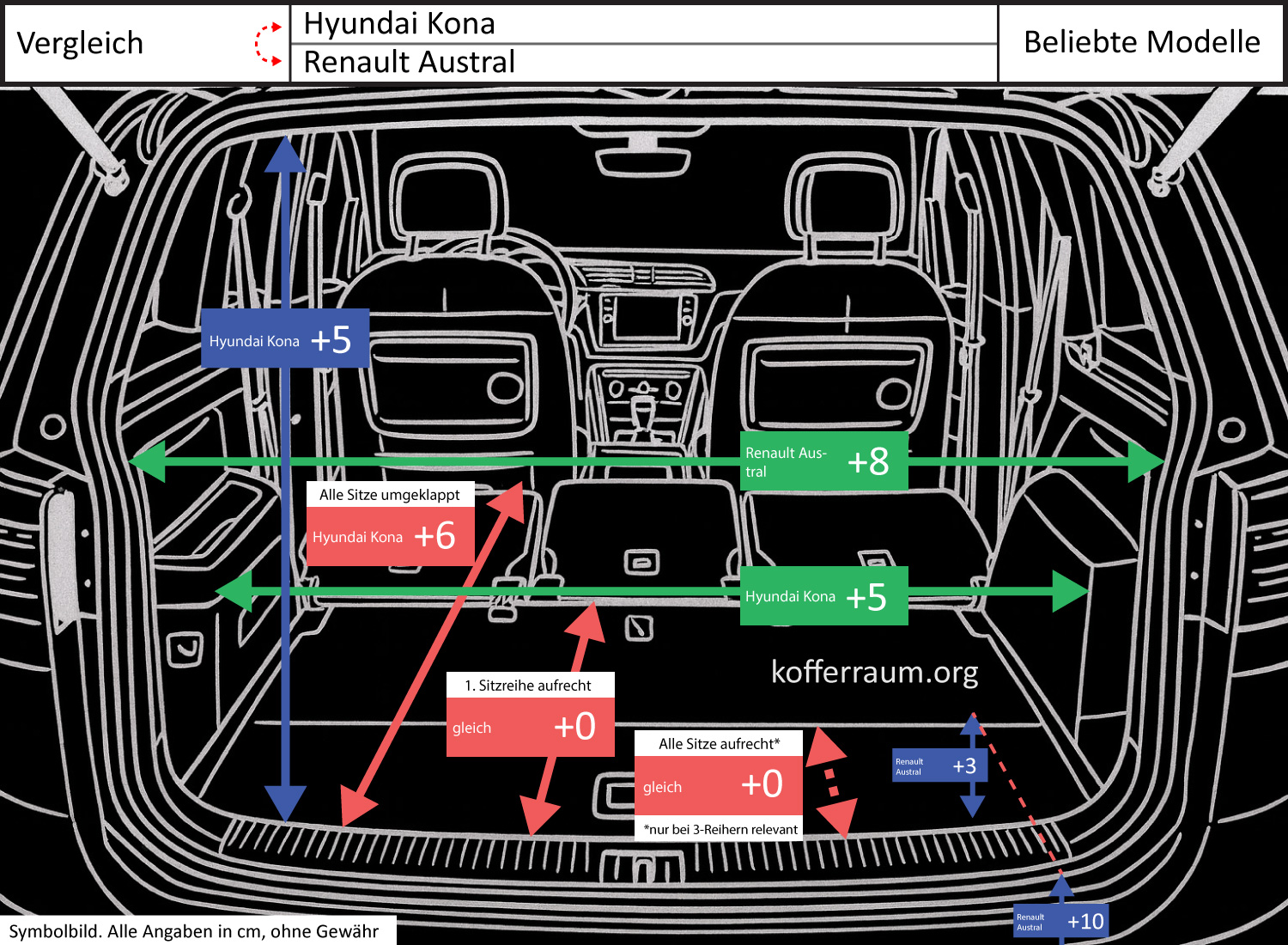
Both models have the same trunk length with the first row of seats upright. When the rear seats are folded down, the Kona is only slightly longer (+2.4 in / 4%).
At the narrowest point, the Kona is marginally wider (+2 in / 5%); the opening width is somewhat larger on the Austral (+3.1 in / 8%). The trunk opening of the Kona is slightly higher (+2 in / 7%).
Significant Differences (>10%) and Their Consequences
1) Trunk depth (loading edge → trunk floor): Renault Austral significantly deeper (+1.2 in, +60%). This practically means more usable vertical volume below the loading edge.
Small to medium-sized items can be stored further "down," which conceals visible loads and creates space for secured or stacked cargo. However, part of the load is deeper in the trunk and less accessible.
2) Loading edge height above the road: Renault Austral significantly higher (+3.9 in, +15%). A higher loading edge makes lifting heavy items in and out more difficult (e.g., furniture, large boxes, strollers).
Combined with the greater depth, this means: for tall cargo, more lifting and simultaneously lower placement is required → less favorable for lifting alone without assistance or ramps.
Conversely, a higher loading edge prevents low cargo from rolling out and can make loading smaller items safer but increases physical effort.
Practical Usability: What Does This Mean in Everyday Life?
- Those who frequently load heavy or bulky items alone (e.g., groceries, moving boxes, heavy sports equipment) benefit from the Hyundai Kona due to the lower loading edge: less lifting effort, easier loading.
- Those who regularly want to store a large volume in a deeper cargo well (e.g., wet/dirty materials, equipment to be concealed) gain more usable storage space below the loading edge with the Renault Austral due to the greater depth.
- For long items, the difference remains small: both models have the same length with the first row upright; with folded seats, the Kona is only minimally longer.
- Width and opening differences are small (<10%) and hardly affect most everyday cases; the Austral offers a slightly wider opening, the Kona slightly more usable width at the narrowest point.
Conclusion
The most significant practical consequences arise from the combination of a considerably deeper trunk and a higher loading edge in the Renault Austral: more hidden volume but significantly more lifting effort when loading.
The Hyundai Kona is more ergonomic in everyday loading of heavy items due to the lower loading edge and offers slightly more usability at critical points (easier accessibility, marginally wider narrow spots).